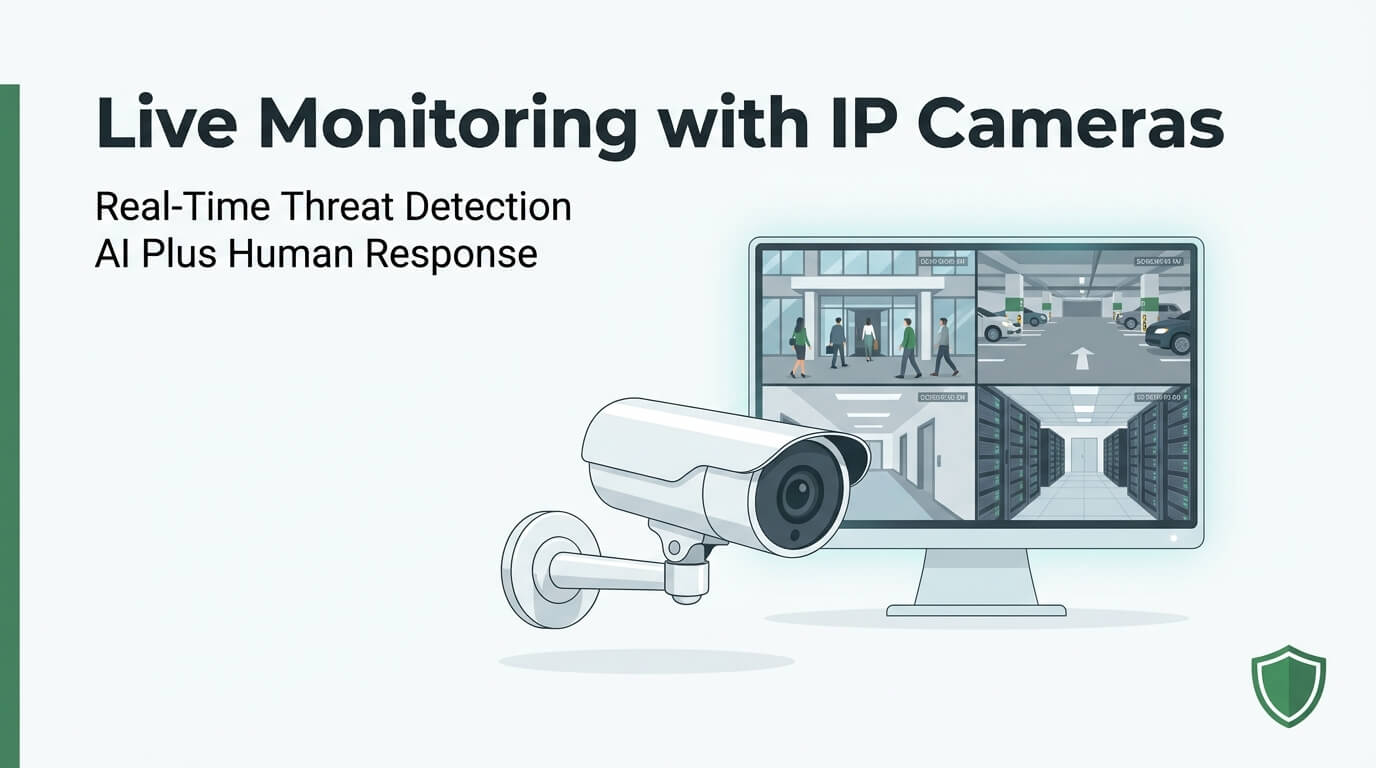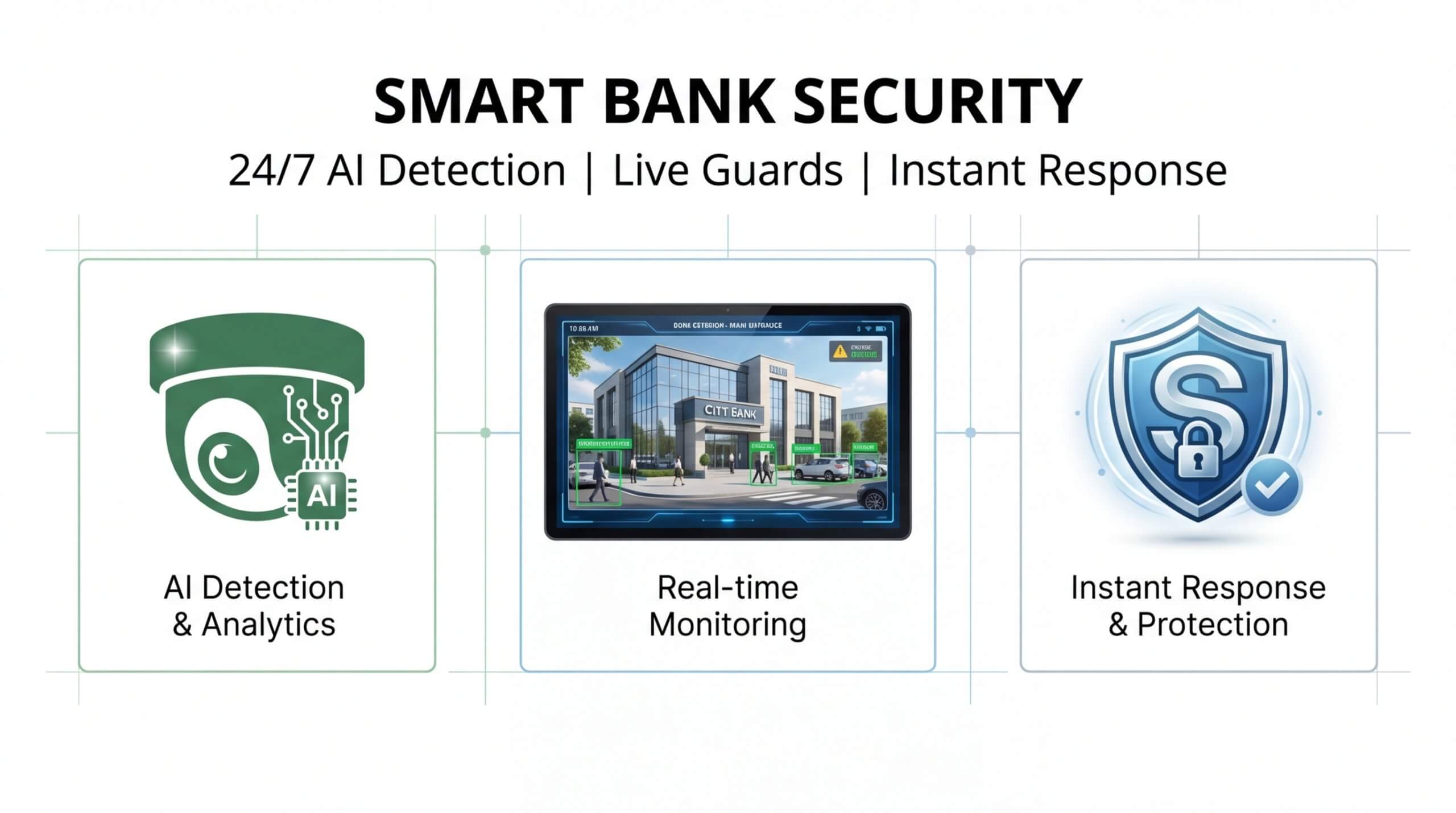

A state-of-the-art home security system is a unified platform that combines AI-powered surveillance, intelligent motion detection, remote mobile control, smart home automation, and professional 24/7 monitoring to protect a residence continuously and automatically. Where older systems relied on passive recording and basic alarms, modern systems analyze threats in real time, coordinate across devices, and connect homeowners to trained operators around the clock.
This guide covers how each of these five features works, how they integrate with one another, and how to match the right combination to your specific home.
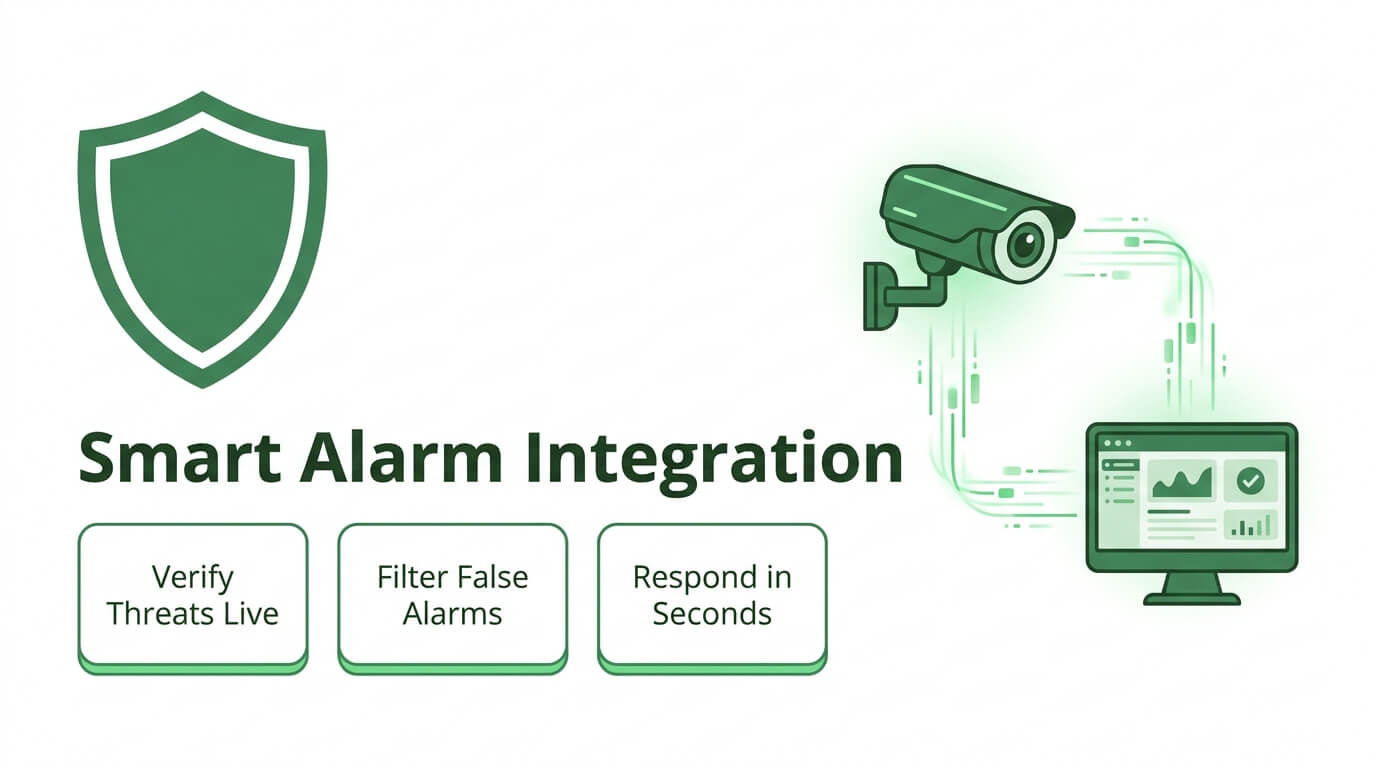
AI-powered video surveillance and smart motion detection form the detection layer of a modern system. AI cameras use computer vision and deep learning to classify threats, operate in low light, and respond in real time, while smart motion sensors filter out pets, environmental triggers, and false alarms to keep alerts accurate and actionable.
Remote access, mobile control, and smart home integration extend that detection layer into active management. Homeowners can arm or disarm their system, view live feeds, and receive instant push notifications from anywhere, while smart locks, video doorbells, and automated lighting work together as a coordinated, automated defense.
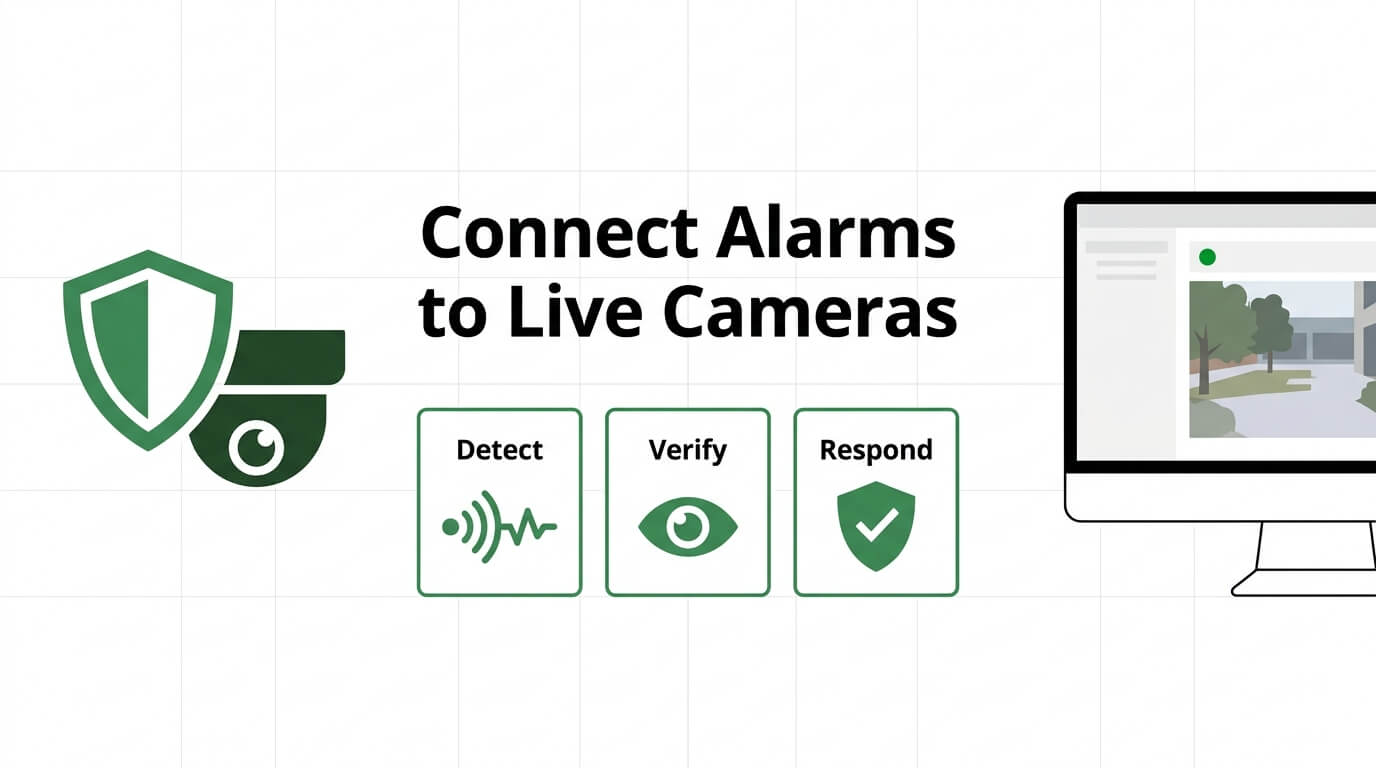
Professional 24/7 monitoring provides the human oversight layer that activates when automated detection flags a verified threat. Trained operators watch live feeds, relay real-time intelligence to dispatchers, and close the gap between a triggered sensor and a police response.
Choosing the right combination of these features depends on home size, local crime rate, and budget, each of which shapes which layers of protection deliver the most value for a given property.
What Makes a Home Security System State-of-the-Art Today?
A state-of-the-art home security system today combines AI-powered surveillance, smart motion detection, remote mobile control, smart home integration, and professional 24/7 monitoring into one unified platform. The sections below cover each of these five features in detail.
What Are the Top 5 Must-Have Features in a Modern Home Security System?
The top 5 must-have features in a modern home security system are AI-powered video surveillance, smart motion detection, remote access and mobile control, integrated smart home automation, and professional 24/7 monitoring. Each feature addresses a distinct layer of residential protection.
AI-Powered Video Surveillance
AI-powered video surveillance is a system that uses computer vision and machine learning to automatically analyze camera footage, identify threats, and trigger alerts in real time. Unlike traditional CCTV, AI-powered cameras can distinguish between a person, a vehicle, and environmental movement, reducing unnecessary notifications. According to NIST, video analytics automates the laborious tasks of monitoring live streams, providing timely alerts and making archived video searchable. For homeowners, this means the system works intelligently around the clock without requiring constant human review.

Smart Motion Detection and Alerts
Smart motion detection is a core security feature that begins recording and sends alerts the moment activity is detected in a monitored zone. In modern residential systems, a motion-activated dedicated camera begins recording upon detecting activity or motion in a specific area. Modern sensors differentiate between relevant threats and routine movement such as pets or wind-blown foliage, keeping false alarms low and alerts meaningful.
Remote Access and Mobile Control
Remote access and mobile control allow homeowners to manage their security system from any location using a smartphone or connected device. NIST defines access control as the process of granting or denying specific requests to obtain information, use processing services, or enter physical facilities. In practical terms, this means arming or disarming an alarm, viewing live camera feeds, and receiving push notifications all from a single mobile app, regardless of where the homeowner is located.
Integrated Smart Home Automation
Integrated smart home automation connects a home security system to locks, lights, sensors, and appliances so they operate together as one coordinated network. The Matter smart home standard, developed by the Connectivity Standards Alliance, ensures that devices from multiple brands work natively together, eliminating compatibility gaps between security components.
Professional 24/7 Monitoring
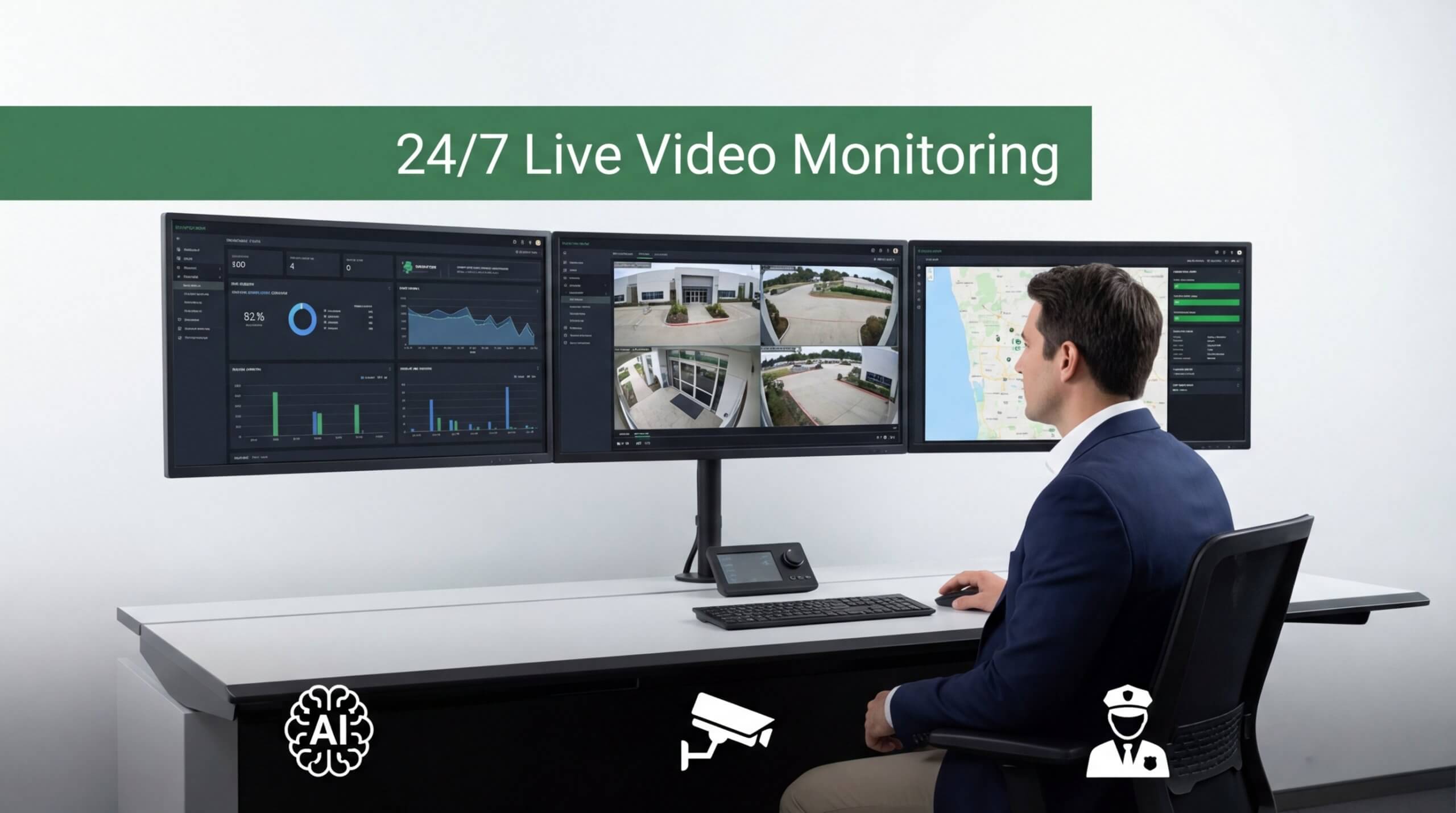
Professional 24/7 monitoring is a service where trained operators watch a property continuously and dispatch emergency response when a verified threat is detected. According to a U.S. Department of Justice report on community-oriented policing, active monitoring involves authorized personnel watching live camera feeds and contacting patrol officers with real-time suspect descriptions and locations. This human oversight layer ensures that when automated systems flag an event, a trained person confirms it and acts immediately rather than waiting for the homeowner to respond.
How Does AI-Powered Video Surveillance Protect Your Home?
AI-powered video surveillance protects your home by combining computer vision, deep learning, and real-time analytics to detect threats, operate in challenging conditions, and trigger immediate responses. The sections below cover how AI filters false alarms, maintains coverage in low light, and acts on threats as they unfold.
How Does AI Distinguish Threats From False Alarms?
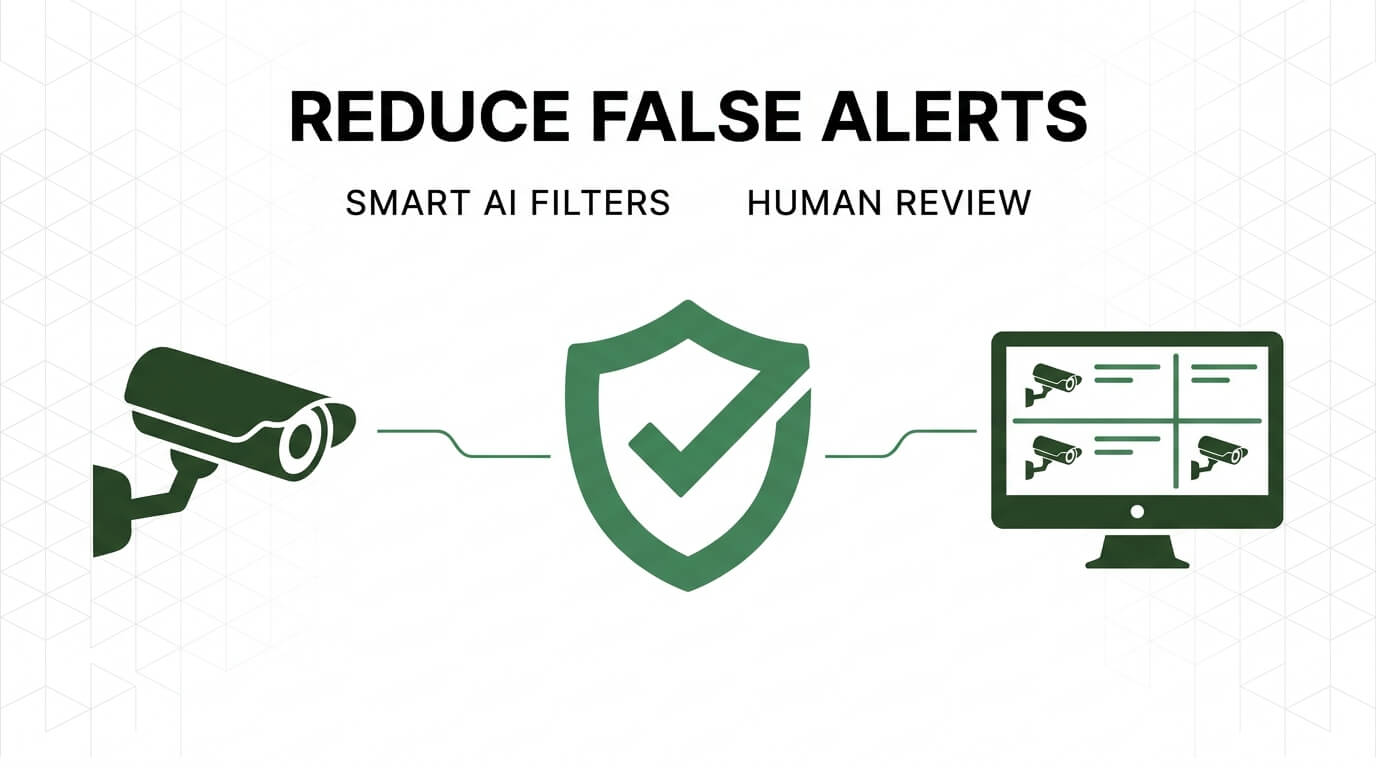
AI distinguishes threats from false alarms by applying binary classification models that measure sensitivity (the ratio of correct threat detections to total actual threats) and the false positive rate (the ratio of false alarms to all non-threat events), according to NIST SP 1500-29. These two metrics work together: high sensitivity catches real intrusions, while a low false positive rate prevents unnecessary alerts. In practice, false alarm management matters enormously. A 2023 Montgomery County Department of Police report found that 92% of all alarm users recorded zero false alarms that year. Well-tuned AI detection, paired with responsible system management, can reach that benchmark consistently. Poor false alarm rates do not just waste time; they erode police prioritization of your alerts.
How Does AI Video Surveillance Work at Night or in Low Light?
AI video surveillance works in low light by using deep learning models trained to compensate for poor visibility conditions, including glare, fog, rain, snow, and full darkness. An MIT study on real-time pedestrian recognition noted that surveillance cameras commonly face very low resolution and extremely poor lighting conditions, making AI-based processing essential rather than optional. Pairing AI cameras with improved lighting amplifies their effectiveness significantly. A University of Chicago Crime Lab experiment in New York City found that increased street lighting produced at least a 36% reduction in nighttime outdoor index crimes. For residential use, OSHA recommends combining video surveillance with extra lighting as a baseline security measure.
How Does AI Video Monitoring Respond to a Threat in Real Time?
AI video monitoring responds to a threat in real time by using video analytics to automate live stream analysis, generate timely alerts, and relay critical information to monitoring personnel without delay. According to the National Institute of Standards and Technology, video analytics automates the laborious tasks of monitoring live video streams, streamlining communications, providing timely alerts, and making large video archives searchable. MIT research on deep learning-based pedestrian recognition confirms that these systems can identify and track individuals as events occur. This real-time pipeline means a verified threat triggers an alert chain in seconds rather than minutes, giving monitoring teams and homeowners the critical window needed to intervene before a situation escalates.
How Does Smart Motion Detection Improve Home Security?
Smart motion detection improves home security by identifying movement accurately, triggering deterrents immediately, and giving homeowners granular control over which areas are monitored. The following sections cover pet-immune sensors, motion-activated lighting, and zone-based detection.

How Do Pet-Immune Sensors Reduce False Alarms?
Pet-immune sensors reduce false alarms by filtering out movement signatures associated with small animals. According to the U.S. Nuclear Regulatory Commission, a PIR sensor annunciates an alarm only when the temperature difference between an intruder and the ambient background reaches a predetermined threshold, sometimes as small as 1°C, but small animals or large insects moving through the sensor’s field of view can still trigger detection. Pet-immune models raise that threshold or apply size-based filtering to exclude animals below a set weight, preventing their heat signatures from registering as threats. This distinction matters because unnecessary dispatches strain police resources and erode homeowner trust in the system over time.
How Do Motion-Activated Lights Deter Intruders?
Motion-activated lights deter intruders by eliminating the concealment darkness provides. A University of Chicago Crime Lab randomized experiment in New York City found that increased street lighting produced at least a 36% reduction in nighttime outdoor index crimes, demonstrating lighting’s direct deterrent effect. For residential applications, motion-sensitive fixtures activate instantly when a person enters a defined range, removing the cover an intruder relies on and signaling that the property is actively monitored. Well-placed lighting at entry points, driveways, and side gates compounds this effect.
How Does Zone-Based Motion Detection Give Homeowners More Control?
Zone-based motion detection gives homeowners more control by letting them define specific areas to monitor and others to exclude. Rather than treating the entire property as a single detection field, a zone-based system assigns independent sensitivity rules to areas such as the front driveway, backyard, or side gate. Homeowners can deactivate a zone with frequent pet activity while keeping high-priority entry points fully armed. This precision reduces nuisance alerts without sacrificing coverage where it counts most, making the system both smarter and more responsive to how a household actually operates.
What Can You Do With Remote Access and Mobile Control?
Remote access and mobile control let homeowners manage their security systems from anywhere using a smartphone. The sections below cover remote arming and disarming, real-time alert response, and how live video feeds stream directly to your phone.
How Do You Arm or Disarm Your System Remotely?
You arm or disarm your system remotely through a dedicated mobile app connected to your security panel. Most modern systems, including those on the Alarm.com network, allow you to control your panel from anywhere with an internet connection. This means you can disarm for a trusted visitor, rearm after a delivery, or lock down your home the moment you realize you left without setting the alarm. For busy households, this level of control is not just convenient; it is genuinely useful for reducing those anxious “did I lock up?” moments.
How Do Real-Time Alerts Help Homeowners Act Faster?
Real-time alerts help homeowners act faster by delivering instant push notifications when sensors detect a door opening, motion in a monitored zone, or a triggered alarm. Instead of discovering a problem hours later through a missed call, you receive the notification the moment the event occurs. You can then view footage, contact your monitoring center, or call a neighbor directly from the app. Faster awareness translates directly into faster response, and faster response is what separates a prevented incident from a completed one.
How Do Live Video Feeds Work From a Smartphone?
Live video feeds work from a smartphone by streaming camera footage through a secure app connection, letting you view, zoom, and review recordings in real time. Standards-based connectivity plays a key role in making this seamless. According to the Connectivity Standards Alliance, the Matter smart home standard is a promise of reliable, secure connectivity, ensuring devices from multiple brands work natively together. This means your cameras, app, and security panel communicate without compatibility gaps, giving you a consistent, reliable view of your property from any location.
How Does Smart Home Integration Strengthen a Security System?
Smart home integration strengthens a security system by connecting locks, doorbells, lighting, and sensors into a single coordinated network, letting each device respond to the others automatically. The H3s below explain how smart locks, video doorbells, and automated lighting each contribute to this layered defense.

How Do Smart Locks Work With a Home Security System?
Smart locks work with a home security system by enabling remote access control, automatic locking triggers, and integration with door/window sensors through a shared wireless protocol. When a sensor detects forced entry, a paired smart lock can log the event and trigger an alarm simultaneously.
Protocol compatibility is what makes this possible. According to the Z-Wave Alliance, Z-Wave certification ensures all Z-Wave products work together regardless of brand, including backward-compatibility between versions, covering technical testing, mark uniformity, and certification enforcement. Zigbee-based door locks similarly classify as end devices (ZEDs) that may sleep to conserve battery, making them well suited for battery-powered deployments.
A Rutgers University study found that an installed burglar alarm makes a dwelling less attractive to both would-be and active intruders without displacing burglaries to nearby homes. Smart locks amplify that deterrent effect by adding a verified, auditable access layer to the alarm.
How Do Smart Doorbells Add a Layer of Home Protection?
Smart doorbells add a layer of home protection by combining a camera, motion sensor, and two-way audio at the primary entry point, capturing visitor activity before anyone reaches the door. When integrated with a security panel, a doorbell alert can simultaneously trigger indoor chimes, mobile notifications, and video recording.
This placement matters strategically: the front door is statistically the most common entry point for residential intrusions, so placing detection hardware there intercepts risk at its source. ONVIF profiles ensure that conformant doorbell cameras communicate reliably with a home’s video management system, meaning a device conforming to a given ONVIF profile will work with any client conforming to that same profile.
How Does Automation Like Smart Lighting Deter Break-Ins?
Smart lighting deters break-ins by eliminating the concealment that intruders rely on, with motion-sensitive systems automatically activating when movement is detected and deactivating when the area is clear. A University of Chicago Crime Lab randomized experiment in New York City found that increased street lighting produced at least a 36 percent reduction in nighttime outdoor index crimes after accounting for spatial spillovers.
The deterrence mechanism works through two reinforcing pathways: improved visibility increases the perceived risk of being observed, and consistent illumination signals active property oversight. Motion-sensitive lighting specifically targets the moments of approach, turning activation itself into a visible warning that the property is monitored. For homeowners, this makes smart lighting one of the highest-impact, lowest-cost additions to an integrated security system.
What Does Professional 24/7 Monitoring Actually Provide?
Professional 24/7 monitoring provides continuous, human-staffed oversight that activates the moment a sensor, camera, or alarm triggers an alert. The following sections cover response speed, the difference between passive recording and live monitoring, and how US-based monitoring centers improve outcomes.

How Quickly Do Monitoring Centers Respond to Security Alerts?
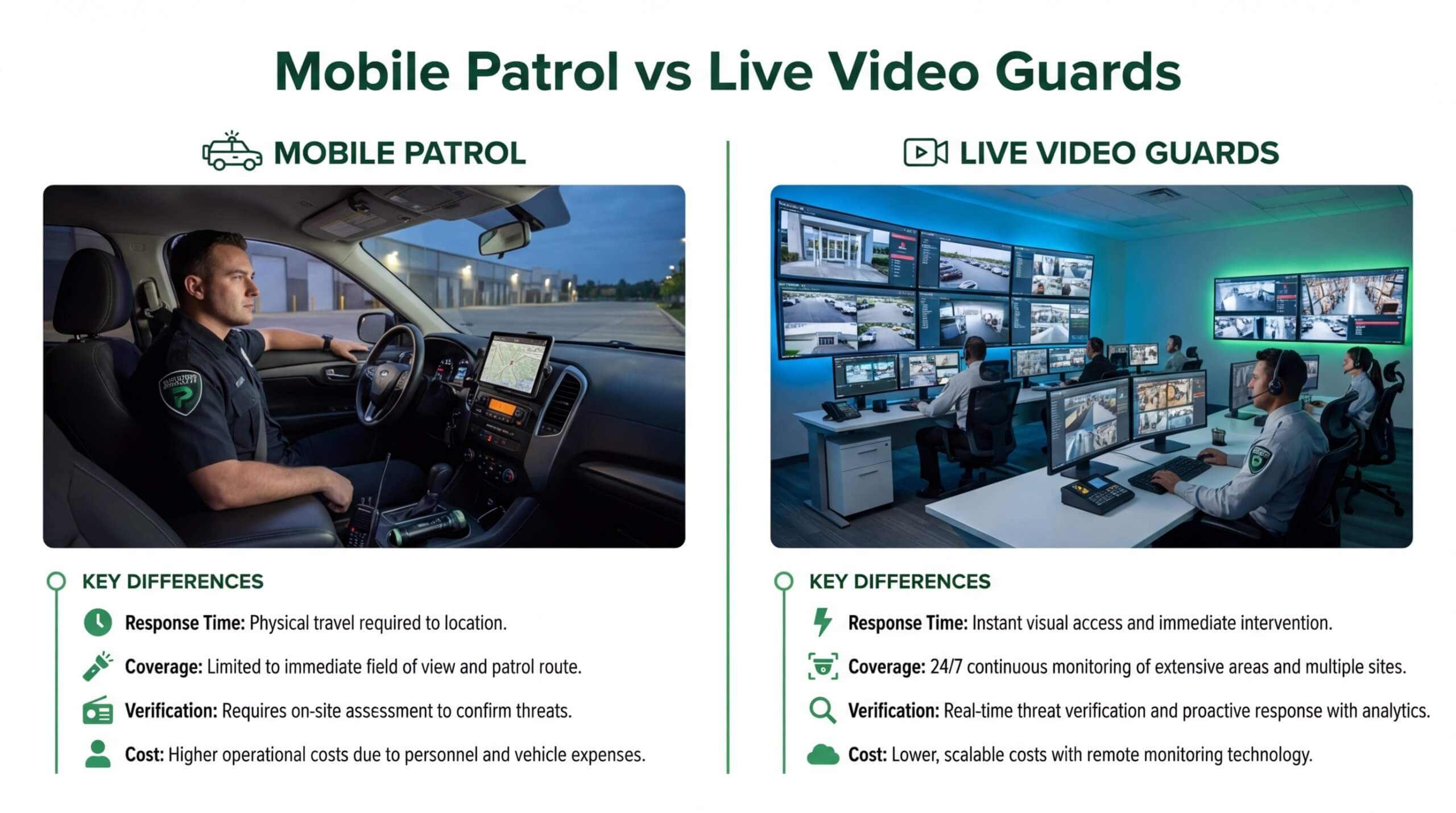
Monitoring centers respond to security alerts by receiving a triggered signal, verifying the event, and dispatching emergency services, typically within minutes. According to the Boulder Police Department’s 2024 Annual Report, the median police response time was 6 minutes and 18 seconds, making early alert verification by monitoring centers critical to closing the gap before officers arrive. A verified alarm, one confirmed by a human operator rather than an automated signal alone, typically receives faster police prioritization than an unverified trigger. This speed advantage is where professional monitoring earns its value most clearly.
What Is the Difference Between Passive Recording and Live Monitoring?
The difference between passive recording and live monitoring is that passive recording stores footage for later review, while live monitoring involves trained operators watching feeds in real time and acting on what they see. According to the U.S. Nuclear Regulatory Commission’s NUREG-1959, a PIR sensor detects radiated thermal energy and can trigger an alarm on a temperature difference as small as 1 degree Celsius, including from small animals. Passive systems log that trigger silently. Live monitoring operators evaluate it immediately, filtering false alarms and escalating genuine threats without delay.
How Does US-Based Live Video Monitoring Improve Response Outcomes?
US-based live video monitoring improves response outcomes by placing trained, domestic operators, not automated bots or offshore call centers, between a triggered sensor and a 911 dispatch. According to the U.S. Department of Justice, active monitoring involves authorized personnel watching live camera feeds and relaying suspect descriptions, vehicle details, and escape directions directly to patrol officers. This real-time intelligence transforms a generic alarm signal into a verified, actionable report. Operators stationed in the US face no language barriers, operate under consistent legal standards, and can dispatch police directly from the monitored address.
How Do You Choose the Right Security Features for Your Home?
Choosing the right security features depends on three factors: home size, local crime rate, and budget. The sections below address each factor and how it shapes your system.
How Does Home Size Affect Which Security Features You Need?
Home size affects which security features you need by determining the number of cameras, sensors, and entry points that require coverage. A small apartment may need only a video doorbell and door sensors, while a large multi-story home requires multiple cameras covering all exterior zones, motion detectors in every room, and a central control panel. Motion-activated cameras begin recording upon detecting activity in a specific area, making them a practical baseline unit for scaling residential coverage. Larger properties benefit from zone-based placement that maps cameras to distinct perimeters rather than relying on a single device.
How Does Your Neighborhood Crime Rate Influence Your System Choice?
Your neighborhood crime rate influences your system choice by setting the threat baseline your security system must meet. According to the Bureau of Justice Statistics, households in urban areas experience property crime, burglary, and theft at rates significantly higher than suburban or rural households, with lower-income households burglarized at the highest rates across all residence types. A Rutgers University School of Criminal Justice study found that an installed burglar alarm makes a dwelling less attractive to would-be intruders without displacing burglaries to neighboring homes. In higher-crime areas, motion-activated exterior lighting and professional monitoring add measurable deterrence beyond basic alarm coverage.
How Does Budget Determine Which State-of-the-Art Features Are Realistic?
Budget determines which state-of-the-art features are realistic by establishing which combination of hardware, monitoring, and smart integration a homeowner can sustain long-term. According to the Center for Problem-Oriented Policing at Arizona State University, the average alarm system installation in the United States costs approximately $1,200, plus roughly $25 per month for professional monitoring. Homeowners with limited budgets should prioritize entry-point sensors, a single high-resolution exterior camera, and encrypted camera storage to protect livestreams and archived footage. As budget allows, adding AI-powered detection and professional 24/7 monitoring raises the system’s capability significantly. The FTC recommends choosing cameras with built-in encryption to protect account data and recorded video from unauthorized access.
With a clear picture of size, crime environment, and budget, the right combination of features becomes straightforward to match to your specific home.
How Does Pioneer Security’s Live Video Monitoring Deliver These Features for Your Home?
Pioneer Security’s live video monitoring delivers these features through AI-powered cameras and US-based human guards. The following sections cover real-time intervention capability and key takeaways from every feature discussed.
Can Pioneer Security’s AI-Powered Live Monitoring Provide Real-Time Intervention at Home?
Yes, Pioneer Security’s AI-powered live monitoring can provide real-time intervention at home. Live Video Guards stationed in the US watch camera feeds and use two-way audio to address trespassers directly before they enter a property. Nvidia GPU-powered AI hubs detect threats and trigger sirens and strobe lights, escalating to verified police dispatch when needed. The Federal Trade Commission recommends choosing cameras that encrypt livestreams and archived footage to prevent unauthorized access. This combination of human judgment and AI automation is, in practice, the most effective deterrent available for residential properties today.
What Are the Key Takeaways About the Top 5 State-of-the-Art Home Security Features We Covered?
The key takeaways about the top 5 state-of-the-art home security features are that each layer of protection compounds the others. The five features work together as follows:
- AI-powered video surveillance identifies and classifies threats, reducing false alarms and enabling faster verified responses.
- Smart motion detection filters out pets and environmental triggers, alerting homeowners only to genuine activity.
- Remote access and mobile control lets homeowners arm, disarm, and view live feeds from anywhere via smartphone.
- Smart home integration connects locks, lighting, and sensors into a unified, automated defense layer.
- Professional 24/7 monitoring ensures a trained human or AI system is always watching, even when homeowners are unavailable.
Pioneer Security combines all five into a single, cohesive system, backed by over 45 years of experience in the security industry.