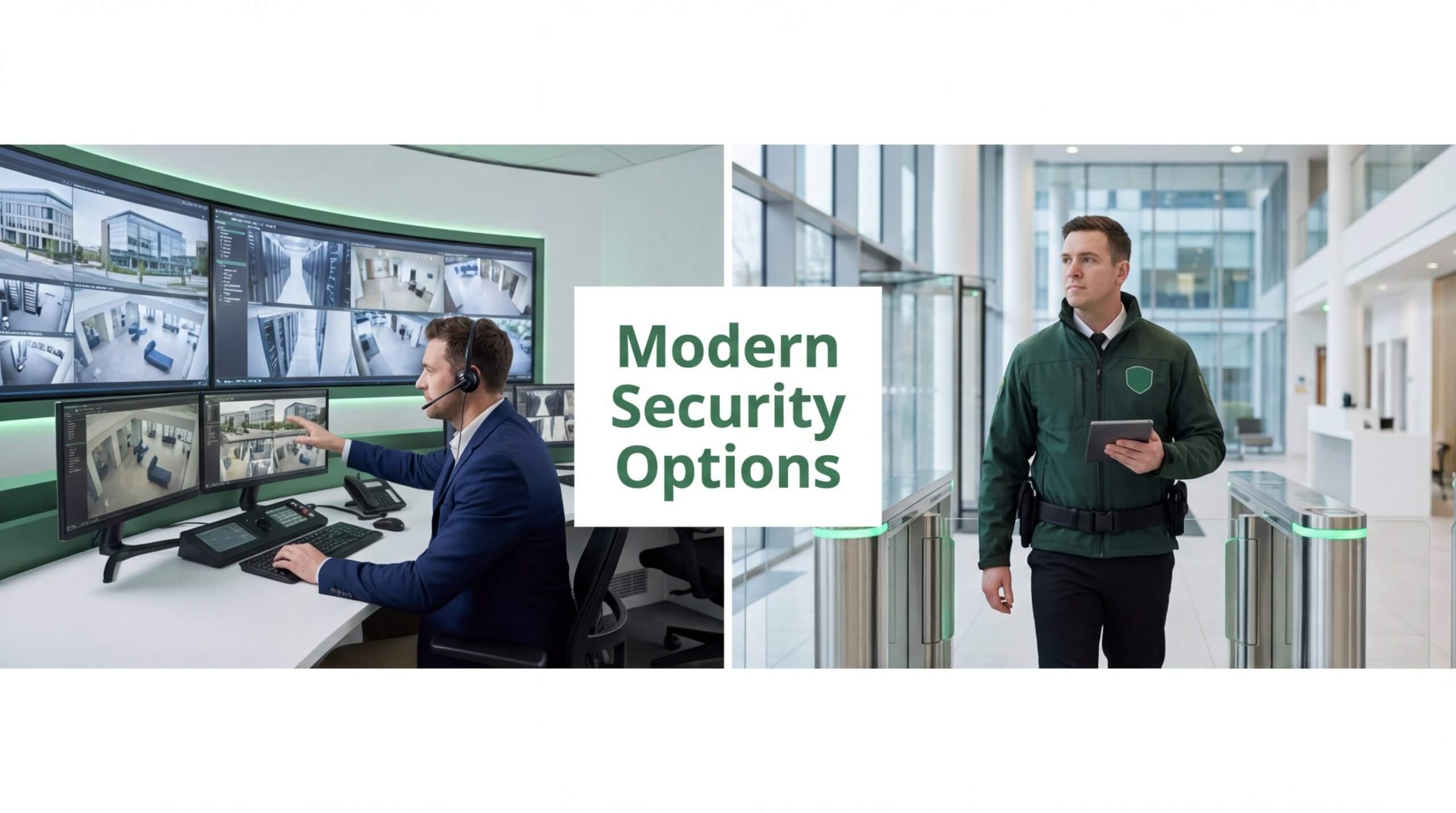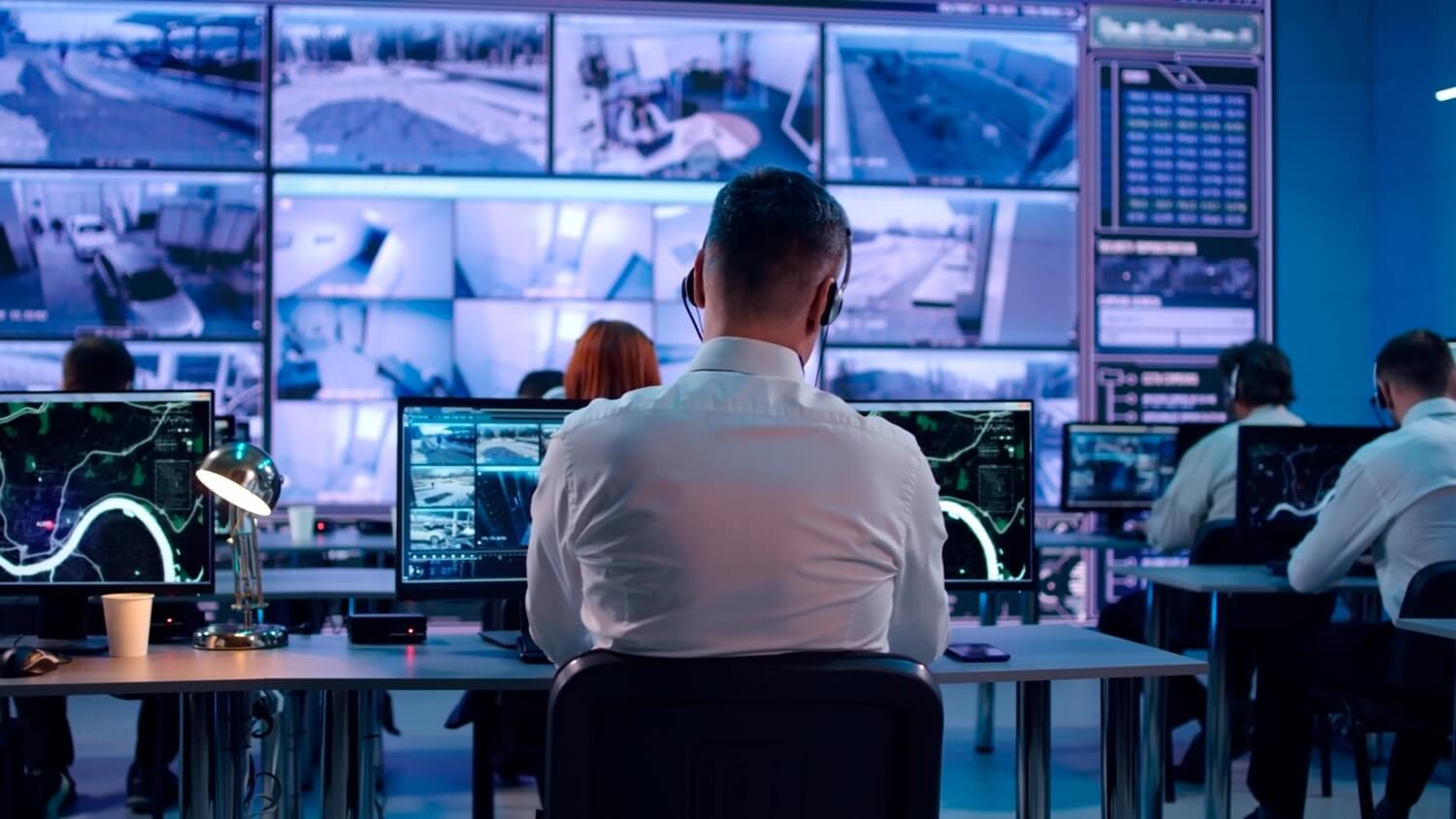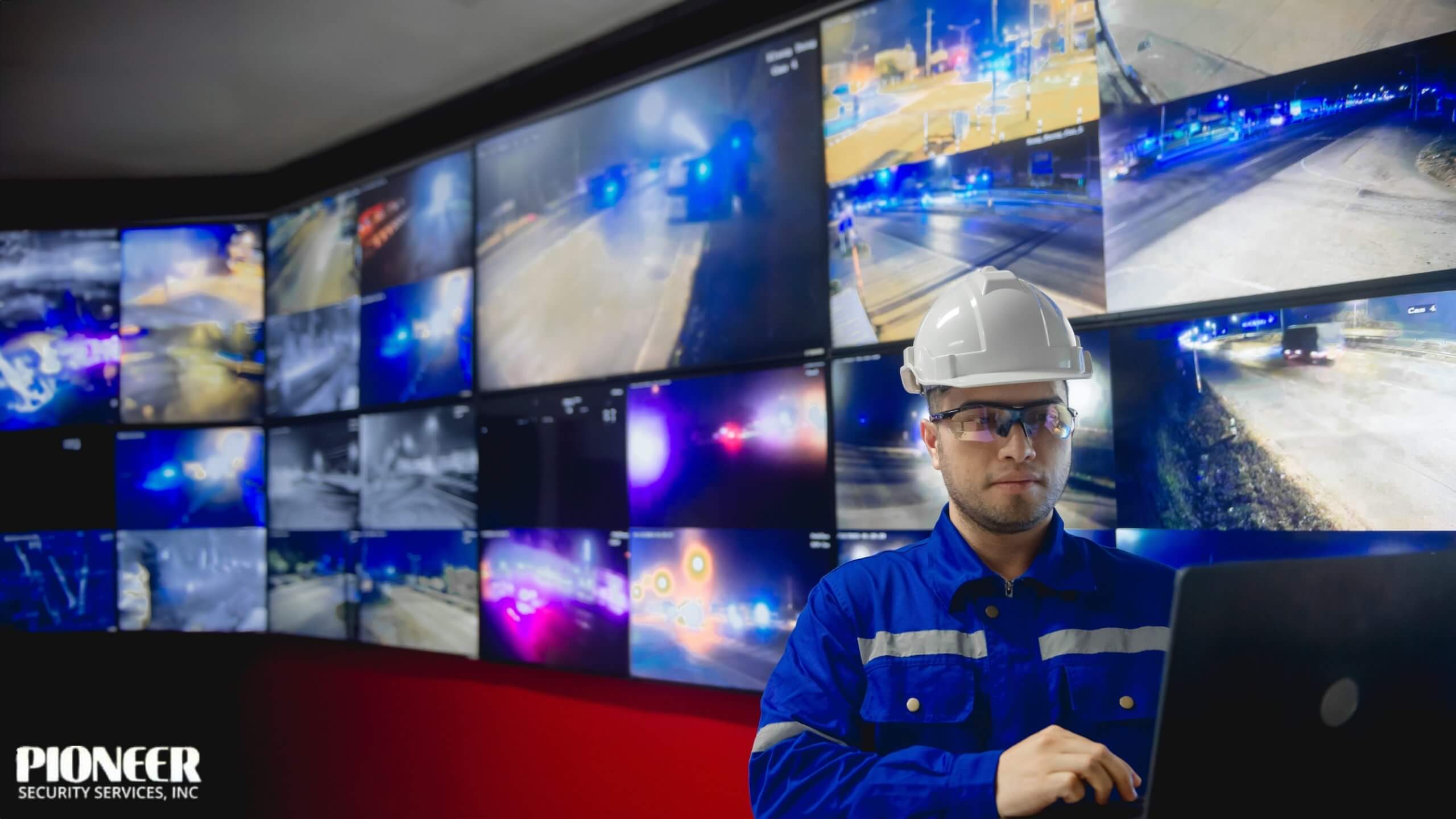
Live monitoring for workplace safety is a security approach that combines real-time video feeds, trained human operators, and AI-powered analytics to detect and respond to hazards as they happen. This guide covers the technology behind live monitoring systems, the financial and regulatory forces driving workplace safety investment, real-time hazard detection across multiple risk categories, liability reduction through intervention and documentation, industry-specific applications, ROI and cost savings, and provider selection criteria.
AI-enhanced cameras using deep neural networks now identify PPE violations, unauthorized access, and environmental hazards across dozens of feeds simultaneously, while human operators handle judgment calls and two-way audio intervention. U.S. businesses spend over $58 billion annually on workplace injuries, and tightening OSHA enforcement alongside rising litigation costs make reactive security increasingly expensive compared to prevention-focused systems.
Live monitoring detects physical safety violations, slip and fall risks, equipment misuse, and employee misconduct in real time, though compliance with state-specific privacy laws remains essential to avoid significant fines. For liability reduction, real-time intervention closes the gap between near-miss and recordable injury, while authenticated video footage serves as admissible evidence in dispute resolution and workers’ compensation proceedings.
Construction, warehousing, retail, manufacturing, and healthcare each face distinct hazards where continuous visual oversight prevents injuries that periodic audits miss. AI safety systems on construction sites have driven substantial reductions in fall-from-height incidents, and 24/7 monitoring has enabled measurable decreases in PPE non-compliance across industrial environments.
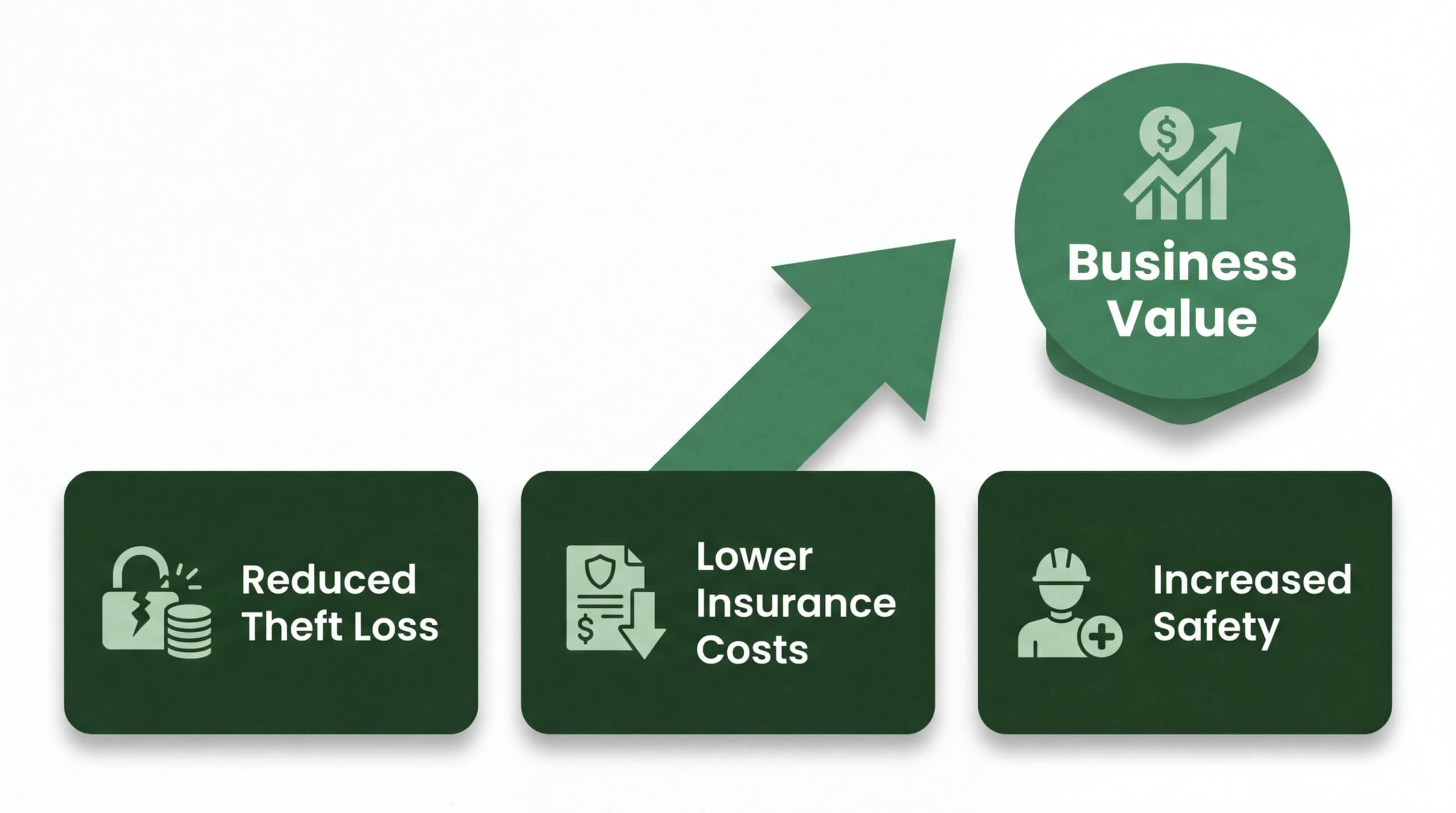
Financially, businesses adopting AI video analytics can achieve payback within months, earn 5% to 20% insurance premium reductions, and eliminate costly false alarm dispatches. Selecting a provider with US-based human operators, uninterrupted coverage, and AI-assisted detection ensures that speed of response matches the urgency workplace safety demands.
What Is Live Monitoring for Workplace Safety?
Live monitoring for workplace safety is a security approach that uses real-time video feeds, trained operators, and AI analytics to detect hazards as they happen. The subsections below cover how it differs from recorded surveillance, the core technology behind it, and how AI elevates its capabilities.
How Does Live Monitoring Differ From Recorded Surveillance?
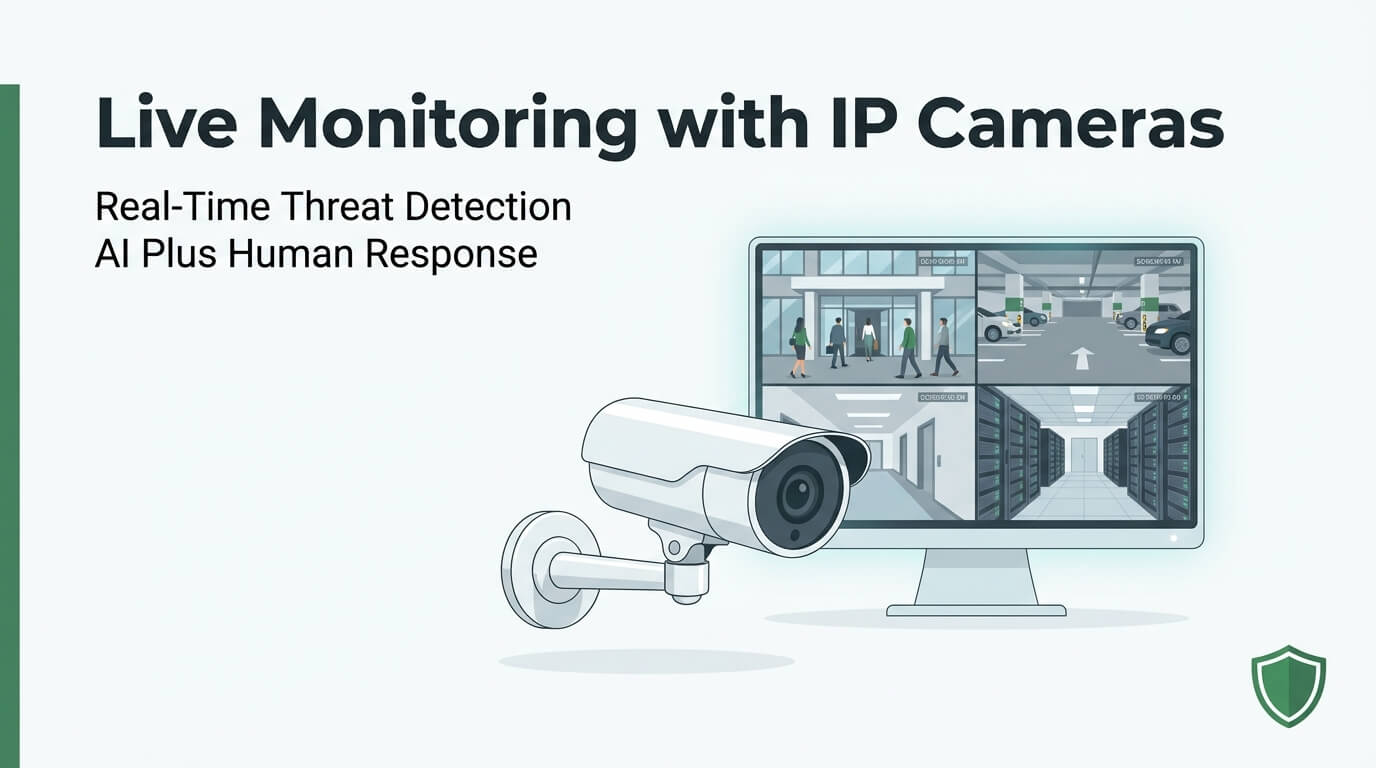
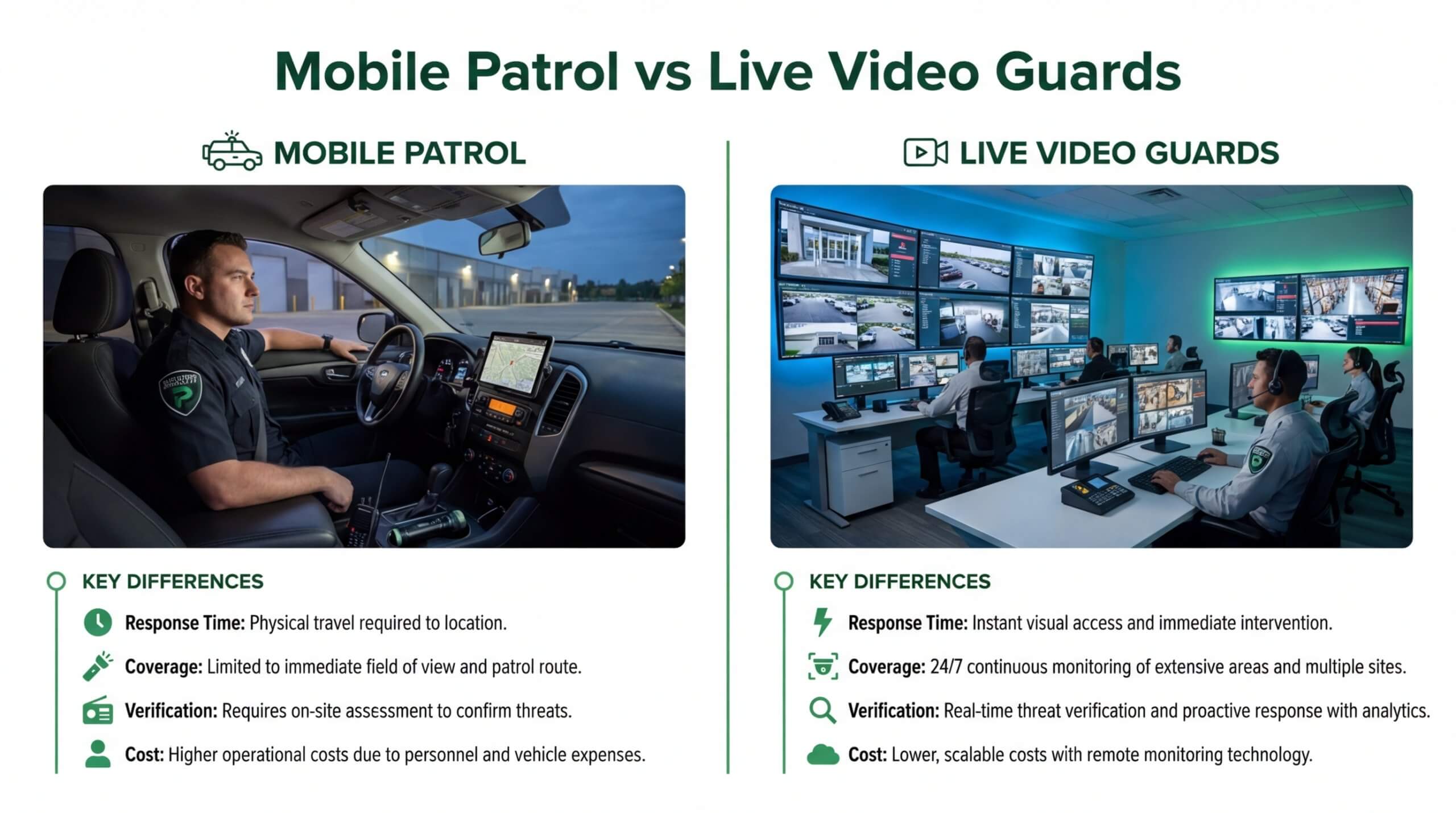
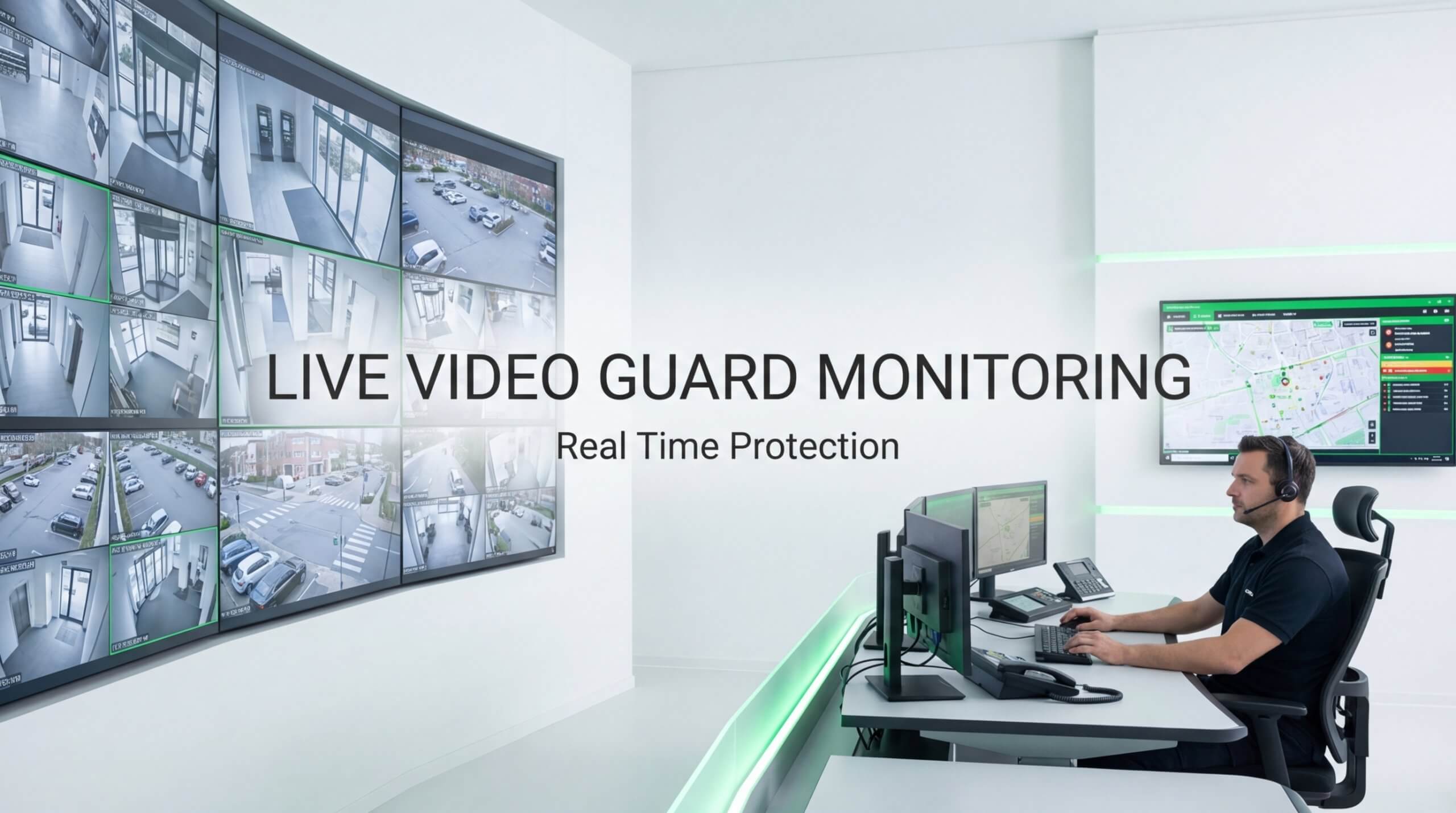
Live monitoring differs from recorded surveillance by enabling real-time human observation and immediate response, rather than reviewing footage after an incident has already occurred. Recorded systems capture events passively; live monitoring allows operators to intervene the moment a safety violation or hazard appears on screen.
Cloud-based platforms have widened this gap further. According to Wasabi, cloud surveillance places video elements onto a cloud platform where cameras feed data into a cloud-hosted VMS, letting administrators access files from any internet browser with no capital expense. This accessibility means safety managers can oversee multiple job sites simultaneously from any location, something traditional recorded systems simply cannot match.
For businesses serious about prevention rather than post-incident review, that distinction is critical.
What Technology Powers Real-Time Live Monitoring Systems?
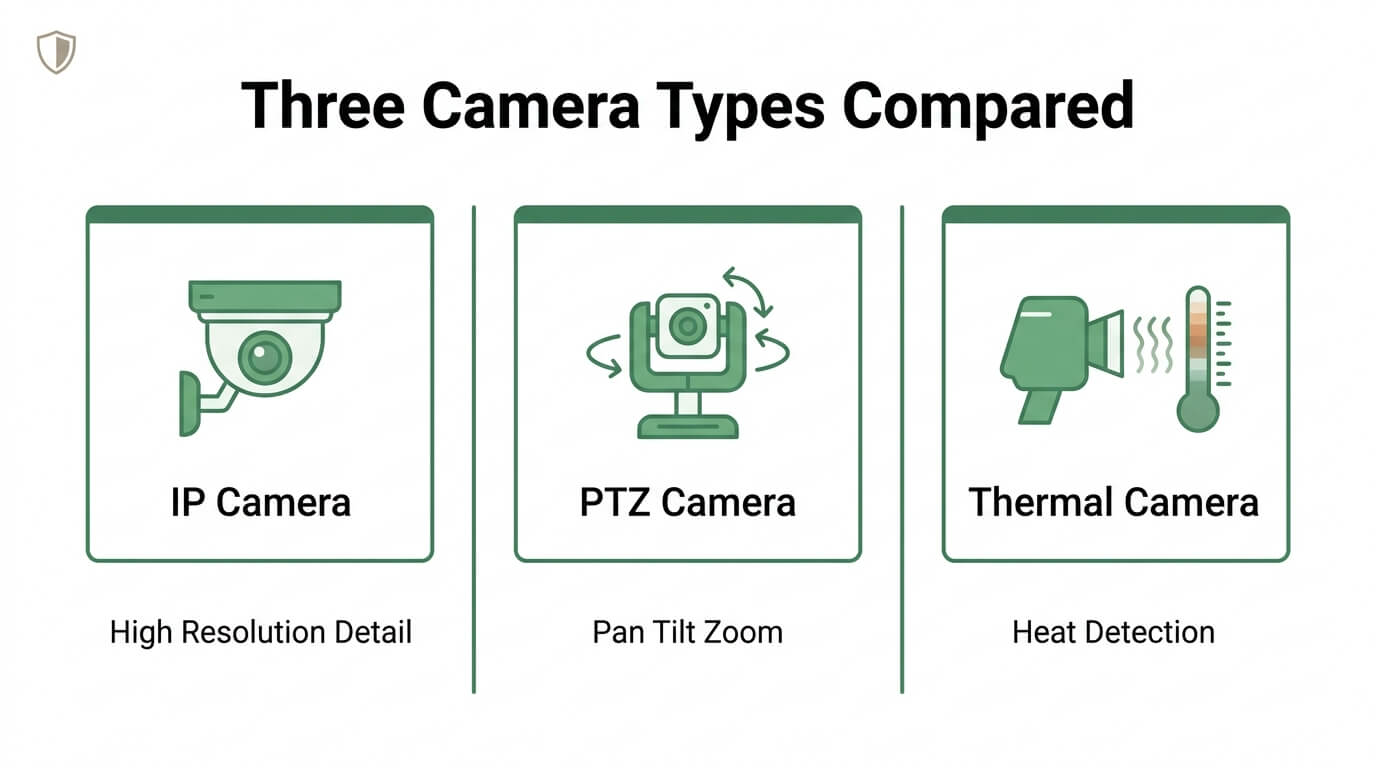
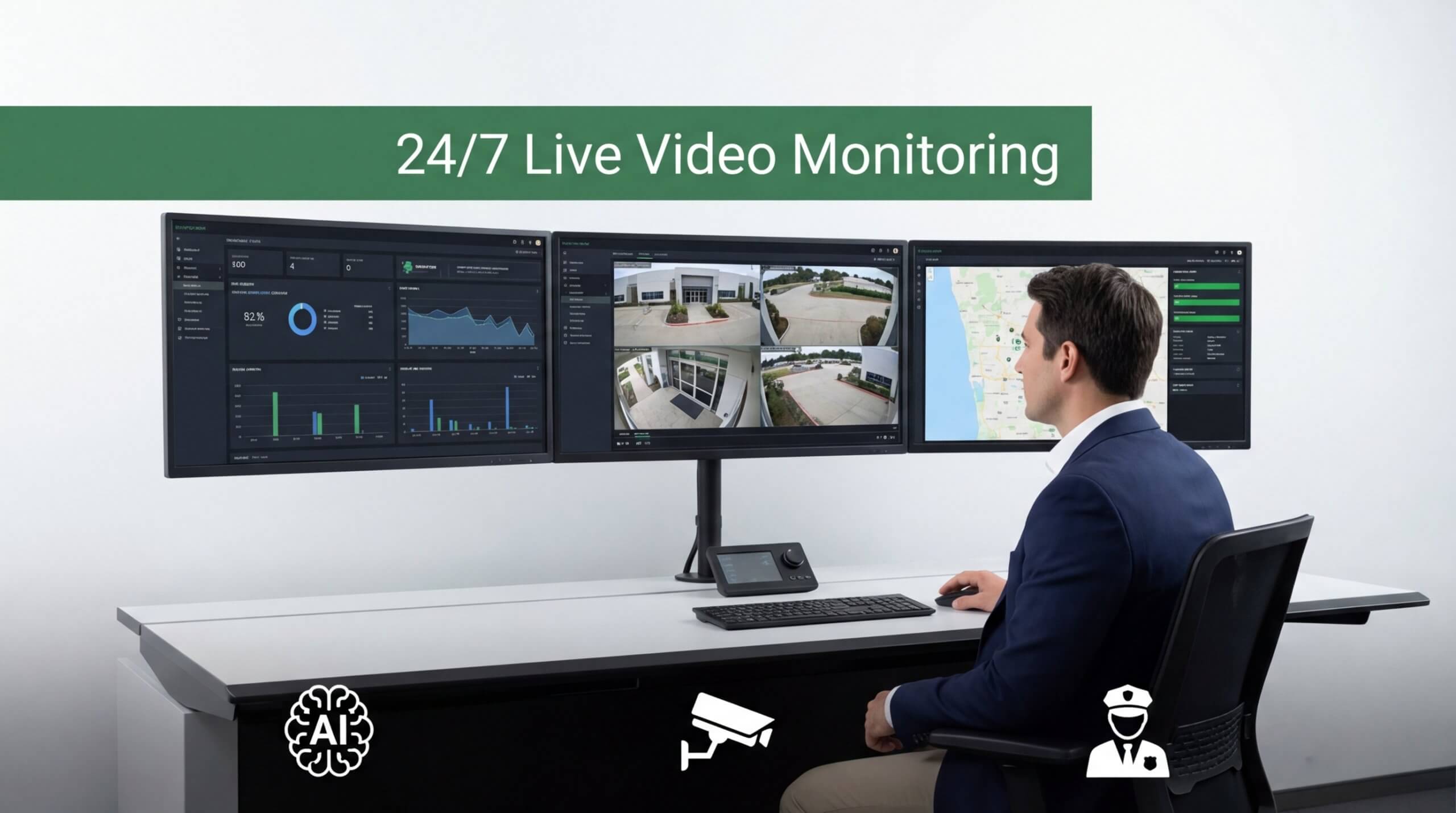
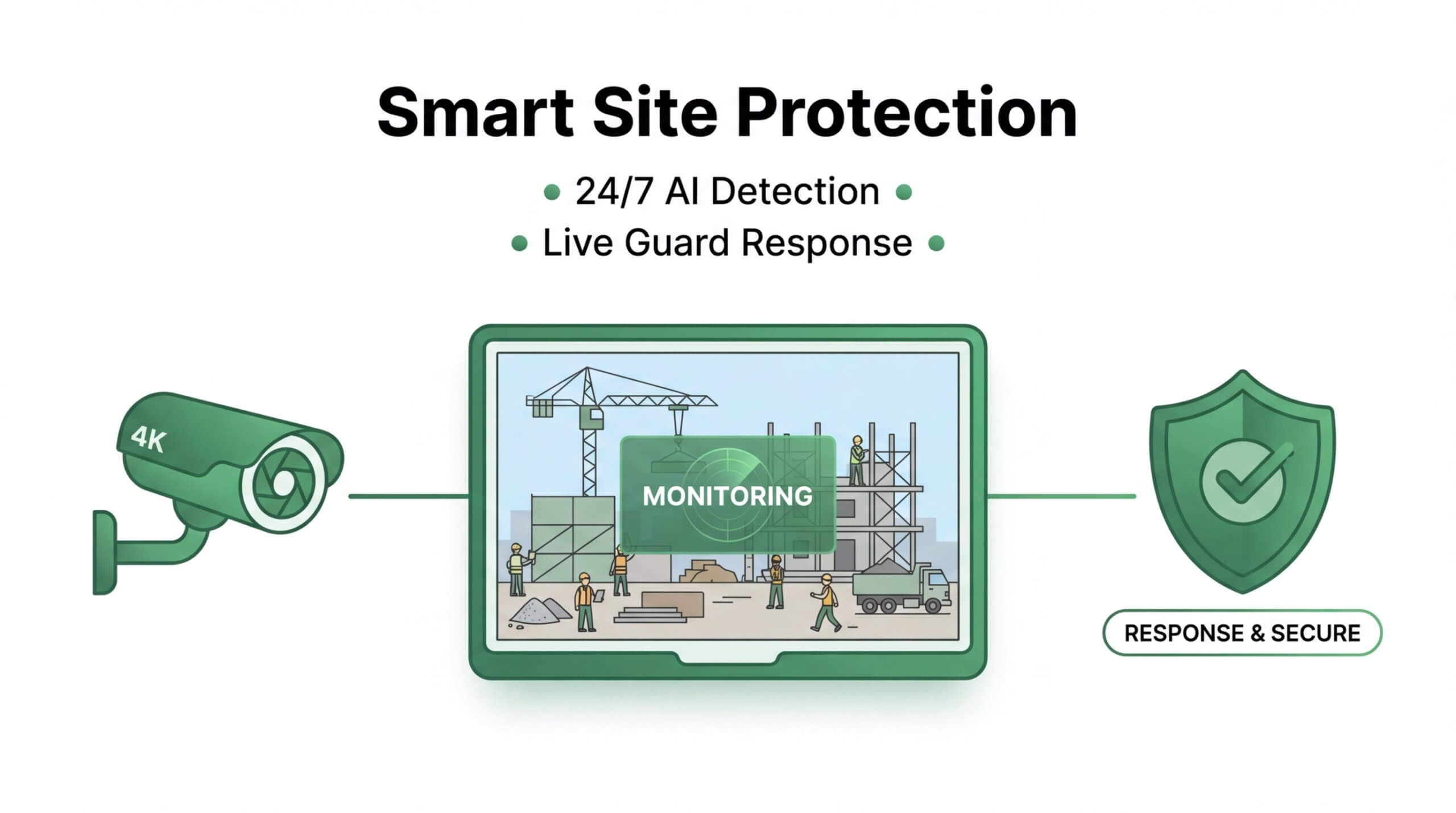
Real-time live monitoring systems are powered by a combination of networked IP cameras, cloud-hosted video management software, AI-driven analytics, and human monitoring operators working in concert. High-resolution cameras, often 4K or 8MP, capture continuous footage streamed to centralized monitoring stations.
The core components include:
- IP camera networks that transmit encrypted video over Power-over-Ethernet connections.
- Cloud-hosted VMS platforms that aggregate feeds for browser-based access without on-site servers.
- AI-powered processing hubs using GPU acceleration to run real-time object detection and pattern recognition.
- Two-way audio systems that let operators issue verbal warnings directly through on-site speakers.
- Mobile integration allowing supervisors to receive instant alerts and view feeds remotely.
Each layer builds on the last, creating a system where detection, analysis, and response happen within seconds rather than hours.
How Does AI Enhance Live Video Monitoring in the Workplace?
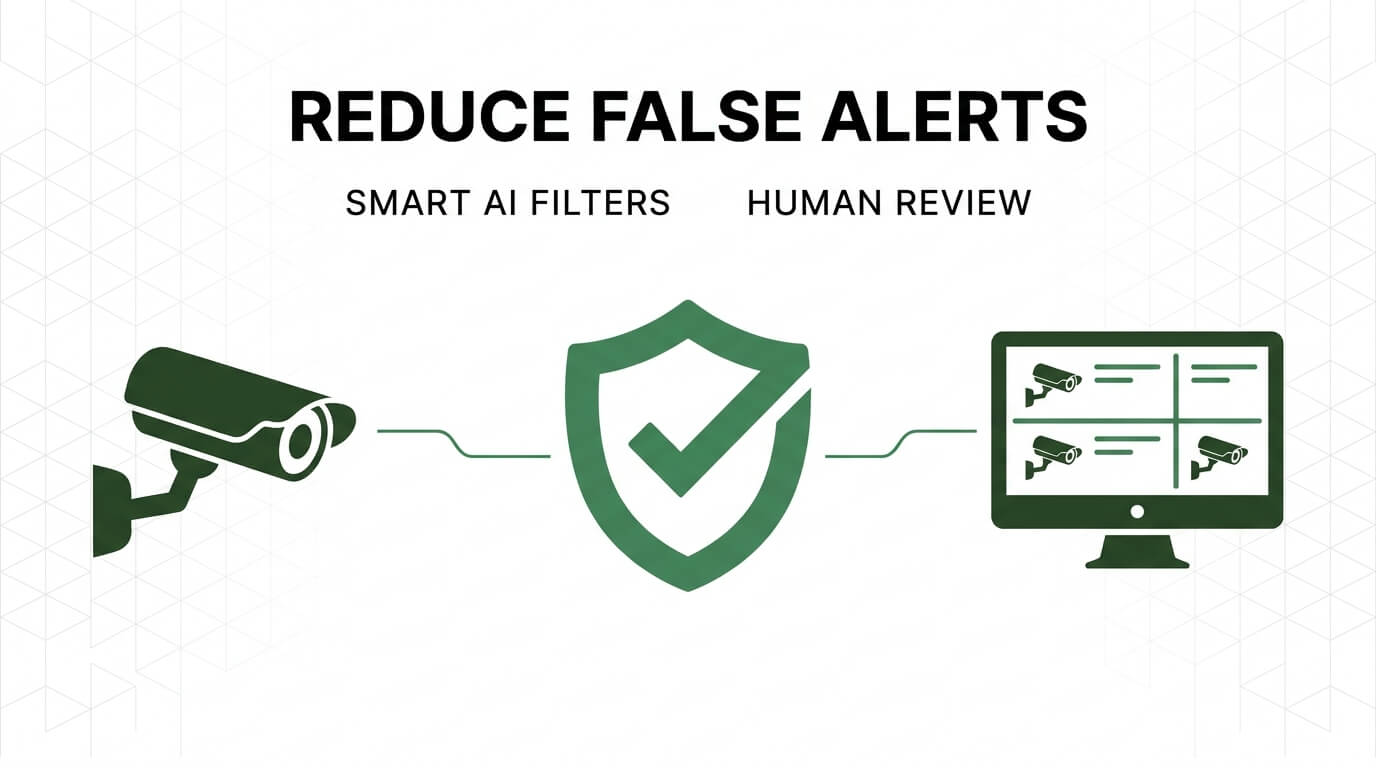
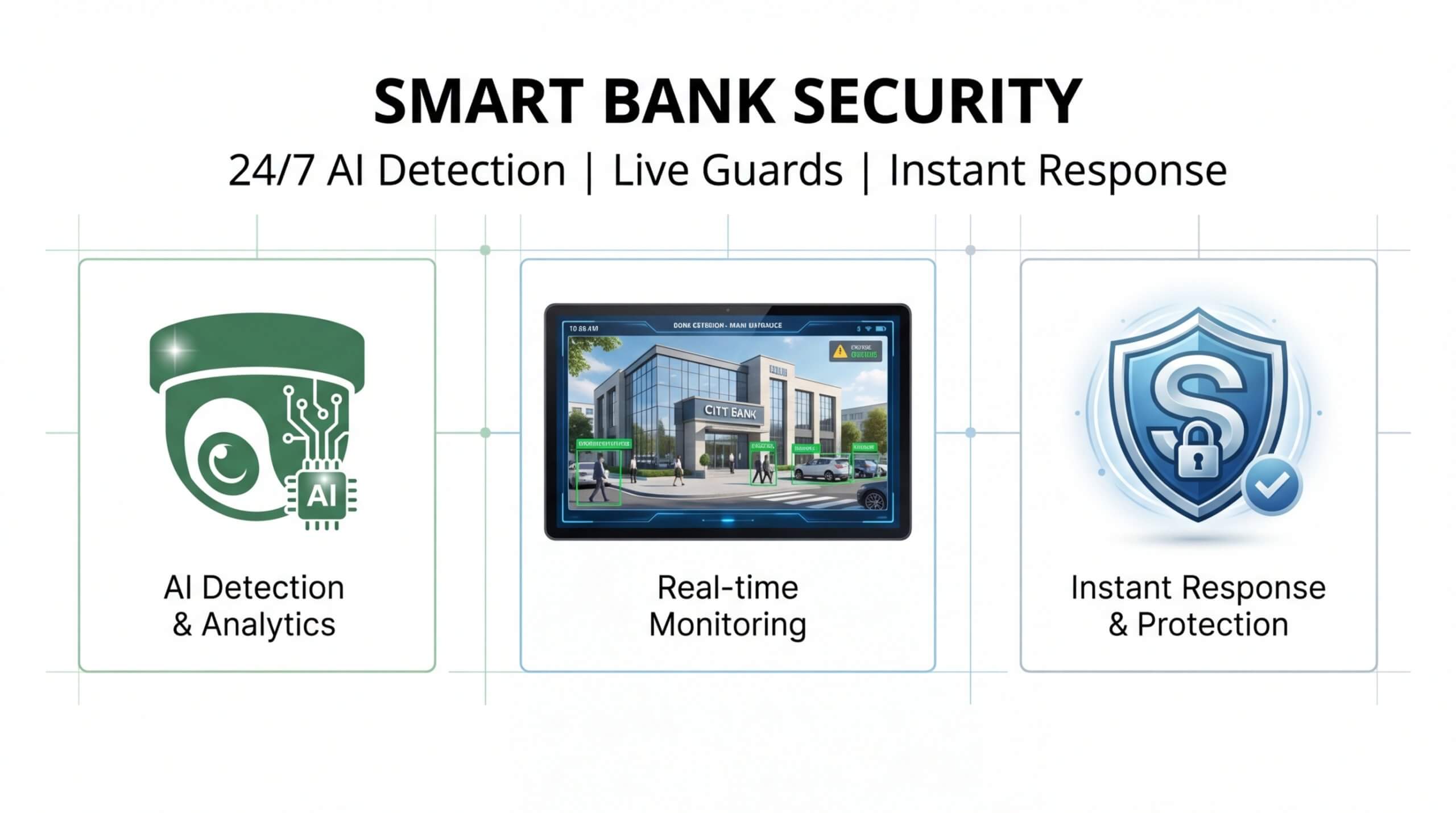
AI enhances live video monitoring in the workplace by automating threat detection, filtering false alarms, and enabling faster operator response to genuine safety events. Rather than requiring a human to watch every camera feed continuously, AI flags anomalies so operators focus only on verified concerns.
According to Euristiq, AI-powered video content analysis has made a significant leap forward through Deep Neural Networks, which identify specific objects and recognize particular patterns without human intervention. In practice, this means the system can detect a missing hard hat, an unauthorized person in a restricted zone, or unusual movement patterns, then instantly alert a trained operator.
AI also reduces costly false alarms, which can range from $25 to $200 per incident in some areas. By filtering routine activity from genuine threats, AI-assisted monitoring keeps response teams focused on real risks.
With the foundational technology defined, the next section examines why workplace safety demands this level of attention.
Why Is Workplace Safety a Growing Concern for Businesses?
Workplace safety is a growing concern for businesses because the financial and human costs of preventable injuries continue to escalate. The scale of these losses, combined with tightening regulations and rising insurance premiums, makes proactive safety investment a strategic priority.
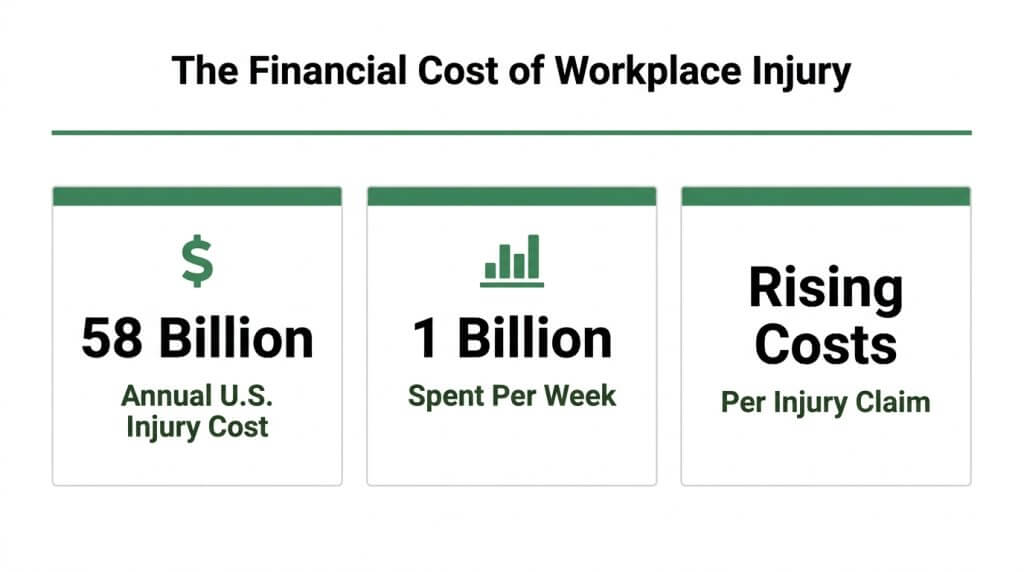
According to Liberty Mutual’s 2024 Workplace Safety Index, U.S. businesses spend more than $1 billion per week on workplace injuries, totaling over $58 billion annually. These costs encompass medical expenses, lost productivity, legal fees, and workers’ compensation payouts. Even with incident rates declining over the past several decades, the per-incident cost burden has grown substantially as healthcare and litigation expenses climb.
Beyond direct financial losses, businesses face reputational damage, employee turnover, and regulatory penalties when safety lapses occur. OSHA enforcement actions can result in significant fines, while repeated incidents erode workforce morale and make it harder to attract skilled employees. For many organizations, the question is no longer whether to invest in safety infrastructure but how quickly they can implement systems that prevent incidents before they happen. This urgency is driving businesses toward real-time monitoring solutions capable of identifying and addressing hazards as they emerge.
What Types of Workplace Hazards Can Live Monitoring Detect?
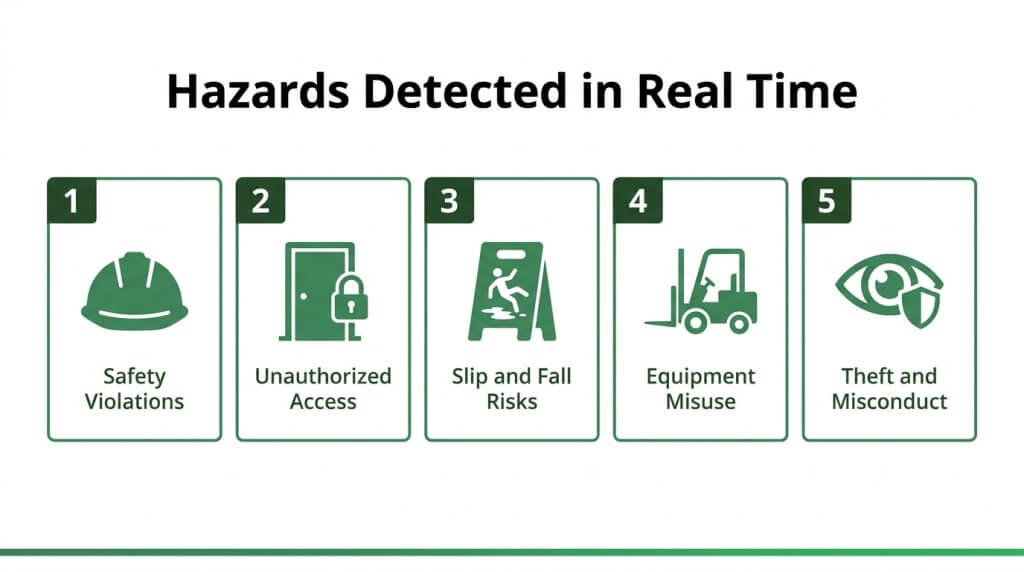
Live monitoring detects a broad range of workplace hazards in real time, from physical safety violations to theft and misconduct. The following sections cover specific hazard categories: physical safety violations, unauthorized access, slip and fall risks, equipment misuse, and employee misconduct.
How Does Live Monitoring Identify Physical Safety Violations?
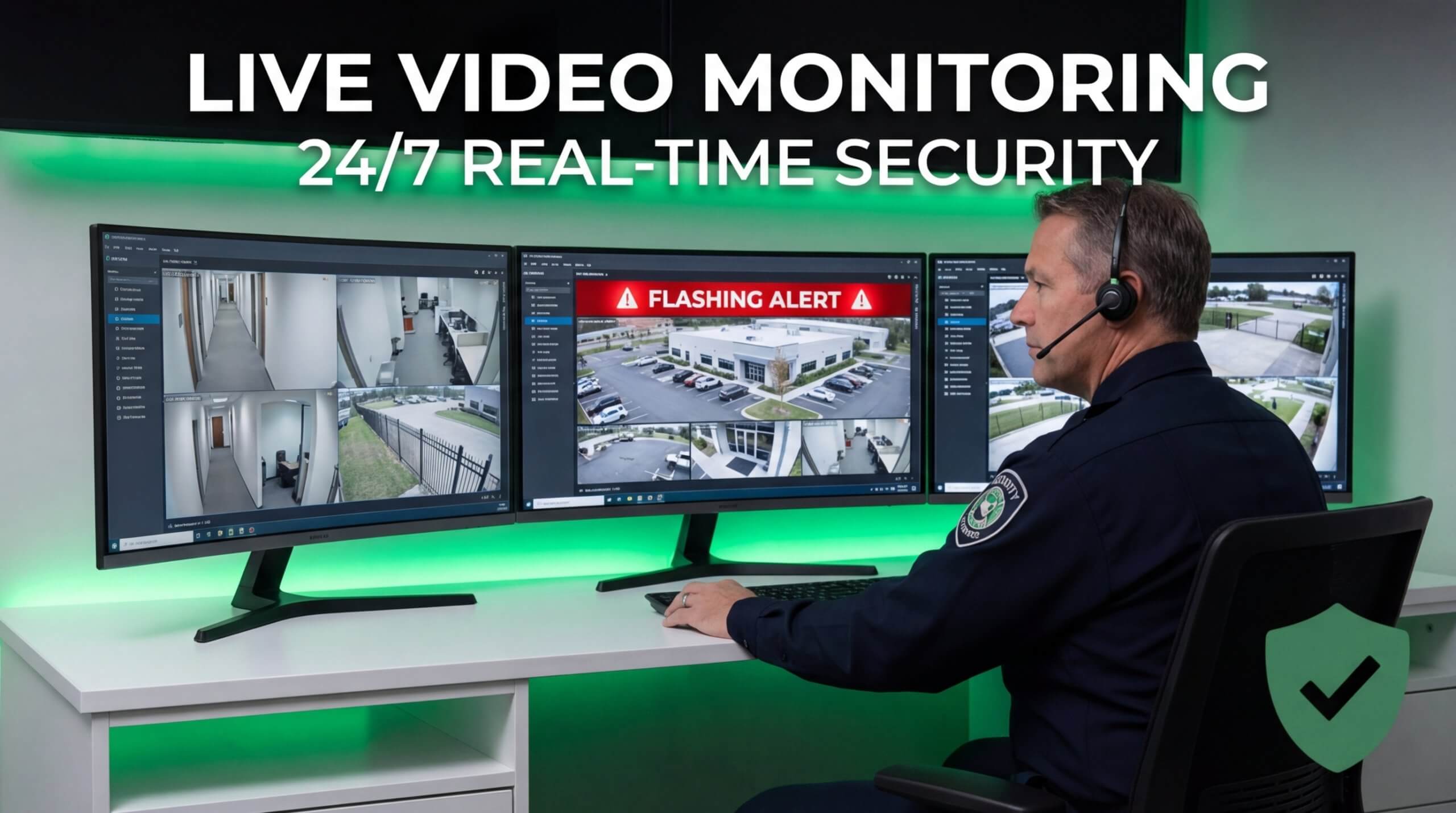
Live monitoring identifies physical safety violations by using AI-driven video analytics to scan work areas continuously for non-compliance. Cameras equipped with deep learning algorithms detect missing hard hats, absent safety vests, and improper harness use the moment a worker enters a monitored zone. When the system flags a violation, trained operators receive an instant alert and can issue corrective instructions through two-way audio before an injury occurs.
This real-time feedback loop closes the gap between violation and correction, which is often the difference between a near-miss and a recordable incident. For high-risk environments, that speed of intervention is arguably the single most valuable capability live monitoring offers.
How Does Live Monitoring Catch Unauthorized Access in Real Time?
Live monitoring catches unauthorized access in real time by combining AI-powered video content analysis with human operator verification. According to Euristiq, deep neural networks now allow systems to identify specific objects and recognize particular patterns without human intervention, meaning an unfamiliar individual approaching a restricted area triggers an automated alert before they reach the entry point.
Operators then verify the alert through live video, challenge the individual via two-way audio, and escalate to law enforcement if necessary. This layered approach prevents tailgating, after-hours intrusions, and entry into hazardous zones where untrained personnel face serious risk.
How Does Live Monitoring Detect Slip, Trip, and Fall Risks?
Live monitoring detects slip, trip, and fall risks by analyzing environmental conditions and worker behavior patterns across camera feeds. AI algorithms flag wet floors, obstructed walkways, missing guardrails, and workers operating near unprotected edges. Rather than waiting for someone to report a spill or a displaced safety barrier, the system identifies these conditions as they develop.
Operators can then direct on-site personnel to address the hazard immediately, whether that means deploying wet floor signage, clearing debris from a pathway, or halting work near an unsecured ledge. Given that slips, trips, and falls consistently rank among the most common and costly workplace injuries, early detection here delivers outsized value.
How Does Live Monitoring Flag Equipment Misuse or Malfunction?
Live monitoring flags equipment misuse or malfunction by tracking operational patterns and comparing them against safe-use baselines. Cameras paired with analytics can detect forklift speeding, improper load handling, unsecured machinery guards, and operators bypassing lockout/tagout procedures.
When the system identifies deviation from established protocols, it alerts monitoring operators who can intervene through audio warnings or notify supervisors directly. Equipment malfunctions that produce visible signs, such as unusual vibrations, smoke, or fluid leaks, can also trigger alerts before a catastrophic failure injures nearby workers. This proactive detection is far more effective than relying solely on post-incident investigation.
How Does Live Monitoring Spot Theft and Employee Misconduct?
Live monitoring spots theft and employee misconduct by providing continuous visual oversight of inventory areas, cash-handling zones, and restricted storage locations. Operators observe behavioral anomalies, such as unauthorized product movement or policy violations, and document incidents with timestamped footage.
However, compliance requirements are critical. According to a 2025 Yaware guide on employee monitoring laws, a single misstep in monitoring compliance can trigger fines exceeding $50,000, especially when operating across multiple states with varying privacy laws. Connecticut General Statute 31-48d, for example, requires employers to provide written notice about all forms of electronic monitoring and prohibits monitoring in break rooms, restrooms, and designated health areas.
Balancing theft deterrence with legal compliance demands careful camera placement and transparent policies. With these hazard categories addressed, the next step is understanding how live monitoring directly reduces employer liability.
How Does Live Monitoring Reduce Employer Liability?
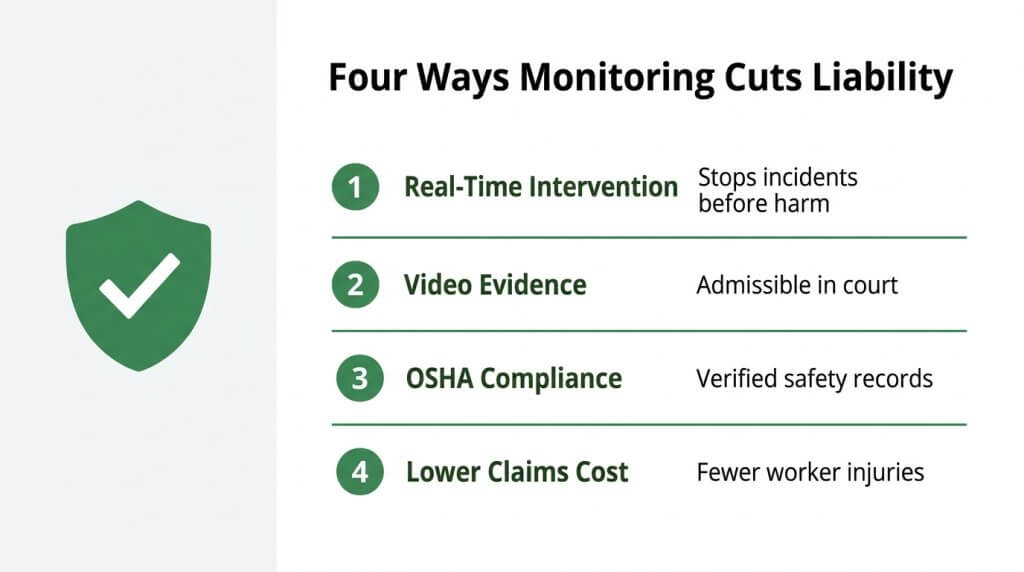
Live monitoring reduces employer liability by enabling real-time intervention, creating admissible video evidence, supporting OSHA compliance, and lowering workers’ compensation costs.
How Does Real-Time Intervention Minimize Incident Severity?
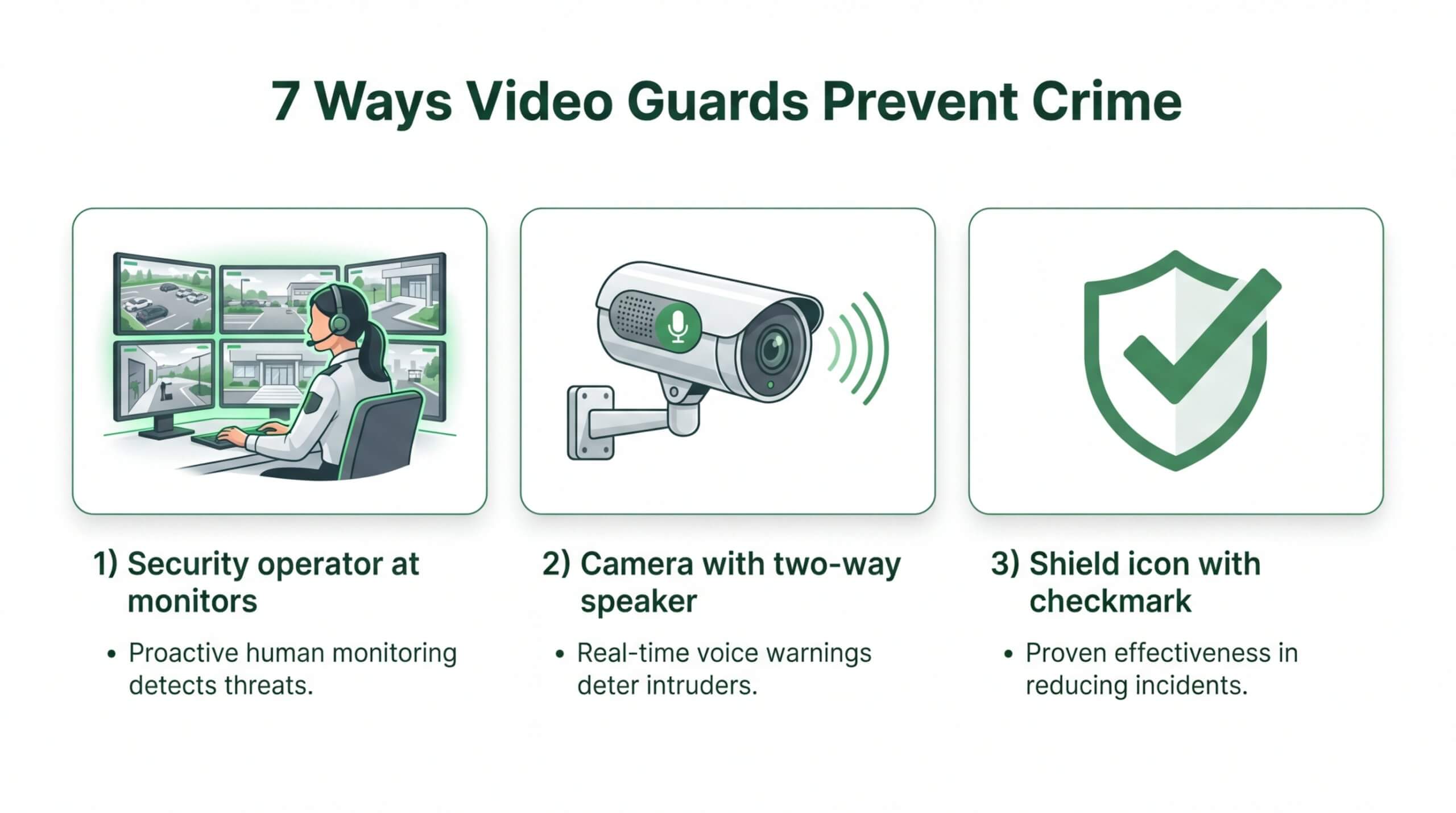
Real-time intervention minimizes incident severity by allowing trained monitoring operators to detect hazards and trigger immediate corrective action before a minor safety lapse escalates into a serious injury. When a worker enters a restricted zone or removes required PPE, live operators can issue two-way audio warnings within seconds.
This speed matters because the window between a near-miss and a recordable injury is often measured in moments. Delayed response, common with recorded-only surveillance reviewed after the fact, eliminates the opportunity to prevent harm. Proactive intervention converts potential claims into corrected behaviors, which directly reduces the frequency and severity of incidents that generate liability exposure.
How Does Documented Video Evidence Protect Against Claims?
Documented video evidence protects against claims by providing a verifiable, time-stamped record of workplace conditions and employee actions at the moment an incident occurs. This record can confirm or refute the circumstances surrounding an injury claim, making it a powerful tool in dispute resolution.
According to Carr Allison, videotapes containing surveillance footage of claimants are admissible for both illustrative and substantive purposes as long as the proper foundation and authentication are established. Employers who maintain continuous, authenticated footage are better positioned to defend against fraudulent or exaggerated claims. Without documented evidence, liability disputes often become one-sided, favoring the claimant’s account by default.
How Does Proactive Monitoring Support OSHA Compliance?
Proactive monitoring supports OSHA compliance by providing continuous visual oversight of safety-critical operations, helping employers document adherence to regulatory standards. Live camera feeds allow safety managers to verify that workers follow required protocols, such as proper PPE usage and safe equipment operation, in real time.
However, cameras have defined regulatory limits. According to SentryPods, OSHA requirements explicitly require a qualified human to observe or signal for cranes and derricks when the operator’s view is obstructed; cameras can support these roles but may not substitute for the qualified signal person. Understanding this distinction is essential for employers who rely on monitoring to demonstrate compliance.
How Does Live Monitoring Lower Workers’ Compensation Costs?
Live monitoring lowers workers’ compensation costs by reducing both claim frequency and claim severity. Fewer incidents result from real-time hazard detection, and documented footage helps resolve disputes faster, limiting drawn-out settlements.
The financial impact compounds over time. Employers with fewer claims build stronger safety records, which insurers reward through lower experience modification rates. A lower mod rate directly reduces annual premium costs, sometimes substantially. For employers spending heavily on reactive injury management, shifting to proactive live monitoring represents one of the most effective strategies for long-term cost control.
With liability exposure reduced across multiple fronts, the next consideration is which industries gain the most from these protections.
What Industries Benefit Most From Live Safety Monitoring?
The industries that benefit most from live safety monitoring include construction, warehousing, retail, manufacturing, and healthcare. Each sector faces distinct hazards where real-time intervention prevents injuries and reduces liability.
How Does Live Monitoring Improve Safety on Construction Sites?
Live monitoring improves safety on construction sites by detecting fall risks, PPE violations, and unauthorized zone entry in real time. Construction ranks among the most hazardous industries, with falls consistently topping the list of fatal workplace events.
AI-powered camera systems can track worker positioning near ledges, open shafts, and scaffolding. According to viAct, deploying an AI safety system to measure serious injury and fatality probability on a Singapore-based construction project helped reduce fall-from-height incidents by 76% within six months. Real-time alerts allow supervisors to intervene before a near-miss becomes a recordable incident, making live monitoring one of the most impactful tools available for high-risk jobsites.
How Does Live Monitoring Protect Warehouse and Logistics Facilities?
Live monitoring protects warehouse and logistics facilities by tracking forklift traffic patterns, loading dock activity, and pedestrian zones simultaneously. These environments combine heavy machinery, elevated storage, and fast-paced movement, creating constant collision and crush risks.
Cameras equipped with AI analytics flag situations such as:
- Forklifts operating too close to pedestrian walkways.
- Workers entering racking zones without proper clearance.
- Blocked emergency exits or fire lanes.
- Improper stacking that creates falling-object hazards.
Operators monitoring feeds in real time can issue two-way audio warnings before collisions occur. For facilities running multiple shifts, round-the-clock coverage ensures safety standards remain consistent regardless of staffing changes.
How Does Live Monitoring Secure Retail and Commercial Properties?
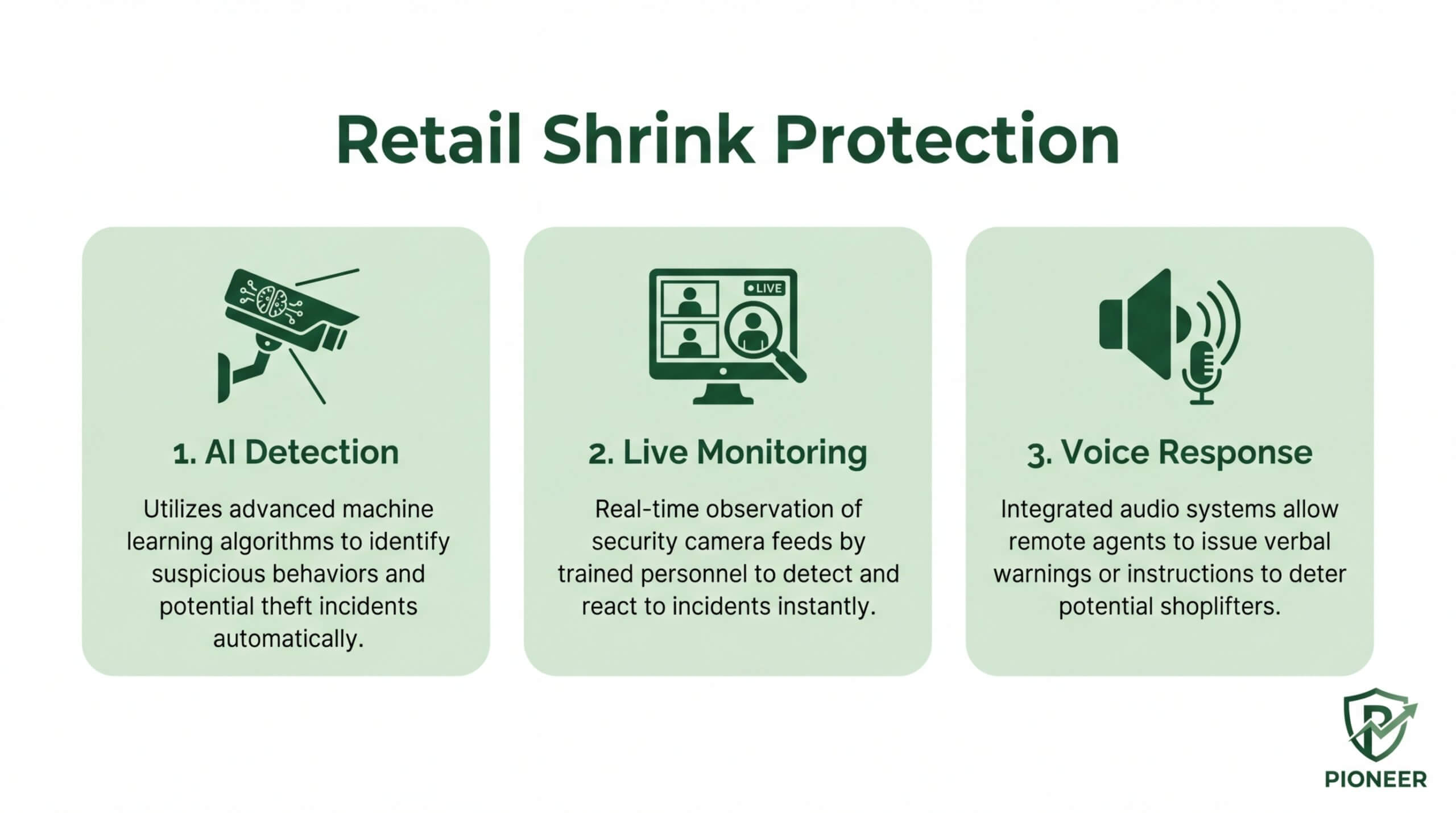
Live monitoring secures retail and commercial properties by combining theft deterrence with occupant safety oversight. Slip-and-fall incidents, aggressive customer encounters, and after-hours intrusions all present liability exposure for property owners.
Real-time video feeds allow monitoring operators to spot wet floors, obstructed aisles, and suspicious behavior as they develop. When an incident does occur, timestamped footage provides documented evidence that supports or refutes claims. For multi-location retailers, centralized cloud-based monitoring enables a single security team to oversee dozens of properties simultaneously. This dual function of loss prevention and safety compliance makes live monitoring particularly cost-effective for commercial operations.
How Does Live Monitoring Safeguard Manufacturing Environments?
Live monitoring safeguards manufacturing environments by detecting equipment misuse, restricted zone breaches, and PPE non-compliance across production floors. Factories involve rotating machinery, chemical exposure risks, and repetitive processes that increase human error over long shifts.
AI-driven cameras can identify workers operating without required safety gear, employees standing inside machine guarding zones, or conveyor systems running while maintenance personnel are nearby. Real-time intervention through audio warnings or supervisor alerts stops unsafe conditions before they cause injuries. For manufacturers balancing high output with strict OSHA requirements, continuous visual oversight bridges the gap between periodic safety audits.
How Does Live Monitoring Enhance Healthcare Facility Security?
Live monitoring enhances healthcare facility security by addressing patient elopement, workplace violence, and restricted area access simultaneously. Hospitals and clinics face unique challenges because they operate 24/7, serve vulnerable populations, and store controlled substances.
Key applications in healthcare settings include:
- Monitoring emergency department entrances for aggressive behavior.
- Tracking access to pharmacy and medication storage areas.
- Detecting patients attempting to leave secured behavioral health units.
- Verifying visitor credentials at after-hours entry points.
Real-time operators can alert on-site security teams within seconds, reducing response times compared to passive alarm systems alone. With workplace violence incidents rising across healthcare settings, proactive live monitoring provides a critical layer of protection for both staff and patients.
What ROI Can Businesses Expect From Live Monitoring Systems?
Businesses can expect significant, measurable ROI from live monitoring systems through faster payback periods, lower insurance costs, and reduced false alarm expenses. The following sections break down specific financial returns.
How Quickly Does Live Monitoring Pay for Itself?
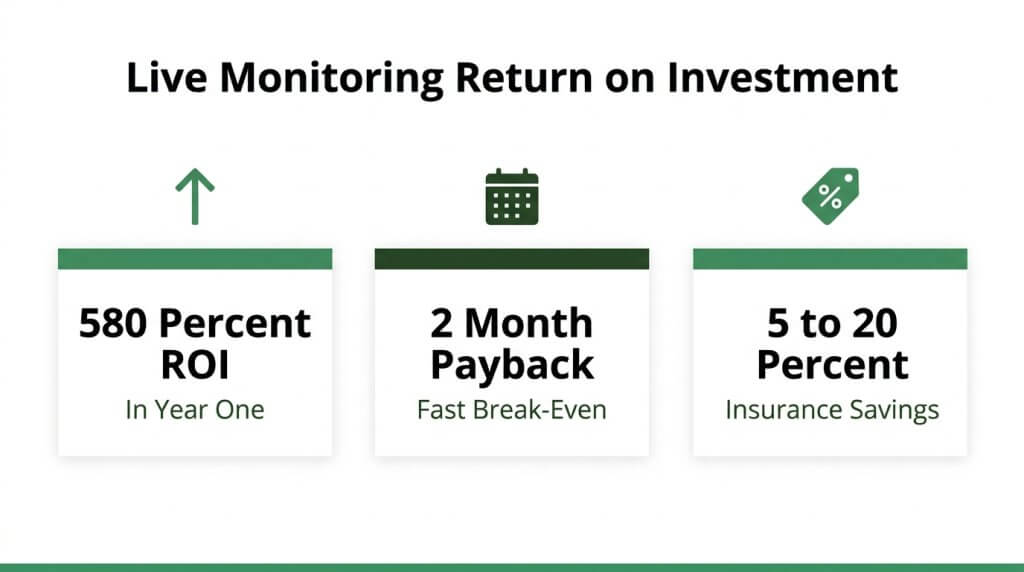
Live monitoring pays for itself within months, not years, for most businesses. According to a 2024 analysis by Superb AI, a manufacturing facility with approximately 100 employees adopting AI video analytics can achieve a net profit of $211,000 in the first year, representing an ROI of approximately 580% with a payback period of just two months.
Several factors accelerate this timeline:
- Eliminated false alarm fines, which can cost $25 to $200 per incident.
- Reduced theft and shrinkage losses through real-time deterrence.
- Lower workers’ compensation claims from proactive hazard detection.
- Decreased security staffing costs compared to on-site guard deployment.
For most commercial facilities, the combination of prevented losses and operational savings makes live monitoring one of the fastest-returning security investments available.
How Much Can Live Monitoring Reduce Insurance Premiums?
Live monitoring can reduce insurance premiums by 5% to 20%, according to Bay Alarm’s ROI analysis. Businesses that install integrated alarm systems with live video monitoring qualify for these discounts, with the exact percentage varying by insurance provider, location, and system capabilities.
These savings compound over time. A business paying $50,000 annually in commercial property and liability insurance could save $2,500 to $10,000 per year. Insurers offer these discounts because verified video monitoring reduces both claim frequency and claim severity, lowering their overall risk exposure. For businesses already evaluating security upgrades, the premium reduction alone can offset a meaningful portion of monthly monitoring costs.
How Does Proactive Monitoring Compare in Cost to Reactive Security?
Proactive monitoring costs significantly less than reactive security over time. Traditional reactive approaches rely on reviewing footage after incidents occur, meaning losses from theft, injuries, and property damage are already realized before any response begins.
Key cost differences include:
- On-site security guards cost $15 to $30 per hour per guard; live monitoring covers entire facilities at a fraction of that rate.
- Reactive systems generate costly false alarm dispatches, while AI-assisted live monitoring filters alerts before they trigger unnecessary responses.
- Incident-related expenses, such as legal fees, medical claims, and operational downtime, accumulate rapidly without real-time intervention.
The proactive model prevents costs rather than managing them after the fact, which is why forward-thinking businesses increasingly treat live monitoring as an operational investment rather than just a security line item.
With clear financial returns established, selecting the right monitoring provider becomes the next critical decision.
What Should You Look for in a Live Monitoring Provider?
You should look for a live monitoring provider that combines US-based human operators, uninterrupted 24/7 coverage, and AI-assisted detection. The sections below break down why each factor matters.
Why Does US-Based Human Surveillance Matter for Response Time?
US-based human surveillance matters for response time because domestically stationed operators eliminate language barriers, reduce communication delays, and maintain familiarity with local emergency dispatch protocols. When a trained operator located in the same country identifies a threat, the chain from detection to police dispatch tightens considerably.
Offshore monitoring centers often introduce latency through overseas routing and cultural or procedural misalignment with US-based 911 systems. Operators who understand regional law enforcement expectations can verify incidents faster, relay precise location details, and provide actionable context to first responders. This verification step is critical; confirmed, real-time threats receive higher priority dispatch compared to unverified automated alerts. For any facility where seconds determine whether an incident escalates or gets contained, domestic human surveillance is a baseline requirement rather than a premium add-on.
How Important Is 24/7 Coverage for Workplace Safety Monitoring?
24/7 coverage is essential for workplace safety monitoring because hazards do not follow business hours. Overnight shifts, weekends, and holiday operations often carry elevated risk due to reduced staffing and lower supervisory presence.
Continuous monitoring ensures that safety violations, unauthorized access, and equipment malfunctions trigger immediate human review regardless of the time. According to Viso.ai, AI vision systems that analyze activity around the clock have enabled a 55% reduction in PPE non-compliance and a 60% decrease in near-miss incidents. These gains depend on persistent coverage; gaps in monitoring create windows where violations go undetected and incidents escalate without intervention. Any provider offering partial-hour coverage leaves facilities exposed during the exact periods when oversight is most needed.
What Role Should AI Play Alongside Human Monitoring Operators?
AI should play a supporting role alongside human monitoring operators by handling continuous pattern detection, filtering false alarms, and flagging anomalies for human review. This division of labor lets technology manage the volume while trained operators handle judgment and response.
AI excels at tasks humans perform inconsistently over long shifts, such as detecting PPE violations across dozens of camera feeds simultaneously or recognizing motion patterns that indicate unauthorized entry. However, AI alone cannot assess context, make dispatch decisions, or communicate with individuals on-site through two-way audio. The strongest monitoring systems pair algorithmic speed with human decision-making. AI reduces operator fatigue by eliminating noise; operators provide the critical thinking that prevents costly false dispatches and ensures proportionate responses. Neither layer alone delivers the reliability that workplace safety demands.
With the right provider criteria in place, the next step is building live monitoring into a broader safety strategy.
How Can Proactive Live Video Monitoring Strengthen Your Safety Strategy?
Proactive live video monitoring strengthens your safety strategy by combining AI-driven threat detection with real-time human intervention to prevent incidents before they escalate. The following sections cover how Pioneer Security delivers this protection and the key takeaways for workplace safety and liability reduction.
Can Pioneer Security’s AI-Powered Live Monitoring Help Prevent Workplace Incidents Before They Occur?
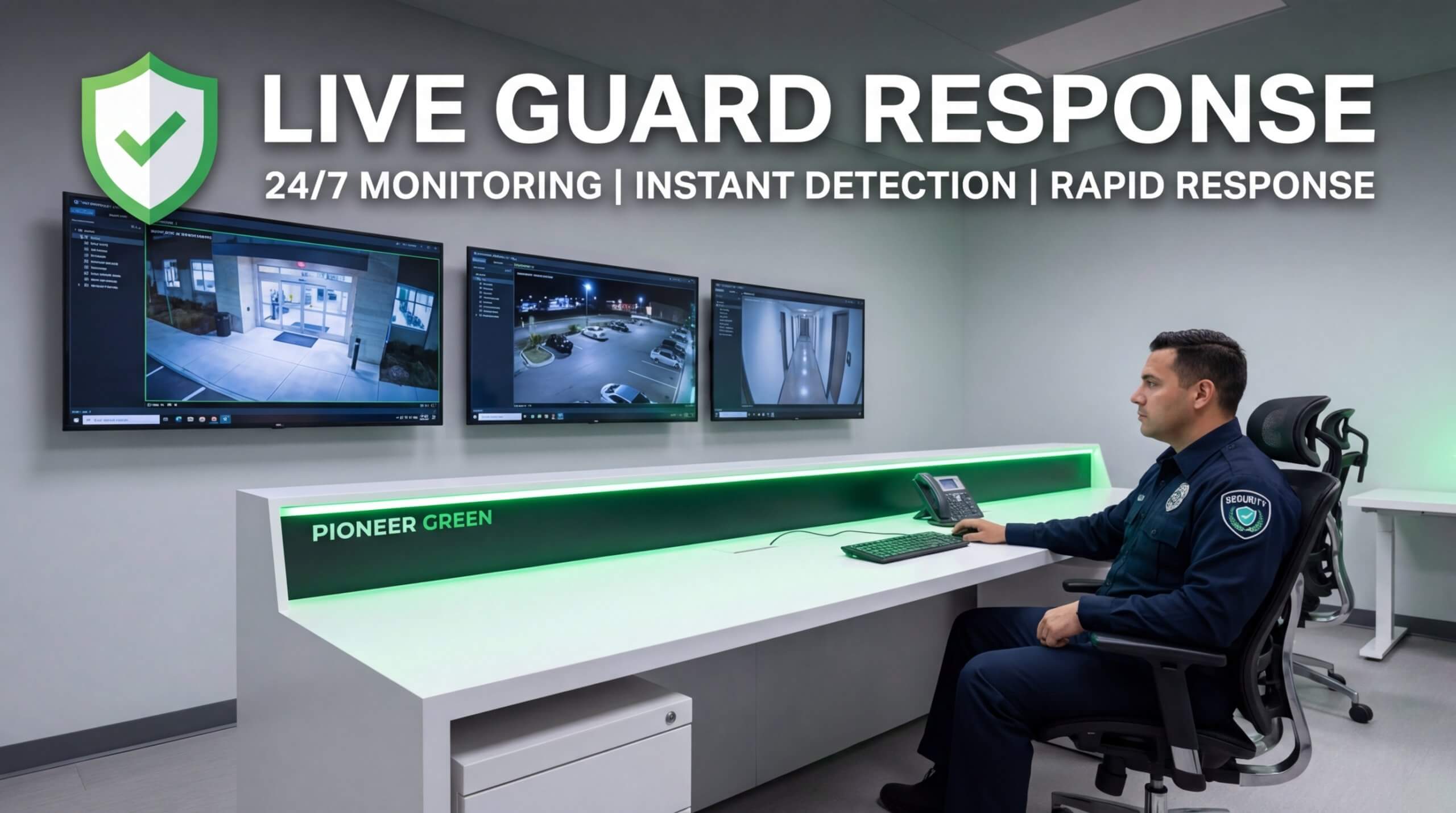
Yes, Pioneer Security’s AI-powered live monitoring can help prevent workplace incidents before they occur. The system pairs Nvidia GPU-powered AI hubs with US-based live video guards who intervene in real time through two-way audio, stopping threats at the point of detection rather than after damage is done.
Pioneer Security’s approach reflects over 45 years of protection expertise, built on the principle of stopping crime before it starts. Key capabilities include:
- AI-driven analytics that flag safety violations, unauthorized access, and hazardous conditions around the clock.
- 4K/8MP cameras with sirens and strobes that deter threats the moment they are identified.
- Real-time human surveillance operators who assess alerts and coordinate responses, including direct 911 dispatch.
For most businesses, the combination of intelligent detection and immediate human judgment is what separates genuine prevention from simple recording. Passive cameras document problems; proactive monitoring solves them in progress.
What Are the Key Takeaways About Live Monitoring for Workplace Safety and Liability Reduction?
The key takeaways about live monitoring for workplace safety and liability reduction center on three principles: prevention outperforms reaction, documentation builds legal protection, and continuous oversight reduces long-term costs.
- Real-time intervention minimizes incident severity by addressing hazards before they cause injuries or property damage.
- Surveillance footage, when properly authenticated, is admissible as both illustrative and substantive evidence in liability claims, according to legal guidance from Carr Allison.
- AI-enhanced monitoring reduces false alarms, lowers insurance premiums, and supports OSHA compliance through verified, continuous observation.
- Proactive systems deliver measurable ROI through fewer workers’ compensation claims, reduced downtime, and lower litigation exposure.
Every workplace carries risk, but the organizations that invest in proactive live monitoring shift from managing consequences to preventing them entirely. Pioneer Security can help build that kind of forward-looking safety strategy from the ground up.