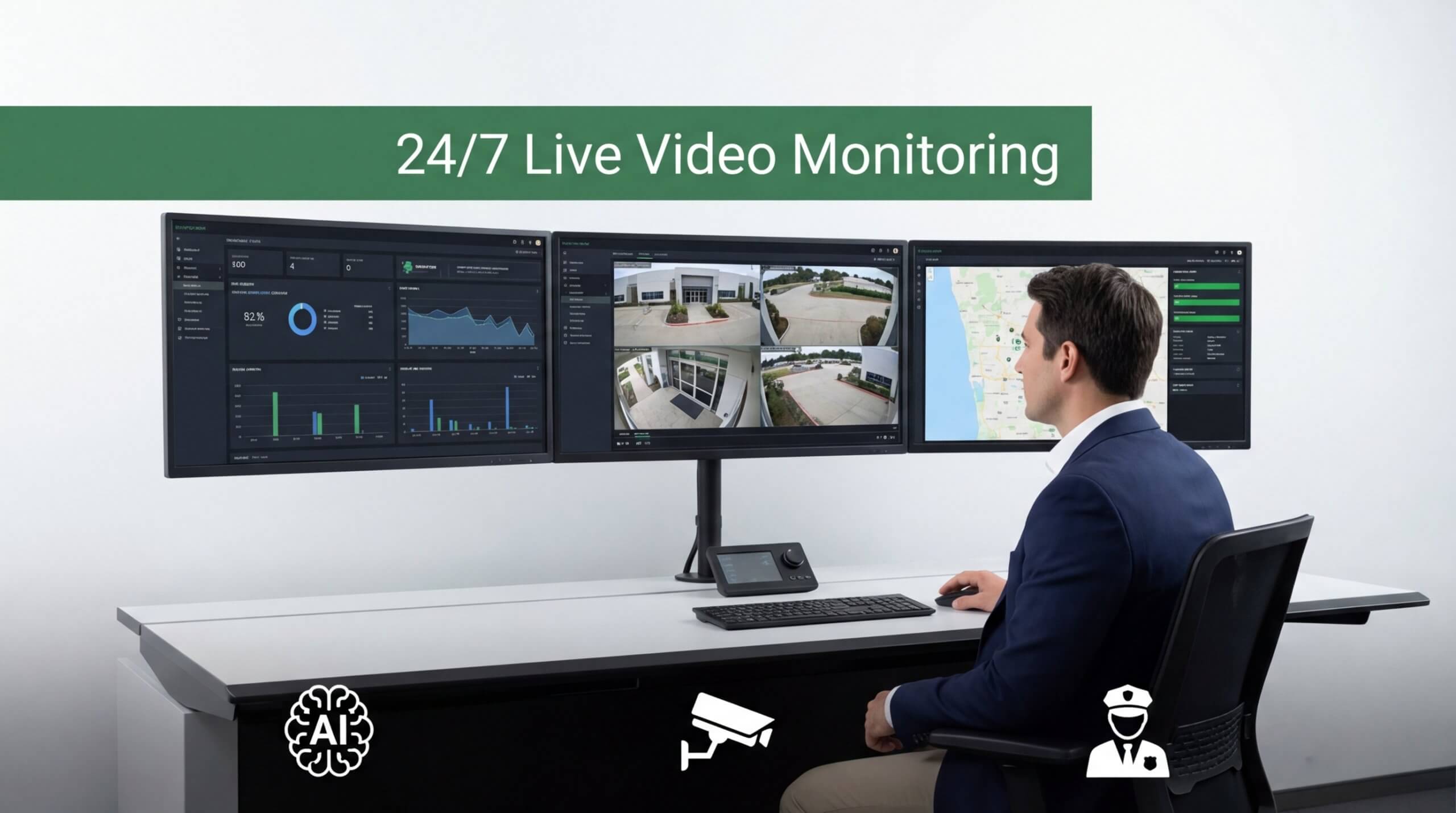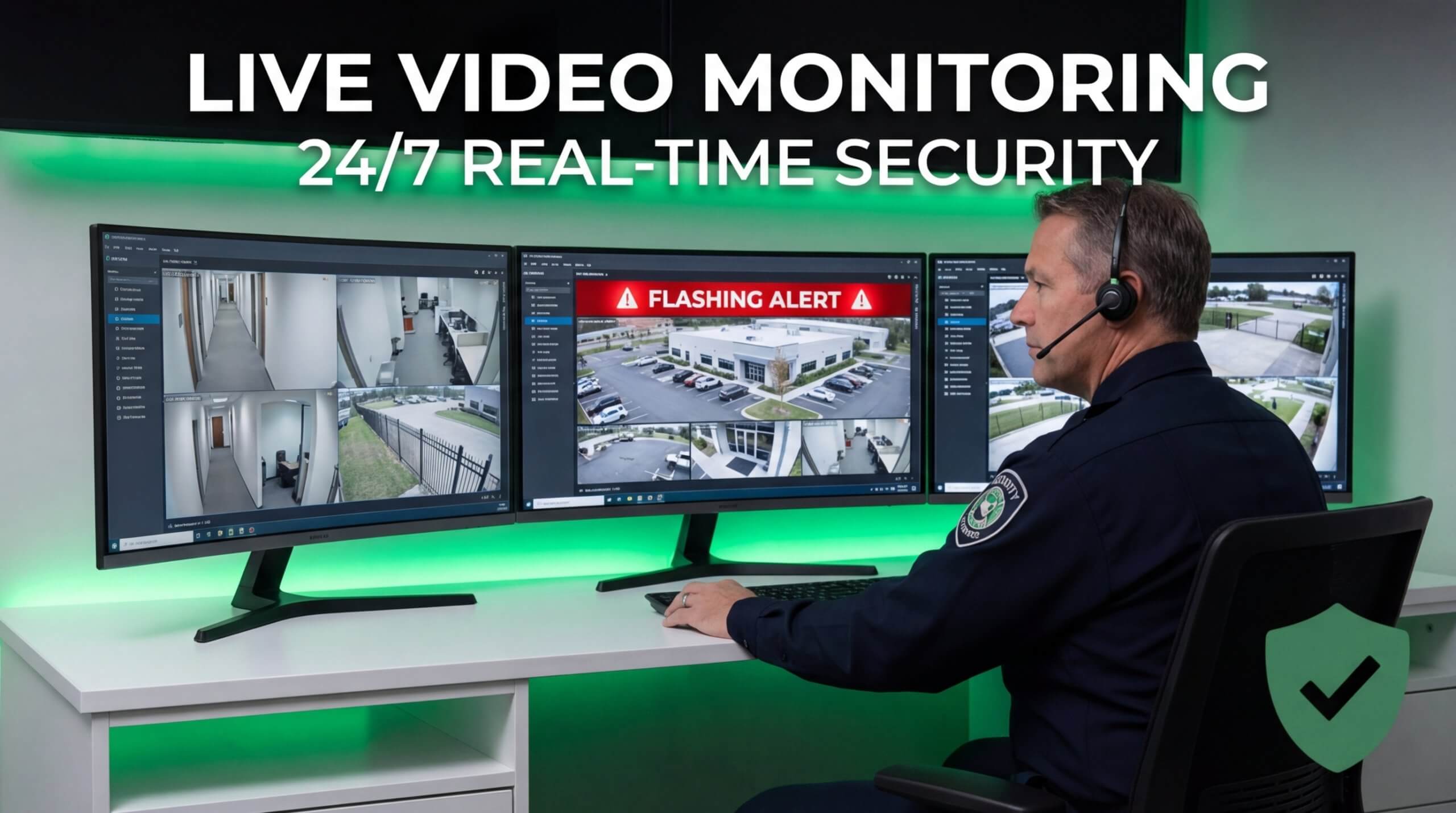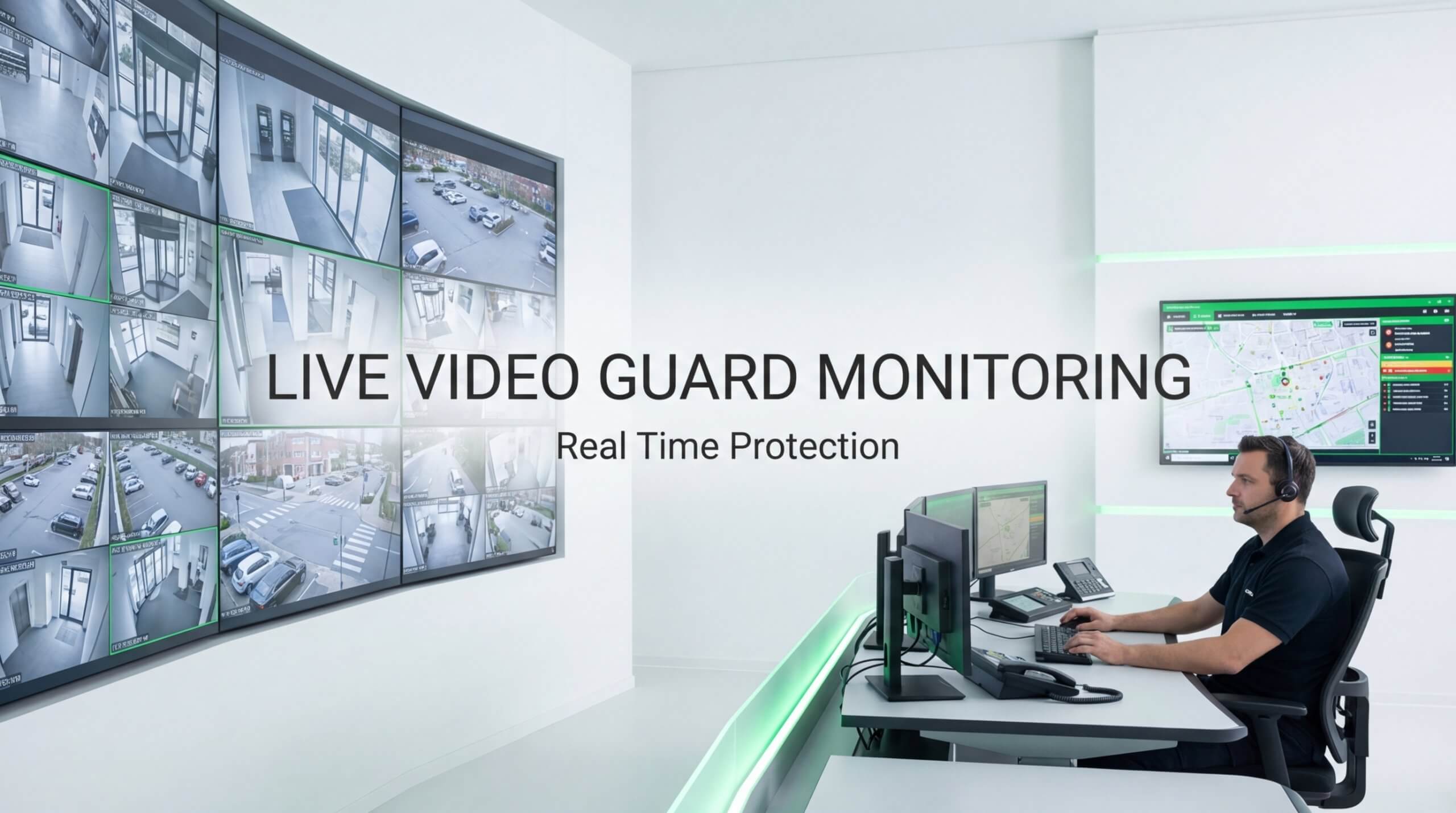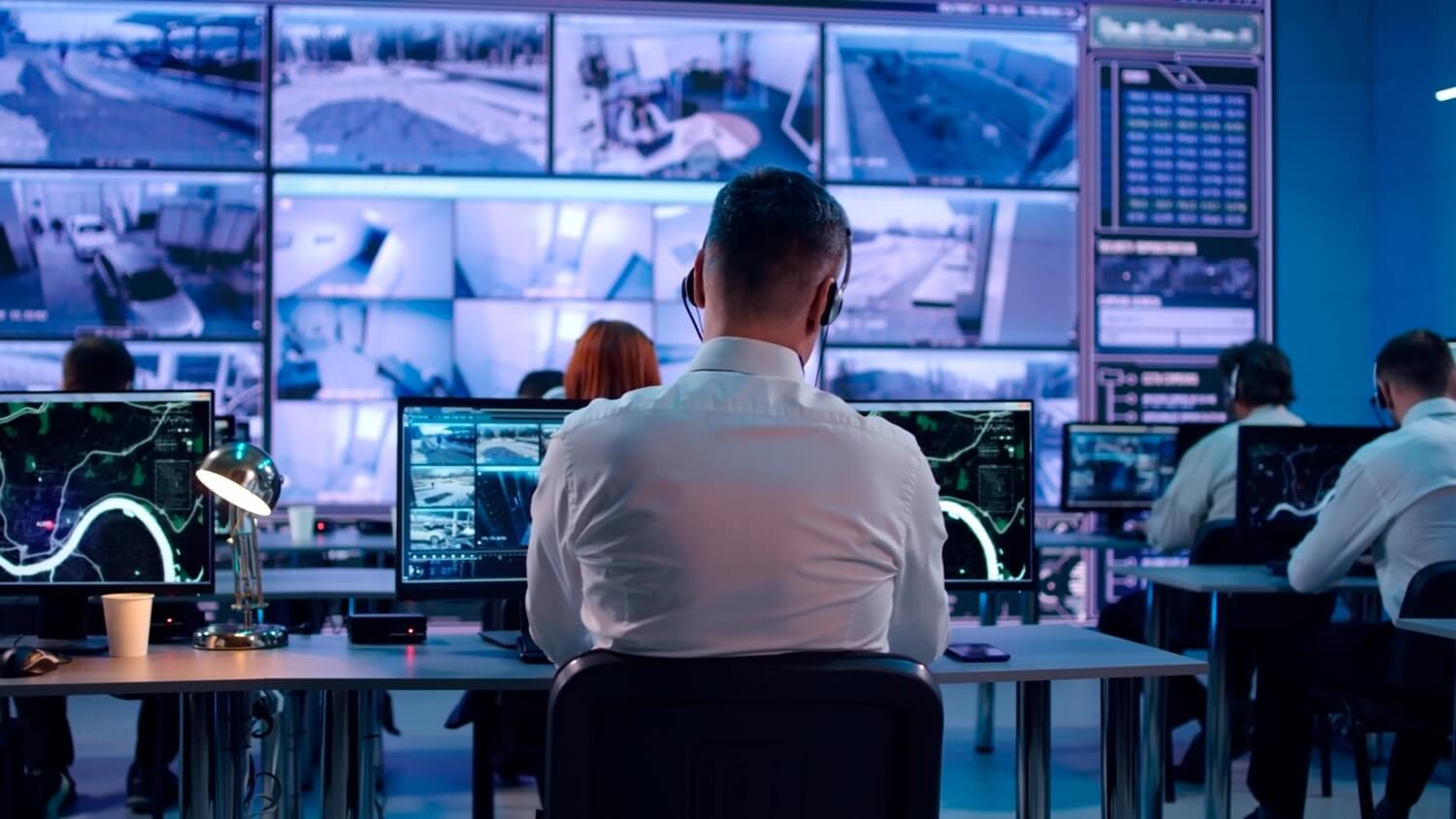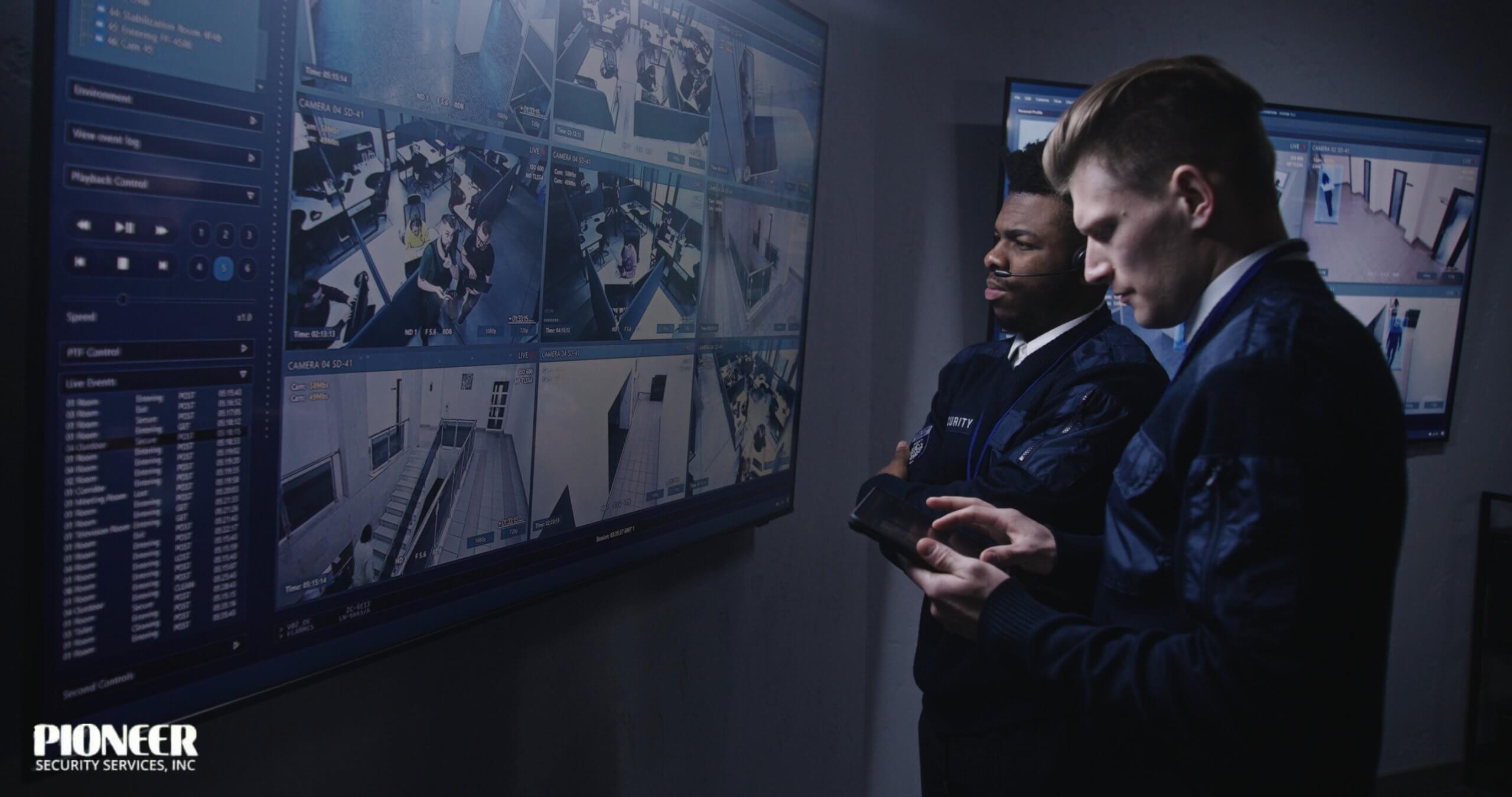
IP cameras used in live monitoring are network-connected digital cameras that stream real-time video to trained operators or AI systems for immediate threat detection and response. Unlike passive recording setups that capture footage for later review, live monitoring turns IP cameras into active security tools that deter crime, verify threats, and coordinate intervention as events unfold.
This guide covers how IP cameras transmit video over networks, their core security applications, where they perform best across industries, the technical features and AI capabilities that drive effective monitoring, and what to consider when building a reliable system.
IP cameras encode and stream video using standardized protocols like RTSP and ONVIF, with options for local, cloud, or hybrid delivery depending on bandwidth and remote access needs. Each camera operates as an independent network device, configurable and viewable from anywhere through its unique IP address.
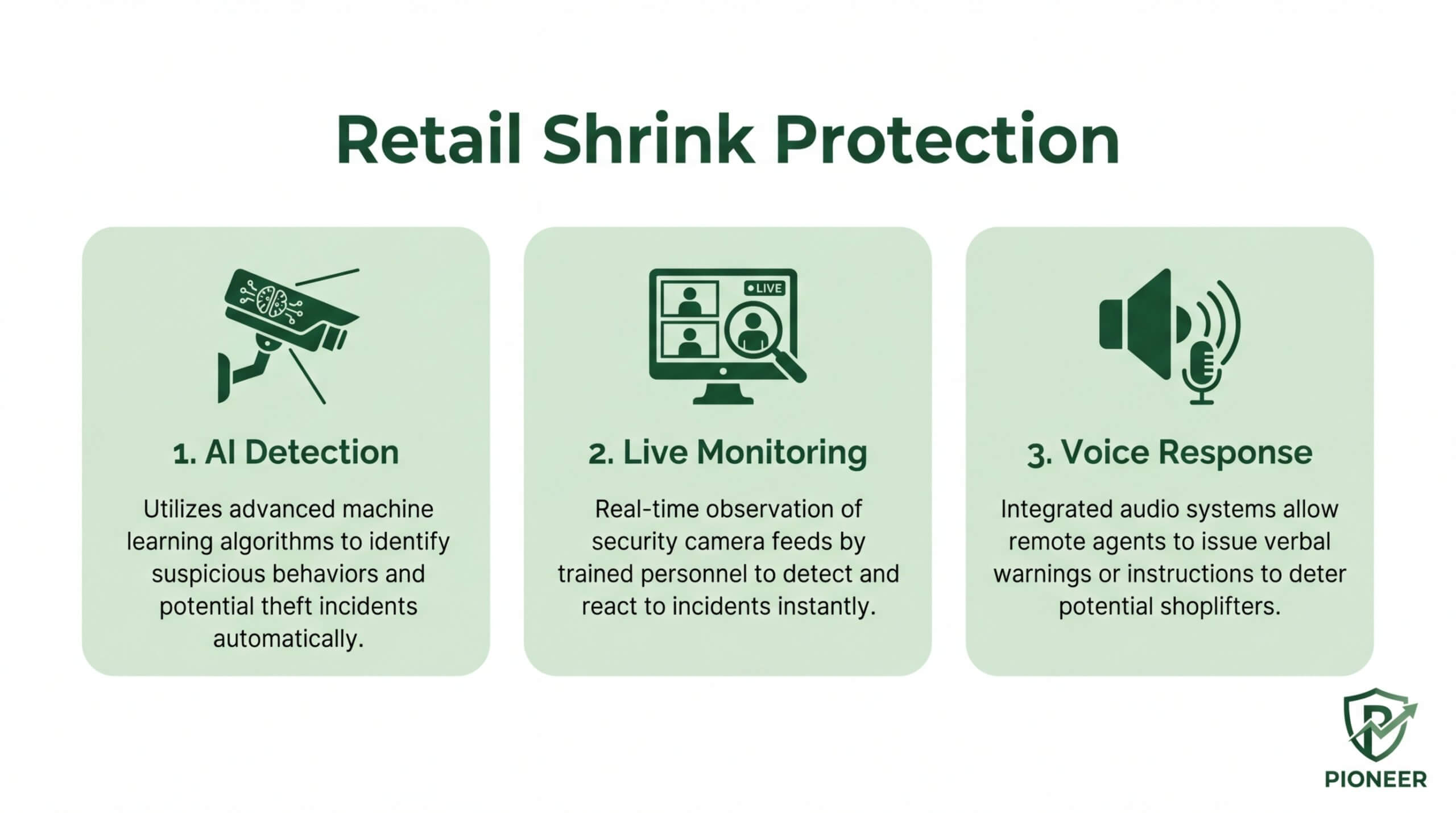
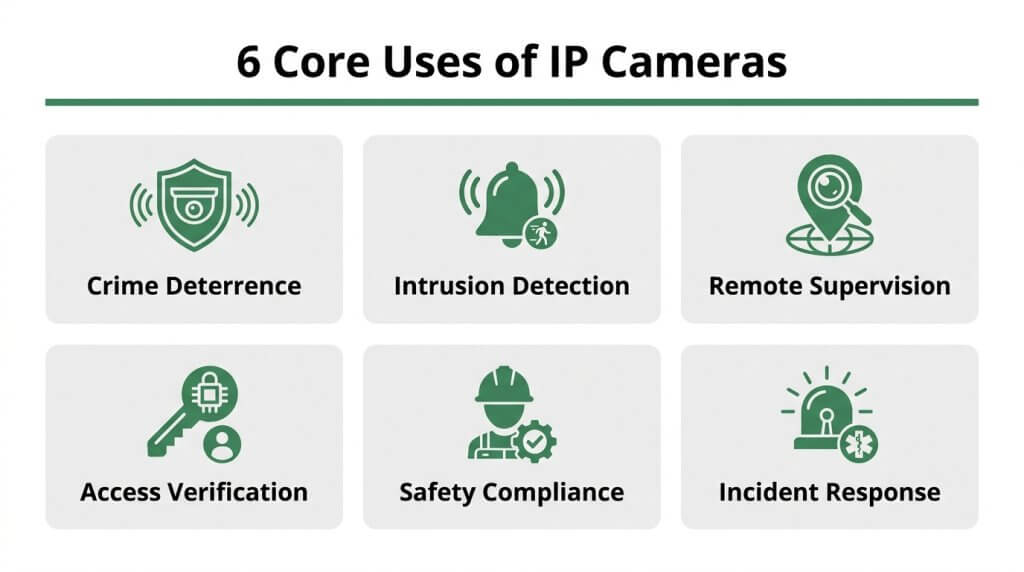
Core live monitoring applications span crime deterrence through visible cameras and two-way audio warnings, real-time intrusion detection with AI-powered motion classification, remote site supervision across multiple locations, access control verification, safety compliance oversight, and coordinated incident response with emergency dispatch.
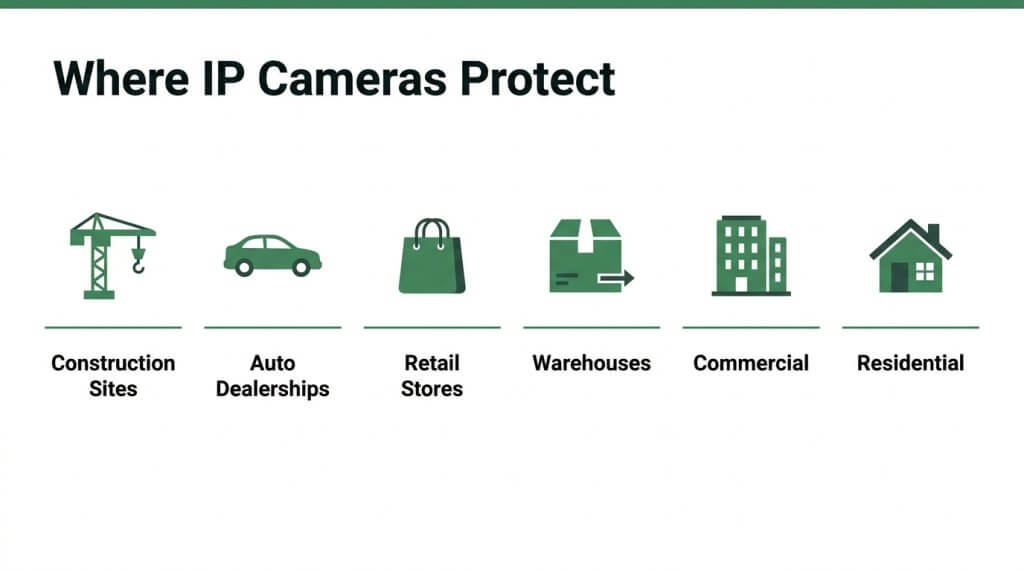
These cameras protect construction sites, auto dealerships, retail stores, warehouses, commercial buildings, and residential properties, each presenting distinct threats that real-time surveillance addresses differently.
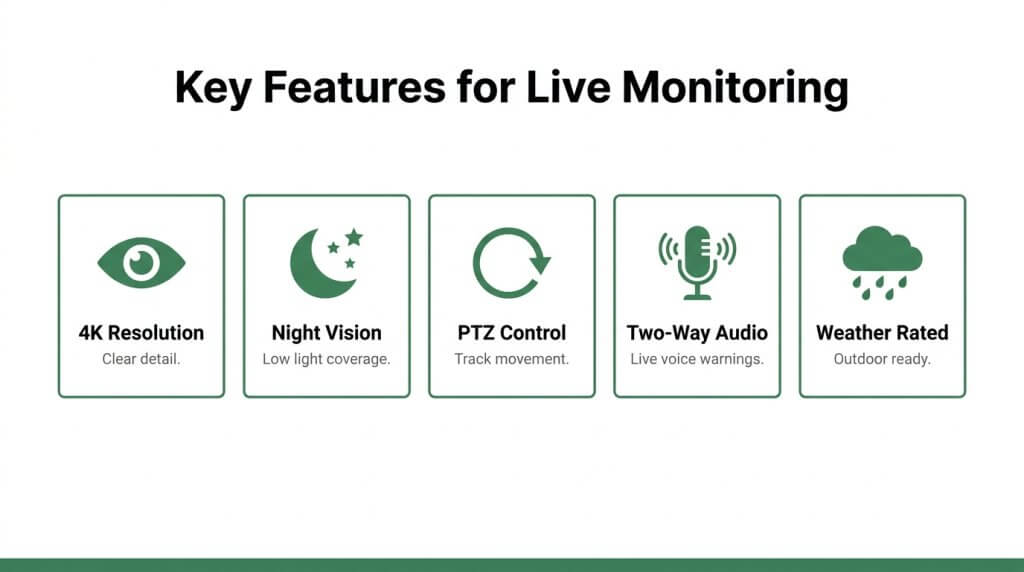
Features like 4K resolution, infrared night vision, pan-tilt-zoom controls, two-way audio, and weather-resistant housings determine what operators can actually see and act on during a live feed. AI analytics layers filter false alarms, classify objects, and flag suspicious behavior patterns before incidents escalate.
Bandwidth capacity, network infrastructure, camera placement strategy, and storage architecture all shape whether a live monitoring system performs reliably or creates gaps that compromise real-time response.
How Do IP Cameras Work for Live Monitoring?
IP cameras work for live monitoring by capturing video, digitizing it internally, and transmitting the footage over a network for real-time viewing. The subsections below cover what an IP camera is, how it sends video across a network, and the differences between local and cloud streaming.
What Is an IP Camera?
An IP camera is a digital video camera that connects directly to a network using an Internet Protocol address. Unlike analog cameras that send raw video signals over coaxial cable to a separate recorder, each IP camera processes and compresses video on board. According to Eclipse CCTV, 4K security cameras offer roughly four times the pixels of 1080p cameras, with improved low-light sensitivity due to larger image sensors.
This built-in processing capability means every camera functions as an independent network device. Each unit can be accessed, configured, and viewed remotely through its unique IP address, making IP cameras the foundation of modern live monitoring systems.
How Does an IP Camera Transmit Video Over a Network?
An IP camera transmits video over a network by encoding footage into digital packets and sending them via Ethernet or Wi-Fi to a viewing destination. The camera compresses video using codecs like H.264 or H.265, then streams it using Real Time Streaming Protocol (RTSP).
According to Pelco, IP cameras use specific standards known as ONVIF profiles to stream video and audio, defining rules about how RTSP should be used for interoperability. This standardization allows cameras from different manufacturers to communicate with network video recorders, video management software, and mobile apps. Power over Ethernet (PoE) simplifies installation further by delivering both data and electrical power through a single cable.
What Is the Difference Between Local and Cloud Streaming?
The difference between local and cloud streaming lies in where video data travels and where it is processed. Local streaming keeps footage within an on-site network, typically routing video from IP cameras to a network video recorder (NVR) or local server. Cloud streaming sends encrypted video to off-site data centers accessible from any internet-connected device.
- Local streaming offers lower latency and does not depend on internet bandwidth.
- Cloud streaming enables remote access from anywhere without on-site hardware management.
- Hybrid setups combine both, storing footage locally while mirroring critical feeds to the cloud.
For most live monitoring deployments, the choice depends on bandwidth availability, storage budget, and whether operators need remote access. Understanding these transmission methods helps clarify what IP cameras can deliver once deployed in specific environments.
What Are the Main Uses of IP Cameras in Live Monitoring?
The main uses of IP cameras in live monitoring include crime deterrence, real-time intrusion detection, remote site supervision, access control verification, safety compliance monitoring, and live incident response.
How Are IP Cameras Used for Crime Deterrence?
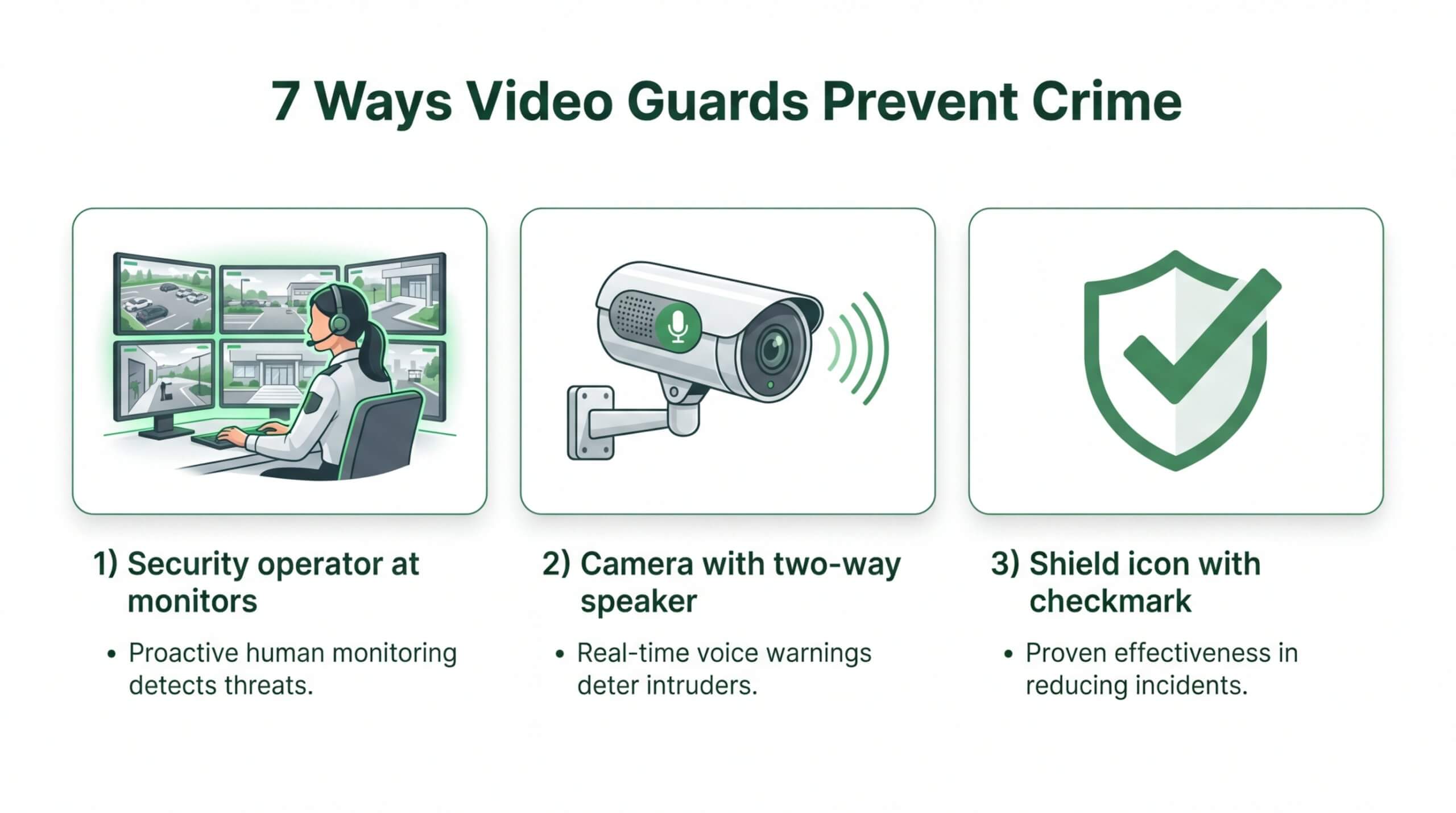
IP cameras are used for crime deterrence by providing visible surveillance presence combined with active monitoring capabilities. When potential intruders see cameras with indicator lights, sirens, or strobes, they often abandon criminal activity before it begins. Active monitoring amplifies this effect because a live operator can issue voice-down warnings through two-way audio speakers, making trespassers aware they are being watched in real time. This human intervention element transforms a passive camera into a proactive deterrent. Strategically placed IP cameras at entry points, parking lots, and perimeter fences create layered deterrence zones that discourage criminal behavior before property damage or theft occurs.
How Are IP Cameras Used for Real-Time Intrusion Detection?
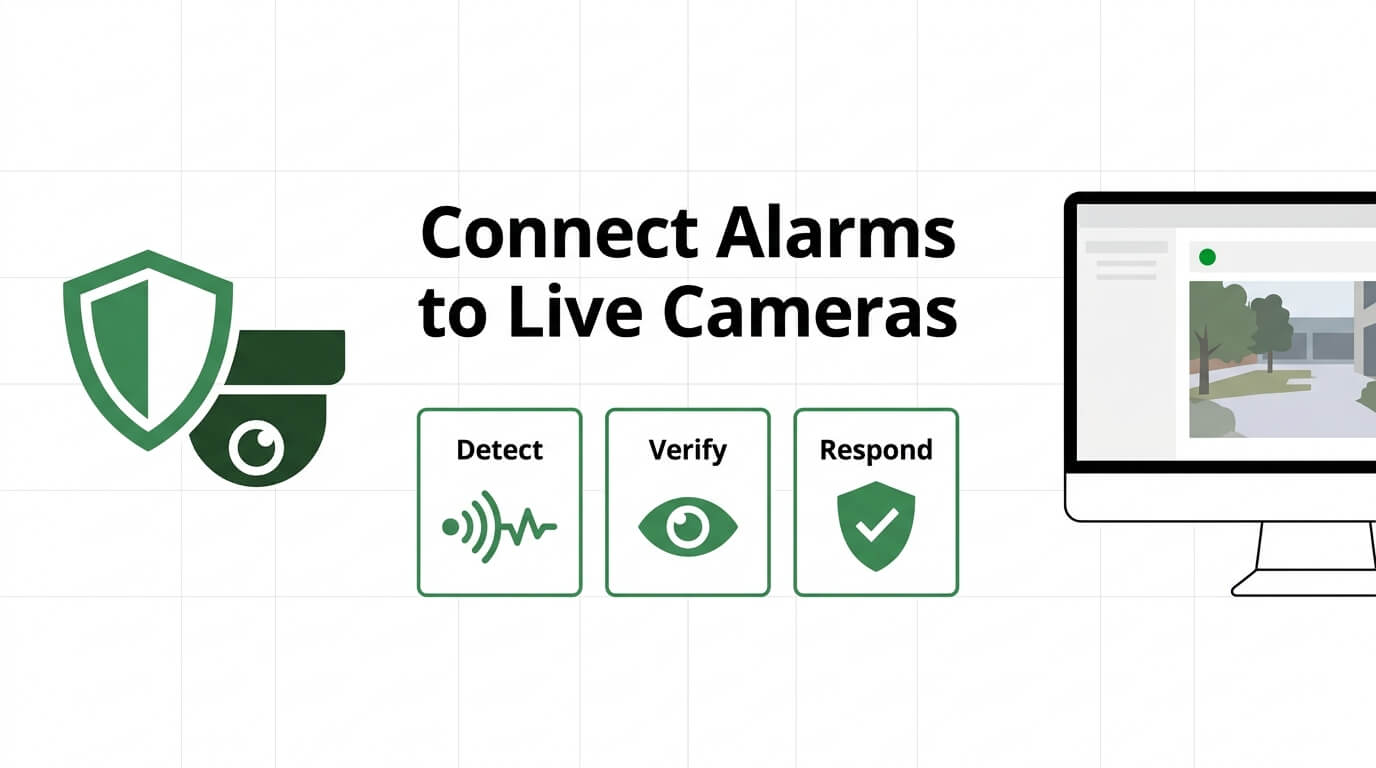
IP cameras are used for real-time intrusion detection by combining AI-powered analytics with continuous live video feeds. When someone crosses a virtual tripwire or enters a restricted zone, the camera triggers an immediate alert to a monitoring station. Operators then verify the threat visually before escalating. This verification step is critical; it separates genuine intrusions from harmless activity like animals or debris. Modern IP cameras use AI motion classification to distinguish between human movement, vehicles, and environmental noise, which dramatically reduces false alerts. Once a real intrusion is confirmed, operators can activate deterrents or dispatch emergency services within seconds.
How Are IP Cameras Used for Remote Site Supervision?
IP cameras are used for remote site supervision by streaming live video over IP networks to authorized viewers anywhere with internet access. Project managers, property owners, and security teams can monitor construction sites, vacant lots, or multi-location businesses from a single dashboard. This capability eliminates the need for on-site personnel at every location around the clock. Networked cameras with pan-tilt-zoom controls allow remote operators to scan large areas, zoom into specific activity, and track movement across a property. For businesses managing multiple facilities, centralized remote supervision through IP cameras reduces operational costs while maintaining consistent oversight.
How Are IP Cameras Used for Access Control Verification?
IP cameras are used for access control verification by visually confirming the identity of individuals entering secured areas. When someone presents a keycard, PIN, or credential at an access point, a linked IP camera captures live video of the person. Monitoring personnel then compare the visual feed against authorized entry records. This pairing of video with electronic access data prevents tailgating, credential sharing, and unauthorized entry. At high-security locations, operators can deny access remotely if the person on camera does not match the credential holder, adding a layer of human judgment that standalone access systems cannot provide.
How Are IP Cameras Used for Safety Compliance Monitoring?
IP cameras are used for safety compliance monitoring by providing continuous visual oversight of workplace conditions and worker behavior. On active job sites, cameras verify that personnel wear required personal protective equipment, follow designated walkways, and stay clear of hazardous zones. According to AlterSquare, AI-powered smart cameras are cutting construction accidents by 80% by identifying hazards in real time and ensuring compliance. When a violation is detected, the system alerts supervisors immediately so corrective action can happen before an injury occurs. This real-time feedback loop makes IP cameras particularly valuable in construction, manufacturing, and warehouse environments where safety regulations demand constant vigilance.
How Are IP Cameras Used for Live Incident Response?
IP cameras are used for live incident response by delivering real-time video feeds to security operators and emergency dispatchers the moment an event unfolds. Using ONVIF protocols, the camera is discovered and configured on the network, and the RTSP URL is retrieved to start the live stream instantly. Operators assess the situation visually, activate on-site deterrents like sirens and strobes, communicate directly with individuals through two-way audio, and coordinate police or fire dispatch with verified visual evidence. This real-time coordination shortens response times and provides first responders with accurate scene information before arrival. With these six core applications working together, IP cameras become a comprehensive live monitoring platform rather than simple recording devices.
Where Are IP Cameras Most Commonly Used for Live Monitoring?
IP cameras are most commonly used for live monitoring at construction sites, auto dealerships, retail stores, warehouses, commercial properties, and residential properties. Each environment presents distinct security challenges that real-time surveillance addresses.
How Are IP Cameras Used at Construction Sites?
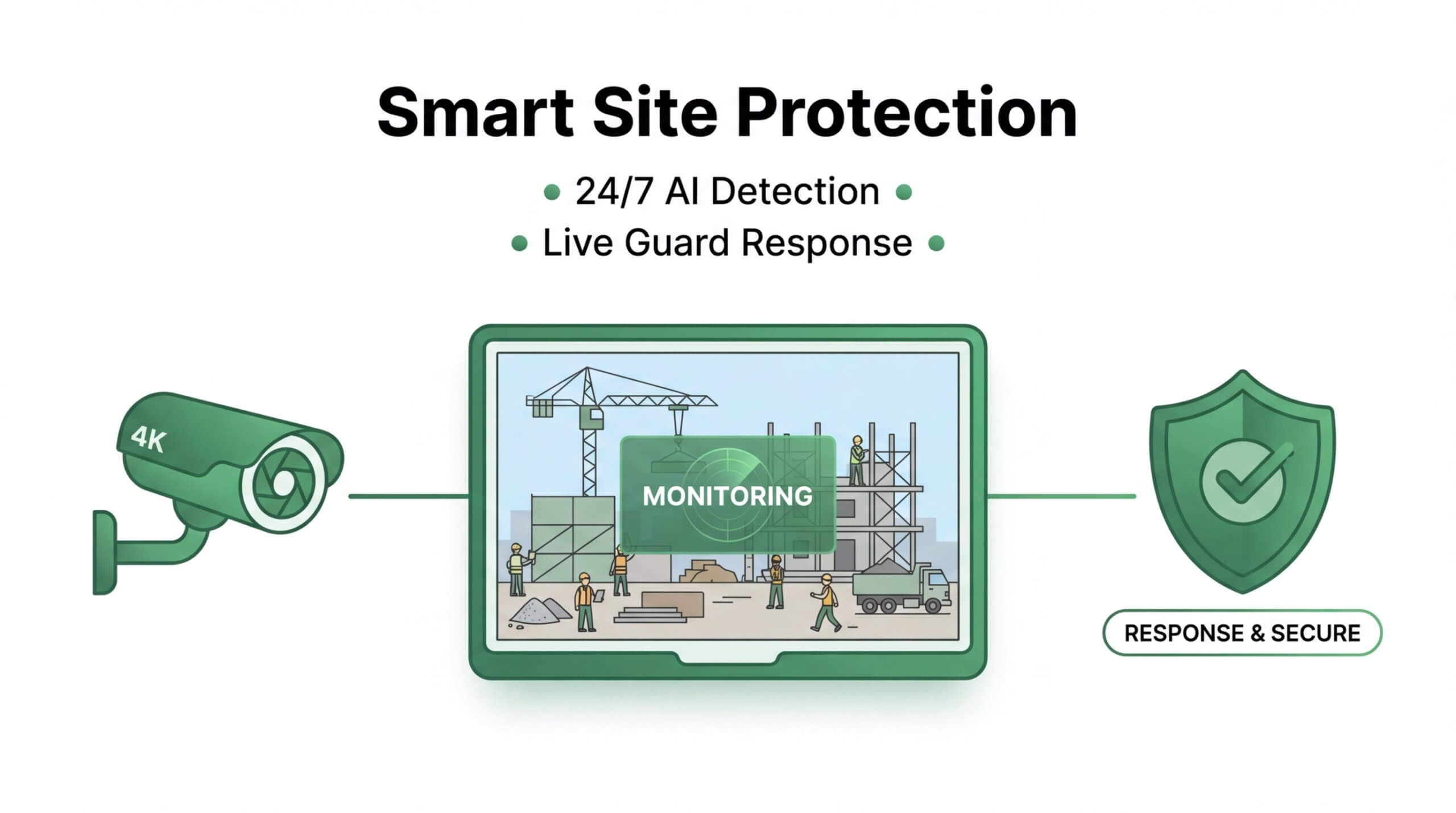
IP cameras are used at construction sites to monitor equipment theft, unauthorized access, and worker safety in real time. Heavy machinery, raw materials, and tools left on open lots overnight make these sites persistent targets. Live monitoring operators can detect trespassers after hours and trigger audio warnings or police dispatch before losses occur. According to AlterSquare, AI-powered smart cameras are cutting construction accidents by 80% by identifying hazards in real time and ensuring compliance. Beyond theft prevention, project managers use live feeds to verify subcontractor progress remotely, reducing the need for costly site visits.
How Are IP Cameras Used at Auto Dealerships?
IP cameras are used at auto dealerships to protect high-value vehicle inventory spread across large, open lots. Dealerships face unique risks: catalytic converter theft, vandalism, and after-hours test drive fraud. Live monitoring operators watch perimeter cameras and can issue two-way audio warnings the moment someone approaches a vehicle suspiciously. Strategic placement along fence lines, showroom entrances, and service bays ensures comprehensive coverage. For dealerships with multiple locations, IP cameras enable centralized remote supervision from a single monitoring center, making real-time protection scalable without stationing guards at every site.
How Are IP Cameras Used in Retail Stores?
IP cameras are used in retail stores to deter shoplifting, monitor point-of-sale activity, and protect employees during operating hours. According to the National Retail Federation, retailers reported an 18% increase in external shoplifting and a 12% increase in merchandise theft incidents from 2023 to 2024. Live monitoring allows security teams to observe suspicious behavior as it unfolds, coordinating with floor staff for intervention before merchandise leaves the store. Interior cameras positioned at checkout lanes also help identify employee theft and transaction fraud, while entrance cameras capture facial detail for incident documentation.
How Are IP Cameras Used in Warehouses and Distribution Centers?
IP cameras are used in warehouses and distribution centers to monitor loading docks, inventory zones, and restricted access points in real time. These facilities operate around the clock, creating windows for internal theft and cargo diversion. According to Overdrive, cargo theft counts stayed flat in 2025 but losses jumped 60%, indicating thieves are stealing smarter rather than more frequently. Live monitoring operators can verify that shipments match manifests and flag unauthorized personnel entering secure areas. Thermal and low-light IP cameras maintain visibility in poorly lit storage sections where traditional cameras struggle.
How Are IP Cameras Used on Commercial Properties?
IP cameras are used on commercial properties to secure office buildings, parking structures, and shared tenant spaces through continuous live surveillance. Property managers rely on real-time feeds to monitor visitor access, verify deliveries, and respond to after-hours intrusions. Integration with access control systems allows operators to visually confirm credentials before granting entry. Parking garages benefit particularly from PTZ cameras that track vehicles and pedestrians across multiple levels. For multi-tenant buildings, IP cameras provide a centralized security layer that protects common areas without requiring each business to maintain its own guard presence.
How Are IP Cameras Used in Residential Properties?
IP cameras are used in residential properties to monitor entry points, driveways, and perimeter zones for real-time intrusion detection. Homeowners receive instant alerts when cameras detect motion, and live monitoring operators can assess whether the activity is a genuine threat or a false trigger. Two-way audio allows operators to warn trespassers directly through the camera speaker before they reach a door or window. This proactive approach is especially valuable for vacation homes or properties left unoccupied for extended periods. With the range of environments IP cameras protect, specific camera features determine how effective live monitoring performs in each setting.
What Features Make IP Cameras Effective for Live Monitoring?
The features that make IP cameras effective for live monitoring include high resolution, night vision, pan-tilt-zoom controls, two-way audio, and weather-resistant construction. Each capability addresses a specific surveillance challenge.
How Does Resolution Affect Live Monitoring Quality?
Resolution affects live monitoring quality by determining how much detail operators can see in a live feed. Higher pixel counts reveal faces, license plates, and small objects that lower-resolution cameras miss entirely.
According to Eclipse CCTV, 4K security cameras offer roughly four times the pixels of 1080p cameras, providing improved low-light sensitivity due to larger image sensors. This pixel density matters most during active monitoring, where operators must make split-second identification decisions. For properties requiring real-time threat assessment, investing in 4K resolution produces noticeably sharper, more actionable footage than standard HD alternatives.
Why Does Night Vision Matter for Real-Time Surveillance?
Night vision matters for real-time surveillance because most property crimes and unauthorized entries occur during low-light hours. Without infrared or starlight imaging, live monitoring operators lose visibility precisely when threats peak.
Modern IP cameras use infrared LEDs or advanced starlight sensors to illuminate scenes invisible to the human eye. Infrared night vision typically reaches 30 to 100 feet depending on the camera model, while starlight technology captures color images using ambient light. Both approaches ensure continuous monitoring coverage regardless of lighting conditions. For any live monitoring system, cameras without reliable night vision create dangerous blind spots during the hours that matter most.
How Do Pan-Tilt-Zoom Controls Enhance Live Monitoring?
Pan-tilt-zoom controls enhance live monitoring by giving operators the ability to track subjects, scan wide areas, and zoom into specific details without additional cameras.
PTZ functionality transforms a single camera into a dynamic surveillance tool:
- Pan rotates the lens horizontally up to 360 degrees, covering entire perimeters.
- Tilt adjusts the vertical angle to follow movement across elevation changes.
- Zoom magnifies distant subjects, enabling operators to read text or identify individuals from hundreds of feet away.
During active monitoring, PTZ cameras allow guards to follow a suspicious person across a property in real time rather than switching between multiple fixed-camera feeds.
What Role Does Two-Way Audio Play in Live Monitoring?
Two-way audio plays a critical role in live monitoring by enabling direct verbal communication between remote operators and individuals on-site. This feature turns passive observation into active intervention.
When a monitoring operator spots suspicious activity, two-way audio allows immediate verbal warnings before a situation escalates. Built-in speakers and microphones let operators issue commands, verify visitor identity, or deter trespassers without dispatching personnel. The psychological impact of a live human voice addressing an intruder by describing their actions is a powerful deterrent. Two-way audio is especially valuable for access control verification, where operators can confirm credentials and grant or deny entry remotely.
How Does Weather Resistance Affect Outdoor IP Cameras?
Weather resistance affects outdoor IP cameras by determining whether the hardware survives environmental exposure while maintaining image quality. Cameras without adequate protection fail during the conditions that often demand the most vigilant monitoring.
IP ratings indicate protection levels:
- IP66 cameras resist powerful water jets and complete dust ingress.
- IP67 cameras withstand temporary submersion up to one meter.
Operating temperature ranges also matter; quality outdoor cameras function reliably from approximately -30°F to 140°F. Humidity, salt air, and UV exposure degrade unprotected housings over time, causing lens fog and circuit corrosion. Selecting the correct weather resistance rating for the installation environment ensures uninterrupted live feeds year-round. With reliable hardware in place, AI-driven analytics can further elevate what these cameras accomplish.
How Does AI Improve IP Camera Live Monitoring?
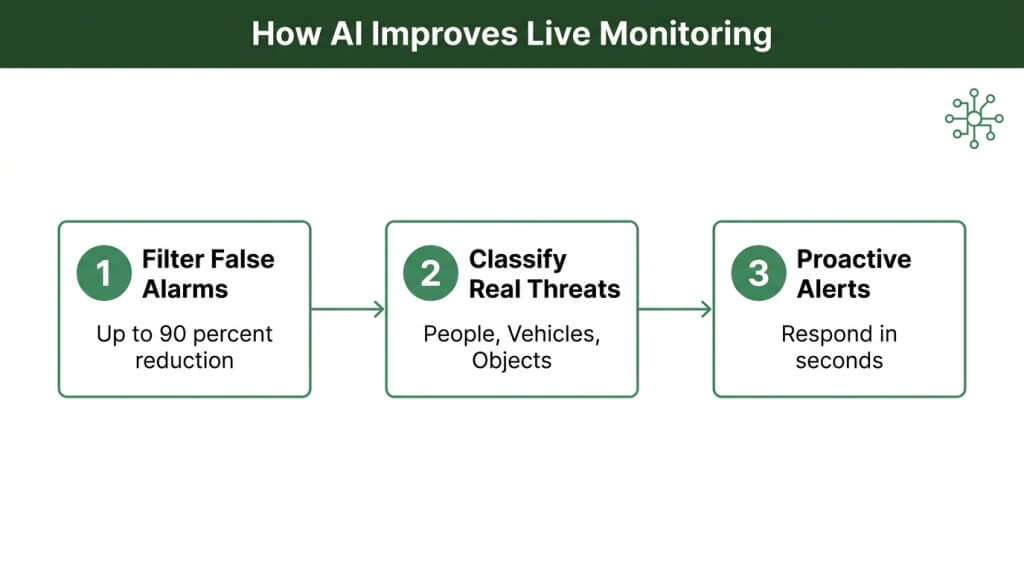
AI improves IP camera live monitoring by adding intelligent analysis layers that filter noise, classify threats, and trigger faster responses. The following subsections cover AI-powered motion detection, object recognition, and proactive analytics.
How Does AI-Powered Motion Detection Reduce False Alarms?
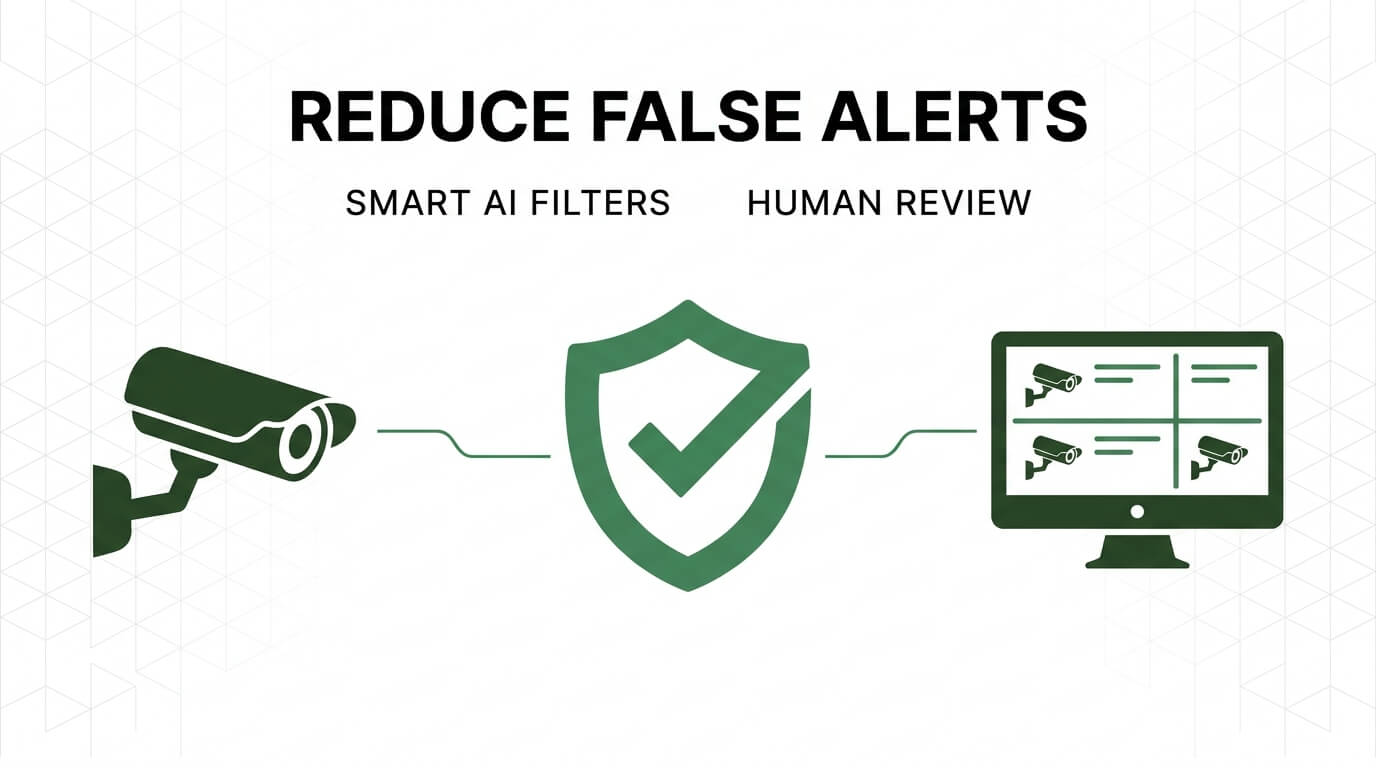
AI-powered motion detection reduces false alarms by classifying movement sources before triggering alerts. Traditional motion sensors treat all pixel changes equally, so wind-blown branches, passing animals, and shifting shadows generate constant notifications. AI models analyze movement patterns, size, speed, and direction to distinguish humans and vehicles from irrelevant motion.
According to VORTEX, AI models can distinguish movements and reduce false alarms by up to 90% in surveillance systems. More advanced filtering pushes that figure even higher; dedicated classification engines remove up to 95% of false alerts by accurately identifying objects of interest.
Fewer false alarms mean monitoring teams focus attention where it matters, which directly improves response quality.
How Does Object Recognition Help Identify Real Threats?
Object recognition helps identify real threats by categorizing what appears in a camera’s field of view. AI assigns labels to detected objects, separating people, vehicles, packages, and animals into distinct categories. This classification happens in real time, enabling the system to apply threat-specific rules.
When a person enters a restricted zone after hours, the system escalates the alert differently than it would for a stray dog crossing the same area. Combined with higher-resolution sensors (4K cameras deliver roughly four times the pixels of 1080p models), object recognition gains sharper detail for accurate identification even in challenging lighting. That precision turns raw video into actionable intelligence.
How Does AI Analytics Enable Proactive Intervention?
AI analytics enables proactive intervention by identifying suspicious behavior patterns before an incident escalates. Rather than waiting for a breach to occur, AI correlates data points such as loitering duration, unusual movement trajectories, and time-of-day anomalies to generate early warnings.
Operators receive prioritized alerts ranked by threat probability, allowing them to activate deterrents like two-way audio warnings or strobe lights within seconds. This shift from reactive playback to real-time prediction is what separates modern AI-driven monitoring from conventional surveillance. For properties that need continuous coverage, AI analytics reduces the gap between detection and response to moments rather than minutes.
Understanding how AI enhances live monitoring helps clarify what to look for when selecting the right camera system.
What Is the Difference Between Live Monitoring and Passive Recording?
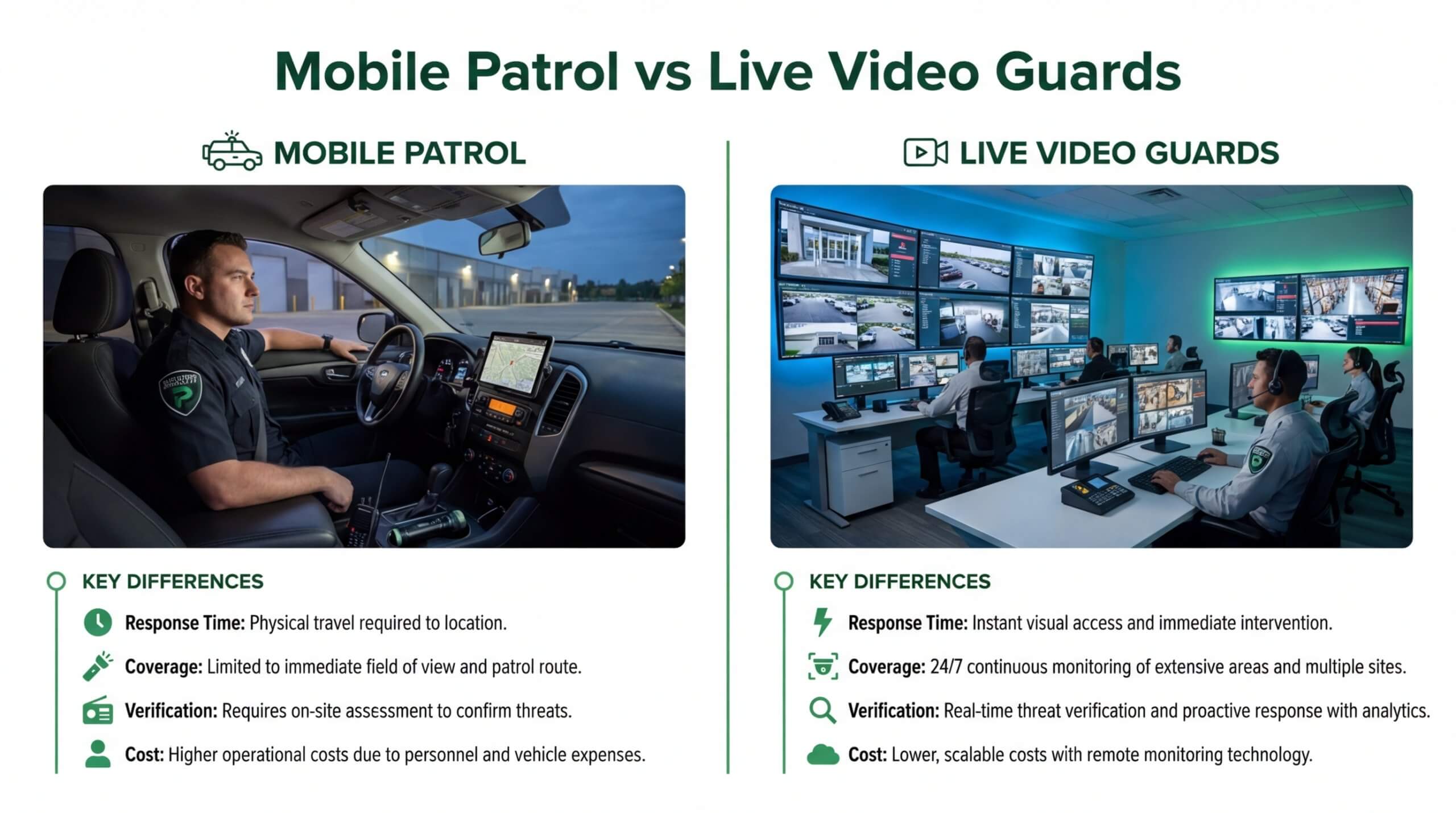
The difference between live monitoring and passive recording is how each system responds to security events. Live monitoring uses trained operators or AI to watch feeds in real time and intervene during incidents. Passive recording captures footage to storage for review only after an event occurs.
Key distinctions include:
- Response timing: Live monitoring enables immediate action, such as triggering alarms or dispatching police, while passive recording provides evidence only after a crime has already happened.
- Staffing and cost: Active monitoring requires ongoing staffing costs, more sophisticated equipment, and higher storage requirements for real-time data processing compared to passive systems, according to Digital Security Guard.
- Crime prevention impact: A systematic review published by the Office of Justice Programs found that CCTV schemes incorporating active monitoring generated larger effect sizes for crime reduction than passive systems.
- Operator involvement: Live monitoring depends on human or AI-driven oversight during the event, whereas passive recording operates unattended.
- Evidence value: Both approaches capture footage, but live monitoring pairs recorded evidence with real-time intervention documentation.
For most commercial properties, passive recording alone leaves a critical gap between detection and response. Pairing IP cameras with live monitoring closes that gap, turning surveillance from a forensic tool into a preventive one.
How Do IP Cameras Compare to Analog Cameras for Live Monitoring?
IP cameras compare to analog cameras for live monitoring by offering higher resolution, network-based remote access, and AI compatibility that analog systems cannot match. The key differences span image quality, scalability, infrastructure, and smart feature support.
| Feature | IP Cameras | Analog Cameras |
| Resolution | Up to 4K/8MP and beyond | Limited to 720p (960H) |
| Remote Access | Native via network/internet | Requires additional DVR encoding |
| AI Integration | Built-in analytics support | No onboard processing |
| Scalability | Add cameras to network without new cabling | Each camera needs dedicated coax run |
| Audio | Two-way audio capable | Separate audio cabling required |
| Power | PoE (single cable for power and data) | Separate power supply per camera |
| Bandwidth | Higher, requires network planning | Minimal network impact |
| Upfront Cost | Higher per unit | Lower per unit |
Analog cameras still function adequately for basic recording in small, budget-constrained setups. However, their inability to support real-time AI analytics, remote PTZ control over the internet, or edge-based processing makes them poorly suited for active live monitoring. According to Eclipse CCTV, 4K security cameras offer roughly four times the pixels of 1080p cameras while providing improved low-light sensitivity due to larger image sensors.
For any operation where live monitoring is the priority, IP cameras are the clear choice. The gap widens further when factoring in AI-powered features like intelligent motion detection and object classification, which require the digital architecture only IP cameras provide. Understanding what to look for in an IP camera system ensures these advantages translate into real-world results.
What Should You Consider When Choosing IP Cameras for Live Monitoring?
When choosing IP cameras for live monitoring, you should consider bandwidth capacity, network infrastructure, camera placement strategy, and storage requirements. Each factor directly impacts streaming reliability and surveillance effectiveness.
How Does Bandwidth Affect Live Video Streaming?
Bandwidth affects live video streaming by determining how much data each camera can transmit without latency or frame drops. Higher-resolution cameras, particularly 4K models, demand significantly more bandwidth per stream than 1080p units.
Insufficient bandwidth causes buffering, pixelation, and delayed feeds, all of which undermine real-time monitoring. Key factors that influence bandwidth consumption include:
- Resolution and frame rate settings per camera
- Number of simultaneous streams on the network
- Video compression codec (H.264 versus H.265)
- Whether motion-adaptive bitrate is enabled
Allocating dedicated bandwidth per camera, rather than sharing general office network capacity, is one of the most overlooked steps in system planning.
What Network Infrastructure Do IP Cameras Require?
IP cameras require a robust network infrastructure built around Power over Ethernet (PoE) switches, sufficient port density, and a dedicated VLAN or subnet for video traffic. PoE simplifies installation by delivering power and data through a single cable.
Essential infrastructure components include:
- Managed PoE switches with enough wattage for all connected cameras
- CAT6 or higher cabling for reliable gigabit throughput
- A network video recorder (NVR) or VMS server for stream management
- Quality of Service (QoS) rules prioritizing video packets over general traffic
Without network segmentation, surveillance streams compete with everyday data traffic, creating lag that compromises real-time response.
How Does Camera Placement Affect Monitoring Coverage?
Camera placement affects monitoring coverage by determining which areas receive continuous visual surveillance and which remain blind spots. Strategic positioning at entry points, perimeters, and high-value zones maximizes detection while minimizing the total camera count needed.
Factors that shape effective placement include:
- Field of view and focal length matching the monitored distance
- Mounting height that balances facial identification with wide-area coverage
- Lighting conditions, including backlight and low-light zones
- Physical obstructions such as columns, signage, or landscaping
Even the most advanced IP camera underperforms when poorly positioned. A site survey before installation consistently prevents costly repositioning later.
What Storage Options Work Best for Live Monitoring Systems?
The storage options that work best for live monitoring systems depend on whether the operation prioritizes real-time access, long-term retention, or both. Active monitoring setups demand faster read/write speeds and higher capacity than passive recording configurations.
According to a systematic review published by the Office of Justice Programs, CCTV schemes incorporating active monitoring generated larger effect sizes for crime reduction than passive systems. That heightened effectiveness comes with trade-offs: active monitoring requires more sophisticated equipment and higher storage requirements for real-time data processing.
Common storage approaches include:
- On-premise NVR with surveillance-grade hard drives
- Cloud-based storage for remote access and redundancy
- Hybrid systems combining local recording with cloud backup
Understanding these selection criteria helps you build a monitoring system that performs reliably from day one.
How Can AI-Powered Live Video Monitoring Strengthen Your IP Camera System?
AI-powered live video monitoring strengthens your IP camera system by combining intelligent detection with real-time human intervention. The sections below cover how Pioneer Security maximizes IP camera performance and the key takeaways from this guide.
Can Pioneer Security’s Live Video Monitoring Maximize Your IP Cameras?
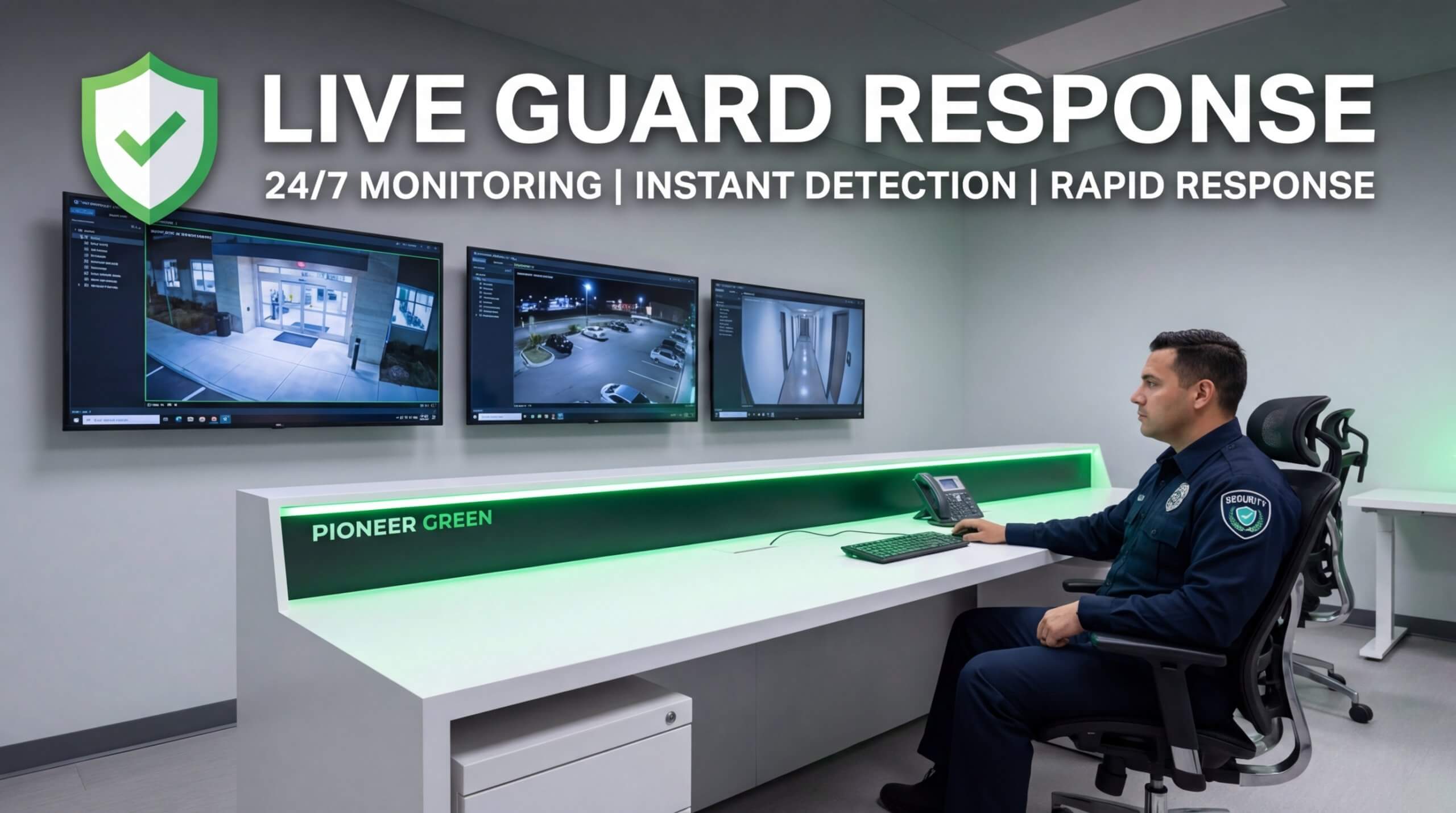
Yes, Pioneer Security’s live video monitoring can maximize your IP cameras by pairing AI-driven analytics with US-based live video guards who respond to threats in real time. Pioneer Security uses AI-powered PoE hubs with Nvidia GPUs to process camera feeds, filtering out false triggers so human operators focus only on genuine events. When the system flags a verified threat, live video guards intervene through two-way audio, activating sirens and strobes before intruders reach the property. According to Digital Security Guard, active monitoring systems require more sophisticated equipment and higher storage requirements for real-time data processing compared to passive systems. Pioneer Security bridges that gap by integrating 4K/8MP cameras with intelligent processing, delivering the infrastructure active monitoring demands without burdening clients with complexity. For most properties, this combination of AI precision and human judgment represents the most effective way to turn IP cameras from passive recording devices into proactive crime prevention tools.
What Are the Key Takeaways About IP Cameras in Live Monitoring?
The key takeaways about IP cameras in live monitoring center on three principles: technology selection, active oversight, and intelligent integration.
- IP cameras transmit high-resolution video over networks using standardized protocols, enabling remote access from any location.
- Resolution, night vision, PTZ controls, and weather resistance directly determine what operators can see and act on during live feeds.
- AI enhancements such as motion detection filtering and object recognition reduce false alarms and surface real threats faster.
- Active monitoring consistently outperforms passive recording for crime reduction, making human oversight essential.
- Camera placement, bandwidth planning, and storage infrastructure shape overall system reliability.
- Combining AI analytics with trained human operators creates a proactive security layer that deters incidents before damage occurs.
Choosing the right IP cameras is only the first step; pairing them with professional live monitoring transforms surveillance footage into actionable protection.