IP, PTZ, and thermal cameras are three distinct surveillance technologies that capture video using different methods: network-transmitted digital imaging, motorized mechanical control with optical zoom, and infrared heat detection. Each type serves a specific role within a live monitoring system, and selecting the right combination determines whether a security deployment detects, identifies, and responds to threats effectively.
This guide covers how each camera type works, their comparative performance across image quality, coverage area, low-light capability, and cost, scenario-based selection for different property types, hybrid system design, common selection mistakes, and AI-powered monitoring integration.
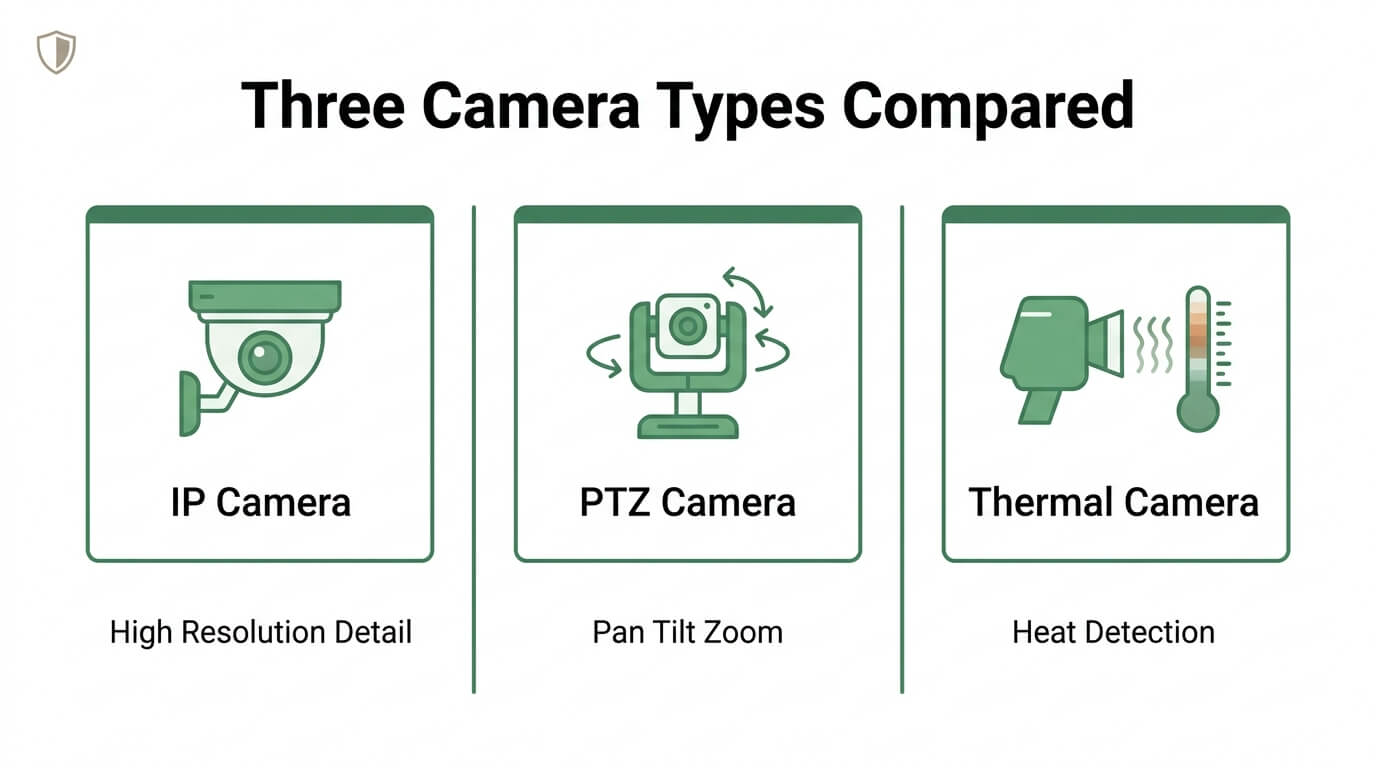
IP cameras operate as network-native digital devices that stream high-resolution footage (up to 4K and beyond) over Ethernet or Wi-Fi to a centralized VMS or cloud platform. Their strength lies in sharp visual detail for facial recognition and license plate capture, scalable architecture through simple network connections, and low per-unit cost ranging from $30 to $500.
PTZ cameras add motorized pan, tilt, and optical zoom (up to 40x) to the IP framework, enabling a single unit to sweep 360 degrees and identify subjects at distances exceeding 140 meters. They replace multiple fixed cameras in large open environments but cost roughly four times more and can only view one direction at a time.
Thermal cameras detect infrared radiation rather than visible light, functioning identically in total darkness, fog, and smoke. With 640×480 sensor arrays and telephoto lenses, they achieve detection distances beyond 1,000 meters. Their limitation is lower visual resolution that cannot support facial identification, which is why they work best as a detection layer paired with optical cameras.
Combining all three types within a single ONVIF-compatible VMS eliminates single-technology blind spots. When layered with AI-powered analytics that reduce false alarms by approximately 90%, each camera type operates closer to its full potential within a unified, proactive security system.
What Is an IP Camera and How Does It Work for Live Monitoring?
An IP camera is a digital video camera that receives control data and sends image data over an IP network, requiring no local recording device. Unlike analog CCTV systems that depend on coaxial cabling and dedicated DVRs, an IP camera connects directly to a local area network and transmits digital video to a video management system (VMS) or cloud platform.
This network-native architecture is what makes IP cameras the foundation of modern live monitoring. Each camera operates as an independent network device with its own IP address, enabling remote access from any authorized location. Security operators can view live feeds, adjust settings, and receive alerts through a centralized VMS or mobile application without being physically on-site.
IP cameras work for live monitoring by encoding video at the source and streaming it over Ethernet or Wi-Fi to a network video recorder (NVR) or cloud server. The camera’s onboard processor handles compression, typically using H.264 or H.265 codecs, which reduces bandwidth demands while preserving image clarity. Power over Ethernet (PoE) simplifies installation further by delivering both data and electrical power through a single cable.
Interoperability is a key advantage. According to Salient Systems, ONVIF (Open Network Video Interface Forum) standards ensure compatibility between different IP-based security devices, allowing a VMS to automatically query and integrate camera capabilities. This means security teams can mix cameras from multiple manufacturers into a unified monitoring platform without proprietary lock-in.
Key capabilities that make IP cameras effective for live monitoring include:
- Digital resolution scaling: IP cameras support resolutions from 1080p to 4K and beyond, capturing detail that analog systems cannot match.
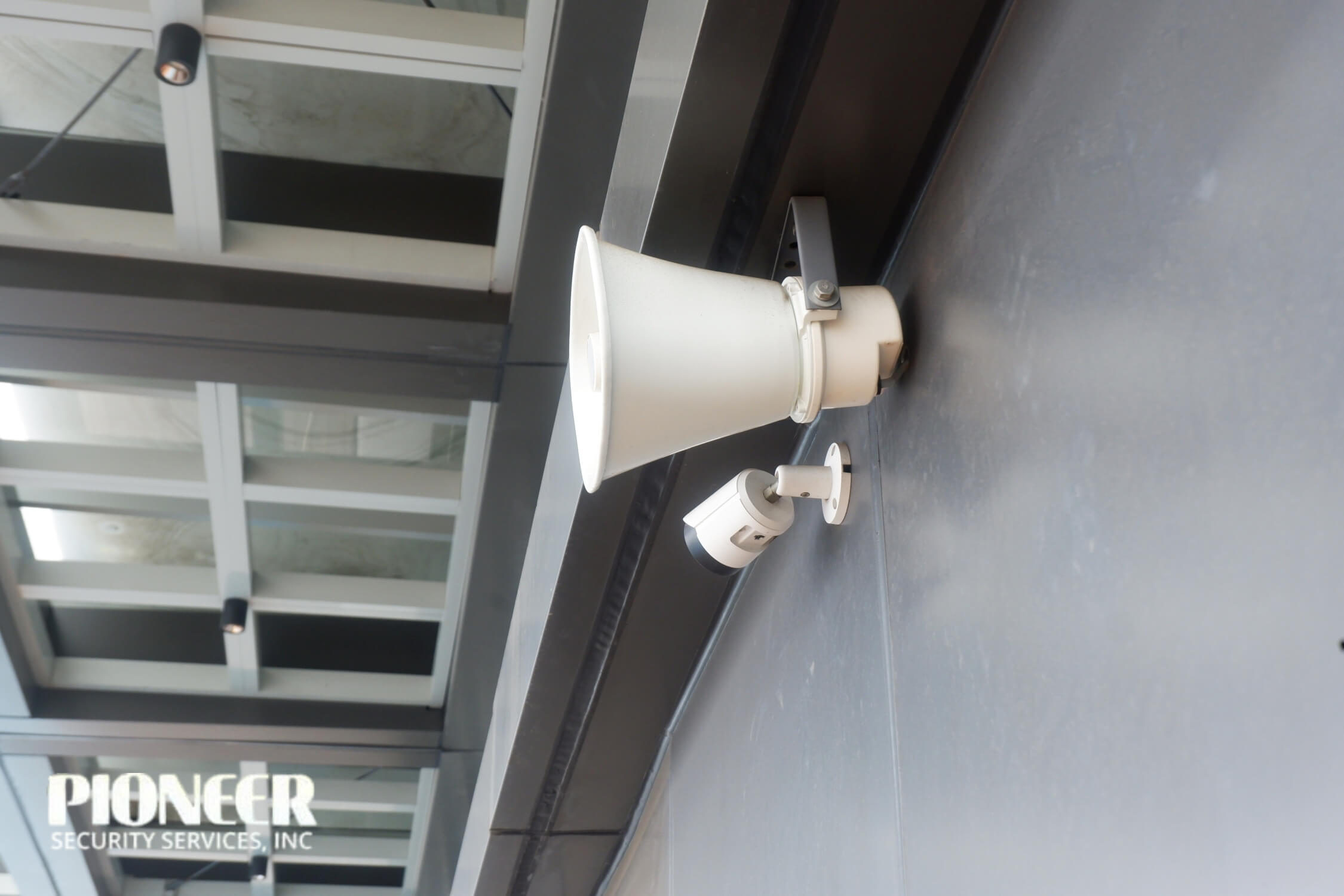
- Two-way audio integration: Built-in speakers and microphones allow operators to issue verbal warnings directly through the camera.
- Edge-based analytics: Onboard processing enables motion detection, line-crossing alerts, and object classification at the camera level before video reaches the server.
- Encrypted transmission: Network protocols like HTTPS and TLS protect video streams from interception during transit.
- Scalable architecture: Adding cameras to an IP system requires only network connectivity, not new cabling infrastructure back to a central recorder.
For security professionals evaluating camera types, understanding that IP cameras serve as the digital backbone of any modern surveillance ecosystem is essential. PTZ and thermal cameras typically operate as specialized IP devices themselves, building on this same network infrastructure to deliver enhanced mechanical control or heat-based detection.
What Is a PTZ Camera and How Does It Work for Live Monitoring?
A PTZ camera is a motorized surveillance camera that provides remote-controlled pan, tilt, and zoom capabilities for active live monitoring. The sections below cover how PTZ mechanics work, what makes these cameras distinct, and where they deliver the most value.
How Does a PTZ Camera Mechanically Operate?
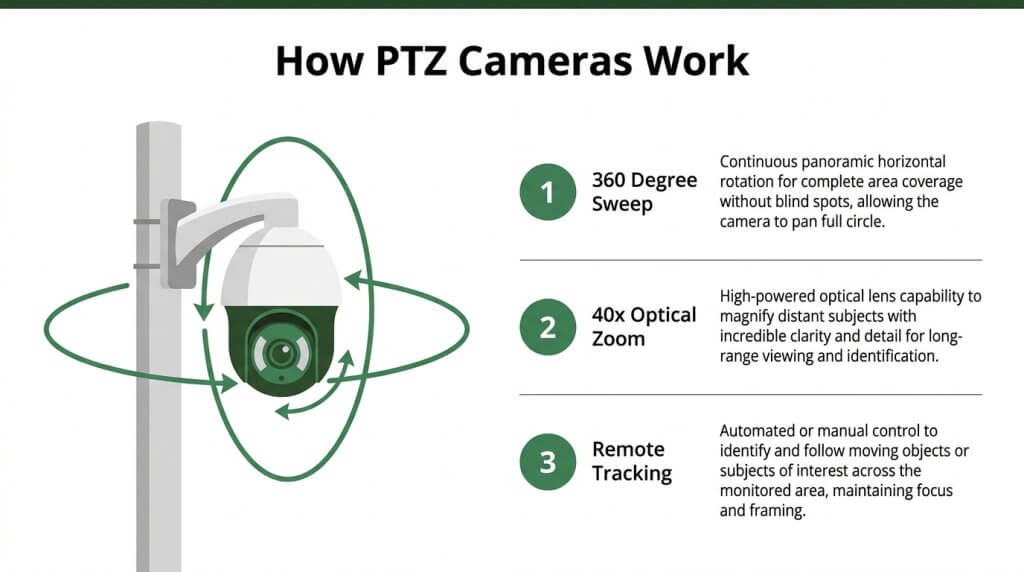
A PTZ camera mechanically operates using precise internal motors that drive three axes of movement: horizontal panning, vertical tilting, and optical zoom adjustment. These motors respond to commands sent over an IP network or from a local controller, allowing a security operator to reposition the camera in real time without physical contact.
PTZ cameras utilize precise mechanical motors to achieve 180 to 360-degree coverage, according to eufy. This continuous rotation eliminates the fixed field-of-view limitation found in standard cameras. Operators can sweep across wide areas, then lock onto a specific target using optical zoom for identification-level detail.
The mechanical nature of PTZ cameras does introduce maintenance considerations that static cameras avoid, including motor wear over time.
What Are the Key Features of PTZ Cameras for Security?
The key features of PTZ cameras for security include:
- 360-degree continuous rotation enables blind-spot-free coverage across large open areas.
- Optical zoom up to 40x (typically 5.6 to 223mm lens range) supports long-range identification of faces and license plates at distances exceeding 140 meters in daylight.
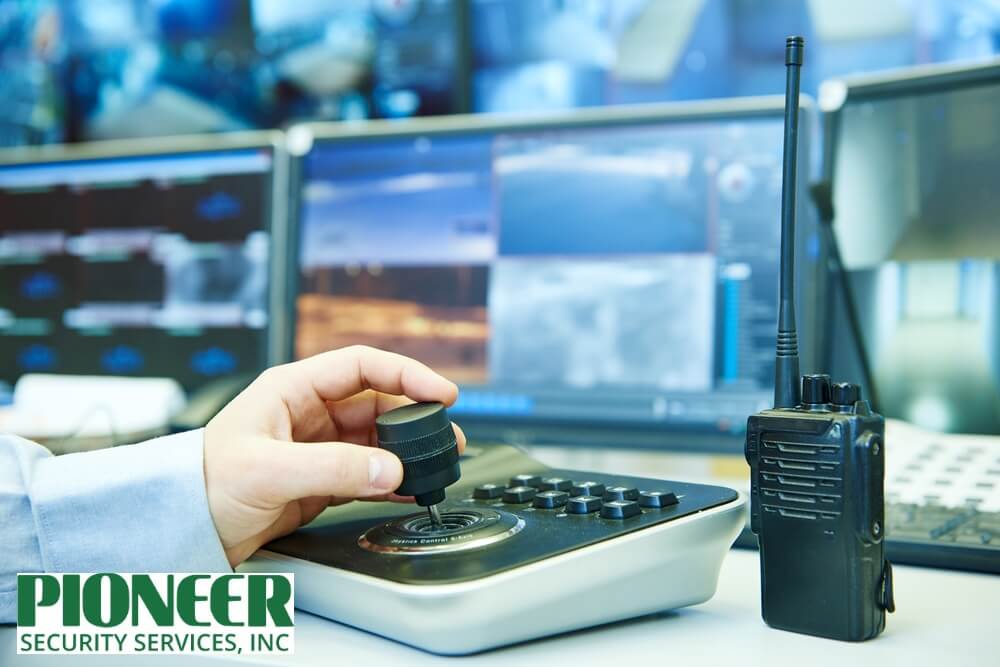
- Remote directional control lets operators track moving subjects in real time from a centralized monitoring station.
- Preset patrol tours automate scanning patterns across predefined positions on a programmed schedule.
- Two-way audio integration allows operators to issue verbal warnings directly through the camera.
For live monitoring operations, the combination of wide-area sweep and deep optical zoom makes PTZ cameras uniquely suited to scenarios requiring active human or AI-guided threat tracking.
Where Are PTZ Cameras Most Effective for Live Monitoring?
PTZ cameras are most effective for live monitoring in large, open environments where active tracking of moving subjects is essential. Parking lots, warehouse yards, construction sites, and campus perimeters all benefit from a single PTZ unit replacing multiple fixed cameras.
Their strength lies in operator-directed response. When an AI analytics platform or a live video guard detects suspicious activity, the PTZ camera can immediately pan to the event location and zoom in for verification. This active engagement model turns passive surveillance into real-time intervention capability.
However, a PTZ camera can only view one direction at a time. Without AI-driven auto-tracking or preset patrol patterns, areas outside the current field of view remain temporarily unmonitored. Understanding this trade-off is critical when designing a hybrid camera system that pairs PTZ units with fixed IP or thermal cameras.
What Is a Thermal Camera and How Does It Work for Live Monitoring?
A thermal camera is a surveillance device that detects infrared radiation emitted by objects, people, and vehicles rather than relying on visible light. Unlike IP and PTZ cameras that capture reflected light, thermal cameras convert heat signatures into visible images, making them effective for detection in complete darkness, fog, and smoke. The subsections below cover how thermal imaging sensors function, where thermal cameras excel in live security monitoring, and what limitations security teams should understand before deployment.
How Does a Thermal Imaging Sensor Detect Heat Signatures?
A thermal imaging sensor detects heat signatures by capturing infrared radiation that every object with a temperature above absolute zero emits. The sensor’s microbolometer array absorbs this radiation and converts it into electrical signals, which a processor then maps into a visual image called a thermogram. Warmer objects appear brighter, while cooler surfaces appear darker.
Thermal sensitivity is measured by Noise-Equivalent Temperature Difference (NETD). According to GT Guard Hunt, sub-40mK NETD performance serves as the benchmark for high-accuracy heat detection across resolution ranges from 160×120 to 640×480 pixels. Lower NETD values mean the sensor can distinguish smaller temperature differences between a person and the surrounding environment, which directly improves detection reliability during live monitoring.
Where Do Thermal Cameras Perform Best for Live Security Monitoring?
Thermal cameras perform best in environments where visible-light cameras struggle or fail entirely. Their ability to detect body heat regardless of lighting conditions makes them ideal for specific high-risk scenarios.
Key environments where thermal cameras excel include:
- Perimeter security at night: Thermal cameras detect intruders crossing fence lines in total darkness without requiring supplemental lighting.
- Fog, rain, and smoke conditions: Infrared radiation penetrates atmospheric obscurants that would blind standard IP or PTZ cameras.
- Large open areas with minimal infrastructure: Wide-field thermal sensors cover vast distances without needing poles, wiring, or illumination arrays.
- Critical infrastructure sites: Power plants, water treatment facilities, and military installations rely on thermal detection for early intrusion alerts.
For expansive perimeters where installing lighting is impractical, thermal cameras often represent the most reliable detection layer in a live monitoring system.
What Are the Limitations of Thermal Cameras for Live Monitoring?
The limitations of thermal cameras for live monitoring center on identification capability, cost, and environmental interference. While thermal sensors detect presence with high reliability, they cannot capture facial features, read license plates, or distinguish colors. This means thermal cameras alone cannot provide the identification detail that law enforcement typically requires for prosecution.
Additional limitations include:
- Lower resolution compared to IP cameras: Common thermal resolutions of 320×240 or 640×480 pixels produce far less visual detail than 4K IP sensors.
- Higher upfront cost: Specialized infrared sensor materials drive prices well above standard visible-light cameras.
- Reflective surface interference: Glass, polished metal, and standing water can reflect infrared energy, producing misleading heat signatures.
These constraints explain why thermal cameras work best as a detection-focused layer paired with IP or PTZ cameras that handle identification, forming a complementary system for comprehensive live monitoring.
How Do IP, PTZ, and Thermal Cameras Compare on Image Quality?
IP, PTZ, and thermal cameras compare image quality across resolution, detail clarity, and compression efficiency. Each camera type produces a fundamentally different image suited to specific monitoring needs. The sections below break down sharpness for IP, PTZ, and thermal cameras individually.
How Sharp Is IP Camera Image Quality for Live Monitoring?
IP camera image quality for live monitoring is exceptionally sharp, with modern models supporting resolutions from 2MP (1080p) up to 4K (8MP) and beyond. An IP camera is a digital video camera that receives control data and sends image data via an IP network, requiring no local recording device, only a local area network. This network-native architecture preserves full-resolution streams from sensor to screen without analog signal degradation.
When paired with H.265 compression, which according to Springer Link provides approximately 30 to 50% bitrate reduction compared to H.264 while maintaining the same image quality, 4K IP streams remain crisp even over bandwidth-constrained networks. Color accuracy, facial detail, and text legibility make IP cameras the strongest choice for environments where visual identification matters most during live monitoring.
How Sharp Is PTZ Camera Image Quality for Live Monitoring?
PTZ camera image quality for live monitoring is sharp at the base resolution and becomes significantly more detailed when optical zoom is engaged. Because PTZ cameras use optical zoom lenses rather than digital cropping, the image retains full pixel density even at extreme magnification. A 4K PTZ unit with 40x optical zoom can resolve license plates and facial features at distances exceeding 140 meters in daylight conditions.
However, sharpness applies only to the zoomed field of view at any given moment. While the lens focuses on one area, surrounding zones are not captured. This trade-off between magnified detail and simultaneous coverage is the defining image quality consideration for PTZ cameras in live monitoring environments.
How Sharp Is Thermal Camera Image Quality for Live Monitoring?
Thermal camera image quality for live monitoring is optimized for detection rather than visual identification. Thermal imaging cameras detect infrared radiation (heat) rather than visible light, producing grayscale or false-color images that reveal human silhouettes, vehicles, and heat anomalies. According to NIST, common thermal resolution standards include 320×240 pixels for general use and 640×480 for high-detail, long-range detection.
These resolutions are far lower than IP or PTZ cameras in raw pixel count, yet thermal sensors excel where visible-light cameras fail entirely. High-resolution 640×480 thermal arrays allow detection distances exceeding 1,000 meters when paired with telephoto lenses. For live monitoring, thermal cameras prioritize reliable presence detection over the sharp facial or text detail that IP cameras deliver.
With image quality differences clarified, understanding how each camera type covers physical space adds the next critical layer to this comparison.
How Do IP, PTZ, and Thermal Cameras Compare on Coverage Area?
IP, PTZ, and thermal cameras compare on coverage area based on their field of view, mechanical range, and detection technology. Fixed IP cameras cover a set angle, PTZ cameras sweep up to 360 degrees, and thermal cameras detect heat signatures across wide zones in complete darkness.
How Much Area Can a Fixed IP Camera Cover?
A fixed IP camera can cover a single, defined field of view typically ranging from 90 to 130 degrees horizontally, depending on lens selection. Because the lens position is locked, each camera monitors one consistent zone without gaps or delays.
This fixed approach carries a practical advantage often overlooked: continuous recording of every pixel in the frame, with no momentary blind spots caused by mechanical repositioning. Multiple fixed cameras can be tiled together to cover large areas, though the number of units required climbs quickly. According to Raythink Technology, PTZ cameras achieving 360-degree continuous horizontal rotation can effectively replace multiple fixed cameras in large open-area deployments. That replacement potential highlights a key trade-off, since PTZ units frequently cost four times more than standard fixed IP cameras. For budget-conscious installations where consistent, gap-free footage matters more than zoom capability, fixed IP cameras remain the most cost-effective coverage solution.
How Much Area Can a PTZ Camera Cover With Pan-Tilt-Zoom?
A PTZ camera can cover 180 to 360 degrees of horizontal area using precise mechanical motors that control pan, tilt, and optical zoom functions remotely. This mechanical range allows a single unit to surveil spaces that would otherwise require several fixed cameras.
Optical zoom extends coverage further. According to CCTV Camera World, long-range PTZ cameras equipped with 40x optical zoom lenses (typically 5.6 to 223mm) can identify license plates and facial features at distances exceeding 140 meters during daylight. That combination of sweep range and zoom depth makes PTZ cameras particularly effective for large parking lots, campuses, and open commercial perimeters. One limitation worth noting: while the camera pans to one area, other zones temporarily fall outside the active view. Pairing PTZ cameras with fixed units or AI-driven auto-tracking mitigates this vulnerability significantly.
How Much Area Can a Thermal Camera Cover in Total Darkness?
A thermal camera can cover its full detection zone in total darkness because it senses infrared radiation (heat) rather than visible light. Lighting conditions have zero effect on a thermal sensor’s ability to detect people, vehicles, or animals.
High-resolution thermal sensors with 640×480 pixel arrays, when paired with telephoto lenses, can achieve detection distances exceeding 1,000 meters. This makes thermal cameras the dominant choice for perimeter security at critical infrastructure sites, where illumination is either impractical or tactically undesirable. While thermal imaging excels at detecting presence across vast, unlit areas, it does not capture facial detail or readable text the way IP or PTZ cameras do. For most large-scale deployments, thermal cameras serve as the detection layer that triggers alerts, while optical cameras handle identification.
With coverage capabilities defined, understanding how each camera type handles low-light performance adds another critical layer to the comparison.
How Do IP, PTZ, and Thermal Cameras Perform in Low-Light Conditions?
IP, PTZ, and thermal cameras perform in low-light conditions using distinct technologies: infrared illumination, enhanced optical sensors, and heat detection. Each approach suits different nighttime monitoring needs.
How Well Do IP Cameras Perform at Night?
IP cameras perform at night primarily through built-in infrared (IR) illuminators that project invisible light onto the scene. Modern IP cameras feature IR illumination distances ranging from 30m for residential units to over 100m for industrial-grade outdoor perimeters, according to Security.org. When IR activates, the image switches to grayscale, which sacrifices color detail but maintains enough clarity for identification. Starlight sensors represent an advancement in this space, allowing some IP cameras to capture usable color footage under extremely dim ambient light. For sites with zero illumination, though, IR range becomes the limiting factor; objects beyond the illuminator’s throw disappear entirely from the feed.
How Well Do PTZ Cameras Perform at Night?
PTZ cameras perform at night by combining mechanical zoom capabilities with IR or laser illumination systems. The optical zoom advantage becomes particularly valuable in darkness because operators can magnify distant subjects without losing resolution, pulling detail from IR-lit areas that fixed cameras would render as indistinct shapes. Higher-end PTZ models pair laser illuminators with their zoom range, extending effective nighttime visibility well beyond standard IR. However, mechanical components introduce a trade-off: while the PTZ tracks one area of interest, unmonitored zones remain dark and uncovered. For consistent nighttime coverage, pairing PTZ cameras with fixed IP cameras eliminates the gap created when the lens repositions. This is one of the most overlooked vulnerabilities in nighttime PTZ deployments.
How Well Do Thermal Cameras Perform at Night?
Thermal cameras perform at night with the same effectiveness as during daylight because they detect heat, not visible light. According to GT Guard Hunt, thermal sensitivity is measured by Noise-equivalent Temperature Difference (NETD), with sub-40mK performance serving as the benchmark for high-accuracy heat detection across resolutions from 160×120 to 640×480. Complete darkness, fog, smoke, and light rain have minimal impact on thermal detection capability. This makes thermal cameras the only camera type that requires zero supplemental lighting infrastructure. The limitation is that thermal imagery shows heat signatures rather than visual detail, so facial recognition or license plate reading is not possible without a paired optical camera.
Understanding low-light capabilities helps clarify total ownership costs across each camera type.
How Do IP, PTZ, and Thermal Cameras Compare on Cost?
IP, PTZ, and thermal cameras compare on cost across a wide price spectrum, from budget-friendly fixed IP units to premium thermal sensors. The sections below break down typical costs for each camera type.
How Much Does an IP Camera System Typically Cost?
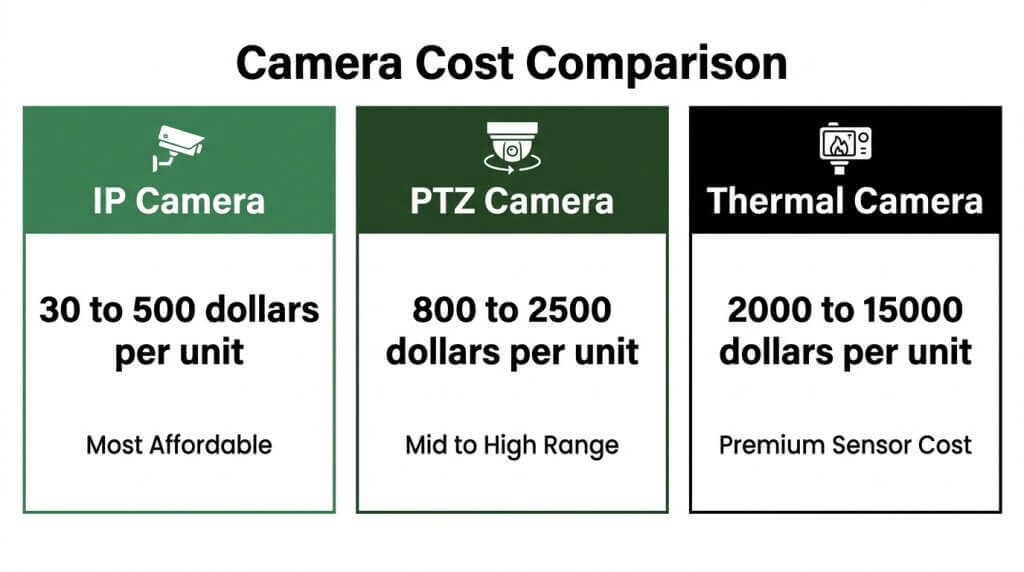
An IP camera system typically costs between $30 and $500 per camera for equipment, with professional installation adding $100 to $200 per unit. According to Security.org, this makes IP cameras the most accessible entry point for businesses and homeowners building a live monitoring system.
Total cost depends on resolution, weatherproofing, and network infrastructure. A basic four-camera setup with a PoE switch and NVR often falls between $500 and $2,500 installed. Ongoing costs remain low since IP cameras have no mechanical parts subject to wear. Adopting predictive maintenance strategies can reduce direct maintenance expenses by an average of 12%, keeping long-term operating costs manageable.
For most small to midsize properties, IP cameras deliver the strongest return per dollar spent on surveillance.
How Much Does a PTZ Camera System Typically Cost?
A PTZ camera system typically costs roughly four times the price of a comparable fixed IP camera, primarily because of its mechanical pan, tilt, and zoom components. A single commercial-grade PTZ unit frequently ranges from $800 to $2,500 before installation.
Higher costs stem from several factors:
- Motorized gimbals require precision engineering and periodic servicing.
- Optical zoom lenses (up to 40x) add significant hardware expense.
- Weatherproof housings rated for continuous outdoor rotation increase material costs.
- Professional installation is more complex due to power and control wiring requirements.
Despite the premium, one PTZ camera can replace multiple fixed cameras in open areas, potentially lowering total system cost for large sites like parking lots or warehouses.
How Much Does a Thermal Camera System Typically Cost?
A thermal camera system typically costs significantly more than IP or PTZ alternatives, with individual units ranging from $2,000 to over $15,000 depending on sensor resolution and detection range. According to LightPath Technologies, the global thermal camera market reached $5.13 billion in 2024, reflecting the high-cost sensors required for defense and industrial security applications.
This premium pricing results from specialized infrared detector arrays that are expensive to manufacture. Most competitors overlook detailed cost breakdowns for hybrid architectures combining IP, PTZ, and thermal cameras into a single VMS platform, yet this integrated approach often provides the best value for critical infrastructure. Pairing a few thermal units for perimeter detection with lower-cost IP cameras for identification keeps budgets realistic while maximizing coverage.
Understanding these cost tiers helps security planners match each camera type to the threats and budget constraints of their specific environment.
Which Camera Type Is Best for Each Security Scenario?
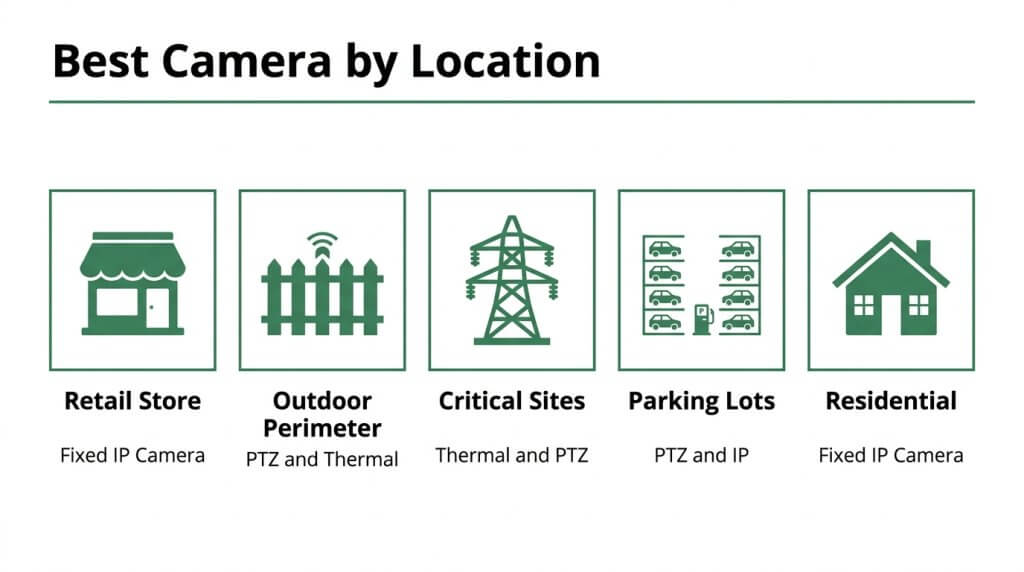
The best camera type for each security scenario depends on the environment, threat profile, and monitoring goals. The sections below match IP, PTZ, and thermal cameras to five common scenarios: retail storefronts, outdoor perimeters, critical infrastructure, parking areas, and residential properties.
Which Camera Type Is Best for Retail and Commercial Storefronts?
The best camera type for retail and commercial storefronts is a fixed IP camera. IP cameras deliver high-resolution footage that captures facial detail, transaction activity, and shelf-level visibility across defined zones.
Key advantages for retail environments include:
- Compact dome and turret form factors that blend into ceiling grids without intimidating customers.
- Continuous, gap-free recording on every aisle, register, and entry point simultaneously.
- Easy integration with point-of-sale systems and AI analytics for shrinkage detection.
Retailers operating under the GDPR in Europe or the CCPA in California must also post visible signage and enforce data retention limits on stored footage. For most storefronts, a multi-camera IP layout delivers the broadest evidentiary coverage at the lowest per-unit cost.
Which Camera Type Is Best for Large Outdoor Perimeters?
The best camera type for large outdoor perimeters is a PTZ camera paired with thermal sensors. PTZ units cover vast distances through continuous pan, tilt, and optical zoom, while thermal cameras detect intruders in complete darkness or adverse weather.
According to Security.org, modern IP cameras feature infrared illumination distances ranging from 30 meters for residential units to over 100 meters for industrial-grade outdoor perimeters. A hybrid approach positions fixed IP cameras at fence-line intervals for baseline coverage, then deploys PTZ cameras at corners or elevated mounts to track movement across the full perimeter. Thermal overlays ensure no gap exists when visible light fails. This layered strategy is the most reliable way to secure sprawling sites like distribution centers and solar farms.
Which Camera Type Is Best for Critical Infrastructure Sites?
The best camera type for critical infrastructure sites is a thermal camera integrated with PTZ tracking. Critical infrastructure, such as power plants, water treatment facilities, and data centers, demands detection capability that functions regardless of lighting, weather, or visual obstructions.
Thermal cameras identify heat signatures from personnel, vehicles, and equipment anomalies at extreme range. When a thermal sensor triggers an alert, a co-located PTZ camera slews to the coordinates and zooms in for visual confirmation. With the global average cost of a data breach reported at $4.44 million in 2025, physical security failures at these sites carry severe financial consequences. For this reason, pairing thermal detection with PTZ verification and AI-driven analytics provides the most defensible security posture.
Which Camera Type Is Best for Parking Lots and Garages?
The best camera type for parking lots and garages is a combination of PTZ and fixed IP cameras. Parking environments present unique challenges: wide open spaces, variable lighting between day and night, and the need for license plate capture at entry and exit points.
Effective parking surveillance requires:
- Fixed IP cameras at every entrance, exit, and payment kiosk for continuous plate and facial recording.
- PTZ cameras mounted at elevated positions to sweep across open lots and multi-level decks.
- IR-equipped models rated for low-light performance in covered garage levels.
PTZ cameras are especially valuable here because operators can follow suspicious activity in real time across hundreds of meters, then zoom in for identification-quality detail.
Which Camera Type Is Best for Residential Properties?
The best camera type for residential properties is a fixed IP camera. Residential security prioritizes simplicity, affordability, and reliable 24/7 recording over the mechanical complexity of PTZ or the specialized cost of thermal systems.
Fixed IP cameras with built-in IR illumination cover driveways, entryways, backyards, and side gates without requiring manual control. Homeowners benefit from smartphone-accessible live feeds, motion-triggered alerts, and cloud or local storage options. For most homes, three to six strategically placed IP cameras eliminate blind spots at a fraction of the cost of a single PTZ unit. Larger estates with wooded perimeters or acreage may justify adding one thermal sensor for boundary-line detection.
Matching camera technology to each scenario ensures budgets are spent where they create the greatest security value.
Can You Combine IP, PTZ, and Thermal Cameras in One System?
Yes, you can combine IP, PTZ, and thermal cameras in one system. A hybrid security architecture uses a unified video management system (VMS) to integrate all three camera types, leveraging each technology’s strengths across a single platform.
ONVIF (Open Network Video Interface Forum) standards ensure compatibility between different IP-based security devices, allowing a VMS to automatically query and integrate camera capabilities. This interoperability means fixed IP cameras, mechanical PTZ units, and thermal sensors can share one network, one recording infrastructure, and one monitoring dashboard. According to Salient Systems, ONVIF protocols allow a VMS to automatically discover and integrate cameras from different manufacturers without proprietary software conflicts.
A well-designed hybrid system assigns each camera type to its optimal role:
- Fixed IP cameras provide continuous, high-resolution coverage of entrances, hallways, and transaction points.
- PTZ cameras deliver on-demand zoom and tracking for large open areas where operators need to follow active incidents.
- Thermal cameras secure perimeter zones and low-visibility areas where detecting heat signatures matters more than facial detail.
The layered approach eliminates single-technology blind spots. Fixed IP cameras capture forensic-quality footage around the clock, while PTZ cameras respond dynamically when an operator or AI alert flags movement. Thermal cameras fill the gap in complete darkness, fog, or smoke, where visible-light sensors lose effectiveness.
For organizations managing critical infrastructure, this combination is not optional; it is the baseline for credible security. Relying on a single camera type always leaves exploitable gaps, whether that means poor night coverage from IP-only deployments or limited forensic detail from thermal-only perimeters. The most resilient systems treat each technology as a complementary layer rather than a standalone solution.
With a hybrid architecture in place, avoiding common selection mistakes ensures each camera performs at its full potential.
What Are Common Mistakes When Choosing Cameras for Live Monitoring?
Common mistakes when choosing cameras for live monitoring include mismatching camera types to site requirements, ignoring total cost of ownership, and overlooking integration compatibility. The following errors can undermine even well-funded security investments.
- Choosing based on price alone. Basic IP cameras cost as little as $30, but selecting the cheapest option often means sacrificing resolution, durability, or analytics capability needed for effective live monitoring.
- Using a single camera type for every zone. Fixed IP cameras cannot track moving subjects across open lots, while PTZ cameras leave blind spots when zoomed in on one area. Each zone demands a matched camera type.
- Ignoring mechanical maintenance costs. PTZ cameras frequently cost four times more than standard fixed IP cameras due to mechanical components, according to Noorio. Those moving parts also wear over time, adding ongoing service expenses that buyers overlook at purchase.
- Neglecting VMS and protocol compatibility. Cameras that lack ONVIF compliance may not integrate with existing video management software, creating costly workarounds or forcing platform replacement.
- Underestimating bandwidth requirements. Deploying multiple 4K IP streams without H.265 compression or adequate network infrastructure leads to latency, dropped frames, and degraded live monitoring performance.
- Overlooking environmental conditions. Thermal cameras excel in total darkness and adverse weather, yet many buyers default to visible-light cameras for perimeter roles where infrared detection would be far more reliable.
- Skipping a professional site assessment. Without evaluating lighting, distance, terrain, and threat profile for each zone, buyers consistently over-invest in some areas and leave others exposed.
The most expensive mistake is treating camera selection as a product decision rather than a systems design problem. Every camera must serve a defined role within the broader monitoring architecture, or gaps will surface after installation when they are costliest to fix. Understanding how AI-powered monitoring leverages each camera type can further close those gaps.
How Does AI-Powered Live Video Monitoring Maximize Camera Performance?
AI-powered live video monitoring maximizes camera performance by closing the gap between raw video feeds and actionable threat detection. The sections below cover how Pioneer Security integrates AI monitoring with camera systems and the key takeaways from comparing IP, PTZ, and thermal cameras.
Can Pioneer Security’s AI-Powered Live Monitoring Enhance Your Camera System?
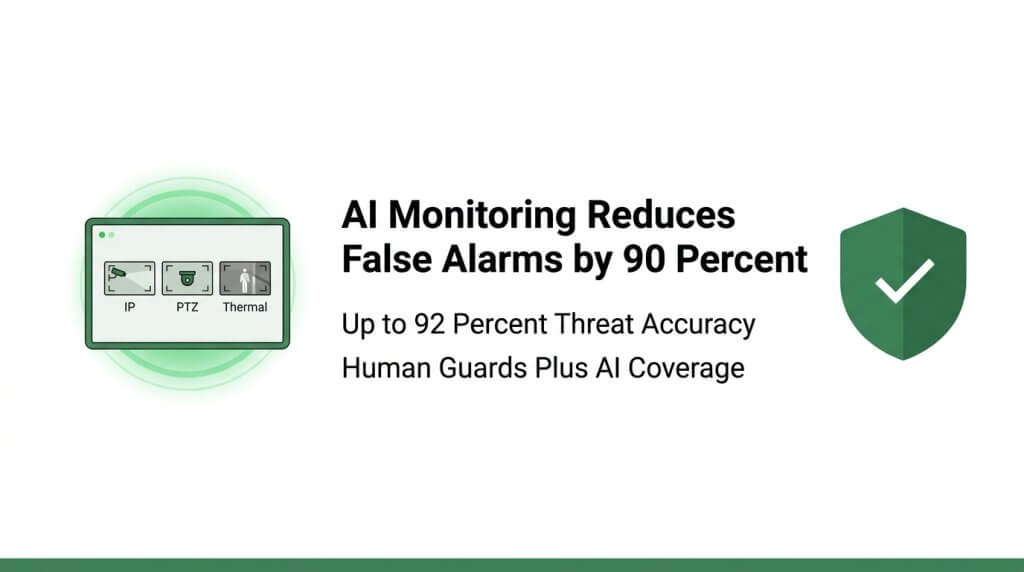
Yes, Pioneer Security’s AI-powered live monitoring can enhance your camera system by layering intelligent analytics over any combination of IP, PTZ, and thermal cameras. Pioneer Security pairs US-based live video guards with AI-powered PoE hubs running Nvidia GPUs, enabling real-time threat detection and two-way audio intervention before a crime occurs.
This combination addresses a core limitation of traditional surveillance. According to Intel Corporation, human detection ability in traditional video monitoring decreases by 15% after just 30 minutes of continuous observation. AI-powered monitoring eliminates that fatigue gap by maintaining consistent alertness across every feed, 24/7.
Machine learning algorithms also filter environmental noise, such as animals, shadows, and weather movement, from genuine threats. This intelligent noise reduction can reduce false alarms by approximately 90%, ensuring that live video guards respond only to verified events. For facilities running hybrid camera systems, this means every camera type performs closer to its full potential without overwhelming operators with irrelevant alerts.
What Are the Key Takeaways About Comparing IP, PTZ, and Thermal Cameras for Live Monitoring?
The key takeaways about comparing IP, PTZ, and thermal cameras for live monitoring are:
- IP cameras deliver high-resolution detail and cost-effective scalability, making them the best foundation for most commercial and residential systems.
- PTZ cameras provide dynamic coverage through pan, tilt, and zoom functions, excelling in large open areas where active tracking is needed.
- Thermal cameras detect heat signatures regardless of lighting or weather, offering unmatched reliability for perimeter security and critical infrastructure.
- Combining all three camera types in a single VMS creates layered coverage that eliminates the weaknesses of any individual technology.
- AI-powered live monitoring transforms passive camera feeds into proactive security by detecting anomalies with up to 92% accuracy and reducing false alarms dramatically.
No single camera type solves every security challenge. The strongest systems pair the right hardware mix with intelligent, human-backed monitoring that acts on threats in real time, which is exactly the approach Pioneer Security has refined over 45 years of protecting homes and businesses nationwide.