
Monitored CCTV Services for Businesses in San Diego, CA | Local Security Experts
FROM PIONEER SECURITY SERVICES
Monitored CCTV services in San Diego combine advanced camera technology with 24/7 professional surveillance to protect businesses from theft, vandalism, and liability exposure. Unlike traditional security cameras that simply record, monitored systems stream live video to trained operators who verify incidents and coordinate immediate response. With San Diego’s coastal climate challenges and busy commercial districts, businesses need specialized surveillance solutions that withstand salt air corrosion while delivering reliable security coverage across retail corridors, parking areas, and warehouse facilities.
"*" indicates required fields
Watch our guards stopping crimes before they start!
What Is a Monitored CCTV System and How Does It Work?
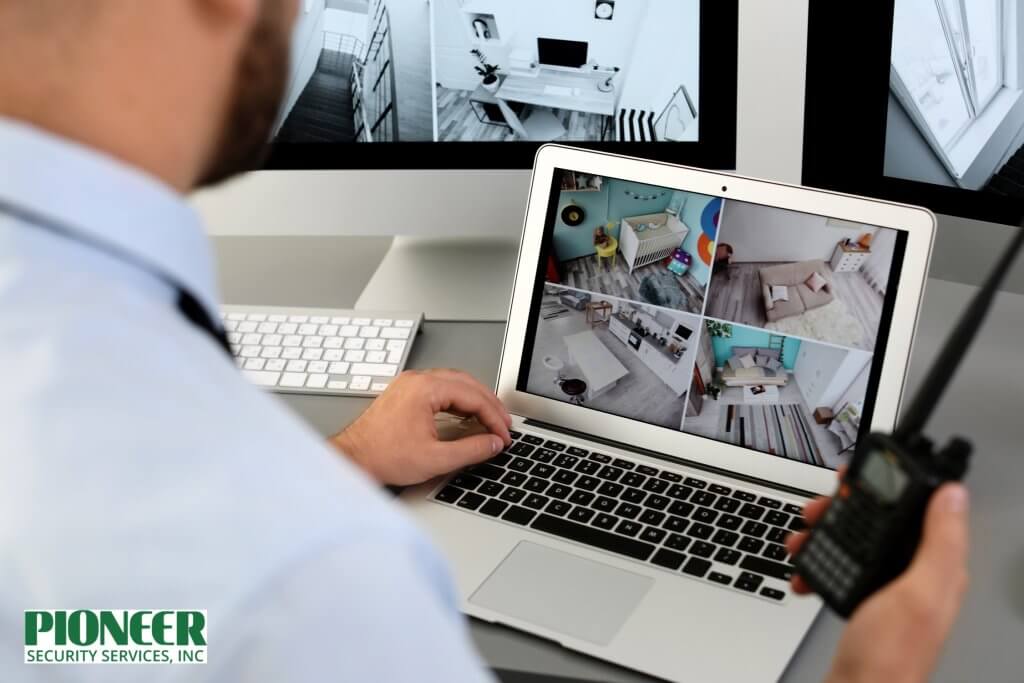
Monitored CCTV systems integrate high-resolution cameras with professional monitoring centers staffed by security specialists. These systems continuously transmit video feeds through encrypted connections to remote facilities where trained operators watch for suspicious activity. When an incident occurs, monitoring personnel verify the threat and execute predetermined response protocols, including contacting business owners, dispatching security guards, or notifying law enforcement with real-time incident details.
What components make up a monitored CCTV solution?
A complete monitored CCTV solution requires multiple integrated components working together. Network video recorders (NVRs) process and store footage while maintaining continuous connection to monitoring centers. IP cameras with resolutions ranging from 2MP to 8MP capture detailed images in various lighting conditions. Power over Ethernet (PoE) switches supply both power and data connectivity through single cables, reducing installation complexity. Video management software enables remote access and intelligent analytics processing.
How does real-time monitoring and alarm verification work?
Real-time monitoring transforms passive camera systems into active security solutions through human verification and intelligent analytics. Motion detection algorithms trigger initial alerts, which monitoring operators immediately review to determine legitimacy. Operators access multiple camera angles to assess situations comprehensively before initiating response protocols. Advanced systems incorporate artificial intelligence for pre-screening events, reducing false alarms by up to 90-95% according to Actuate AI security resources. Verified incidents receive priority police response, as confirmed threats bypass standard alarm queue protocols.
Why Should San Diego Businesses Choose 24/7 Monitoring?
San Diego businesses face unique security challenges from high tourist traffic, extended operating hours, and valuable inventory exposure. Professional 24/7 monitoring provides continuous protection when staff cannot be present, particularly during overnight hours when most commercial burglaries occur. Monitored systems deliver faster incident response, reduced false alarms, and documented evidence for insurance claims and legal proceedings.
How does monitoring reduce theft, vandalism, and liability?
Professional monitoring creates multiple layers of deterrence and documentation that significantly reduce criminal activity. Visible cameras with monitoring decals discourage opportunistic theft, while active voice-down capabilities allow operators to warn intruders they’re being watched and recorded. When incidents occur, time-stamped video evidence supports police investigations and insurance claims. Liability protection extends beyond crime prevention—monitored footage documents slip-and-fall incidents, delivery disputes, and employee safety compliance. Monitored CCTV typically reduces shrinkage by 30% according to ECR Loss research.
How do monitored cameras enable faster incident response?
Monitored CCTV systems compress response times from hours to minutes through verified alarm protocols and direct communication channels. When operators confirm genuine threats, they provide responding officers with suspect descriptions, last-known locations, and real-time movement updates. This actionable intelligence improves apprehension rates and reduces property damage. San Diego Police Department’s verified response program prioritizes monitored alarm calls. Pioneer Security’s monitoring center enables seamless information transfer during active incidents.
What Are the Key Features to Look for in a Business Monitored CCTV System?
Effective business surveillance requires cameras and features tailored to specific operational needs and environmental conditions. San Diego’s coastal environment demands corrosion-resistant housings and specialized coatings to prevent salt air damage. Modern monitored systems incorporate artificial intelligence, advanced analytics, and flexible recording options to maximize security coverage while minimizing false alarms.
Which camera types and resolutions are best for storefronts and parking lots?
Storefront security requires high-resolution dome cameras with wide dynamic range (WDR) technology to handle challenging lighting from windows and displays. 4MP to 8MP resolutions capture facial details and product identification at typical retail distances. Parking lots benefit from bullet-style cameras with infrared illumination extending 150+ feet for nighttime coverage. License plate recognition (LPR) cameras positioned at entry/exit points require specialized optics and 60+ frames per second capture rates. Coastal installations require IP66-rated enclosures with marine-grade stainless steel mounting hardware.
What role do AI analytics and motion-based alerts play?
Artificial intelligence transforms raw video into actionable security intelligence through behavioral analysis and pattern recognition. Line-crossing detection identifies when individuals enter restricted areas, while loitering detection flags suspicious behavior near high-value merchandise. Object removal alerts trigger when items disappear from designated zones, preventing theft of outdoor equipment or displays. Advanced analytics filter routine activity from genuine security events, reducing operator fatigue and improving response accuracy. Heat mapping identifies traffic patterns for operational optimization beyond security applications. These intelligent features reduce false alarms by 90% compared to simple motion detection according to SIA state of security video analytics.
How Much Do Monitored CCTV Services Cost for Businesses in San Diego?
Monitored CCTV investment varies based on property size, camera quantity, and selected features. Businesses typically invest $1,500-$3,000 for initial hardware and installation, with monthly monitoring fees ranging from $40-$120 depending on service levels according to Ackerman Security business costs. Understanding cost factors and calculating return on investment helps businesses make informed security decisions that align with operational budgets.
What factors influence installation and monthly monitoring fees?
Installation costs depend primarily on camera quantity, mounting complexity, and infrastructure requirements. Standard installations include 8-16 cameras, network video recorder, and professional configuration. Complex installations requiring lifts, trenching, or extensive cabling increase labor costs. Monthly monitoring fees scale with camera count, storage retention periods, and response service levels. Basic monitoring with email alerts costs less than premium services including live voice-down intervention and guaranteed guard dispatch.
How can businesses calculate ROI from loss prevention and insurance savings?
Return on investment calculations combine direct loss prevention with insurance premium reductions and operational efficiencies. Average retail shrinkage reaches 1.6% of gross sales according to the National Retail Federation’s 2023 security survey. Monitored CCTV typically reduces shrinkage by 30-50%, delivering immediate bottom-line impact. Commercial insurance carriers offer 15-20% premium discounts for professionally monitored systems with verified response protocols according to the Insurance Information Institute. Additional ROI factors include reduced security guard costs, decreased fraudulent claims, and improved employee productivity.
What Legal and Privacy Rules Apply to Video Surveillance in California?
California maintains strict privacy protections that affect business surveillance deployments. The California Constitution’s privacy provisions and specific statutes like the California Invasion of Privacy Act create compliance requirements beyond federal regulations. Understanding these rules prevents legal exposure while maximizing legitimate security coverage.
What are the rules about recording audio on CCTV in California?
California Penal Code Section 632 prohibits recording confidential communications without consent from all parties according to California Penal Code § 632. This two-party consent requirement effectively bans audio recording in most business surveillance applications. Exceptions exist for recording in public areas where no reasonable expectation of privacy exists, but determining these boundaries requires careful legal analysis. Businesses needing audio for specific security purposes should post conspicuous notices and consider consulting legal counsel for compliance strategies.
Where should you avoid placing cameras to prevent privacy violations?
Camera placement must respect both employee and customer privacy expectations while maintaining security coverage. Prohibited locations include restrooms, changing rooms, break rooms, and private offices where individuals expect privacy. Cameras monitoring workspace areas must focus on security objectives rather than employee monitoring. California Labor Code Section 435 requires employers to provide notice before conducting video surveillance of employees. Union contracts may impose additional restrictions on workplace monitoring. External cameras should avoid capturing neighboring properties or public sidewalks beyond immediate business premises.
How Do San Diego’s Local Conditions Affect Camera Selection and Placement?
San Diego’s coastal environment creates unique challenges for outdoor surveillance equipment. Salt air accelerates corrosion, marine layer moisture affects visibility, and intense UV exposure degrades standard plastics. Successful deployments require specialized equipment and installation techniques adapted to these conditions.
How does coastal salt air and humidity impact equipment choices?
Salt air penetrates standard equipment housings, corroding internal electronics and degrading image quality within months. Marine-grade cameras feature specialized gaskets, conformal coatings on circuit boards, and stainless steel or polycarbonate housings resistant to salt damage. The National Electrical Manufacturers Association (NEMA) 4X rating indicates suitable corrosion resistance for coastal deployments according to NEMA enclosure ratings. Humidity management requires cameras with internal heaters and pressure equalization membranes preventing condensation. San Diego’s microclimates vary significantly—businesses within one mile of the coast face severe exposure, while inland locations experience moderate conditions. Pioneer Security specifies appropriate protection levels based on specific location analysis.
What mounting or power considerations are common for San Diego properties?
Coastal wind loads require reinforced mounting systems exceeding standard specifications. Building codes in San Diego County mandate wind resistance calculations according to Chapter 16 of the California Building Code. Stainless steel mounting hardware with isolation washers prevents galvanic corrosion between dissimilar metals. Power systems benefit from surge protection due to increased lightning activity during monsoon season. Solar-powered cameras work effectively given San Diego’s 146 annual clear days according to National Weather Service climate data, providing installation flexibility for parking lots and perimeter areas lacking electrical infrastructure. Backup power systems should account for Public Safety Power Shutoff (PSPS) events affecting some commercial areas during high fire risk periods.
How Is Installation and Onboarding Performed by a Local Provider?
Professional installation ensures optimal camera performance and long-term reliability. Local providers understand San Diego’s permitting requirements, architectural styles, and environmental challenges. The installation process typically spans 1-3 weeks from initial survey to system activation, depending on project scope and complexity.
What should you expect during a site survey and camera placement plan?
Comprehensive site surveys identify security vulnerabilities, optimal camera locations, and infrastructure requirements. Security consultants evaluate lighting conditions, typical traffic patterns, and high-risk areas like cash registers or loading docks. Advanced providers use 3D modeling software to simulate camera coverage and eliminate blind spots before installation begins. Surveys document existing network infrastructure, power availability, and structural mounting points. Pioneer Security’s survey process includes thermal imaging to identify hidden structural issues and radio frequency analysis ensuring reliable wireless connectivity.
How long does typical installation and system testing take?
Standard 8-16 camera installations require 2-4 days of on-site work by certified technicians. Pre-installation tasks including permit acquisition and equipment staging add 5-7 business days. Installation phases progress from infrastructure (cabling and mounting) through equipment placement, configuration, and comprehensive testing. The City of San Diego requires electrical permits for low-voltage installations according to City of San Diego electrical permit guidelines. System testing validates camera angles, motion detection zones, analytics accuracy, and monitoring center connectivity. Training for designated staff members covers system operation, evidence retrieval, and emergency procedures. Pioneer Security provides detailed project timelines during initial consultations and maintains consistent communication throughout installation.
What Are Best Practices for Integrating Monitored CCTV with Access Control and Alarms?
Integrated security systems multiply protection effectiveness through synchronized responses and comprehensive incident documentation. Modern platforms unify video surveillance, access control, and intrusion detection into cohesive security ecosystems. This integration enables sophisticated response protocols impossible with standalone systems.
How can integrated systems improve incident verification and response?
Integration enables automatic camera positioning when access cards are presented or doors are forced open. Intrusion alarms trigger immediate video pop-ups at monitoring stations, providing visual verification within seconds. Access control events link to corresponding video, creating comprehensive audit trails for investigations. Facial recognition integrates with access databases to identify unauthorized individuals using compromised credentials. These platforms also enable sophisticated analytics like tailgating detection and occupancy management crucial for modern security operations.
Which communication channels are used for verified alarm escalation?
Professional monitoring centers maintain multiple redundant communication pathways ensuring reliable alarm transmission and response coordination. Primary channels include dedicated cellular networks, broadband internet, and traditional phone lines configured for automatic failover. Alarm signals transmit using encrypted protocols meeting UL 2610 standards for commercial alarm monitoring according to UL 2610 standard. Verified incidents trigger simultaneous notifications through multiple channels—automated phone calls, SMS alerts, mobile app push notifications, and email reports. Two-way voice communication allows monitoring operators to challenge intruders and provide real-time updates to responding authorities. Pioneer Security’s monitoring center utilizes proprietary escalation workflows customized to each client’s preferences and response requirements.
How Do Businesses Manage Evidence, Data Retention, and Remote Access?
Effective evidence management balances storage costs, legal requirements, and operational needs. California businesses must consider various retention requirements while maintaining chain-of-custody protocols for legal admissibility. Modern systems provide secure remote access enabling authorized personnel to review footage from any location.
How long should footage be retained for investigations and insurance claims?
Retention periods vary based on business type, regulatory requirements, and risk profile. California’s statute of limitations for property crimes extends up to three years. Standard retention periods range from 30-90 days for routine footage, with automatic archival of tagged incidents. Retail businesses often retain 60 days to cover return fraud investigations and slip-and-fall claims. Storage calculations must account for camera resolution, frame rates, and compression technology—modern H.265 encoding reduces storage requirements by 50% compared to older standards according to Boris FX comparison.
How can authorized users securely access live and recorded video?
Secure remote access requires multi-factor authentication, encrypted connections, and role-based permissions protecting sensitive footage. Modern video management systems support web browsers and mobile applications for convenient access. User permissions control camera access, export capabilities, and privacy masking features. Video systems should implement zero-trust architectures and maintain detailed audit logs of all access attempts according to NIST cybersecurity frameworks. Authorized users can search footage by time, date, camera, or analytics events like motion detection. Export functions include password-protected files with embedded authentication watermarks for court admissibility. Pioneer Security configures granular permissions ensuring employees access only necessary cameras while maintaining comprehensive security coverage.
What Should Facility Managers and Business Owners Ask Before Hiring a Vendor?
Selecting a monitored CCTV provider requires evaluating technical capabilities, service commitments, and local expertise. Key questions focus on monitoring center operations, response procedures, and ongoing support quality. Understanding vendor capabilities prevents disappointments and ensures long-term security success.
What certifications, SLAs, and response procedures should a vendor provide?
Professional monitoring centers should maintain UL-listing for commercial fire and burglar alarm monitoring, demonstrating compliance with industry standards. The monitoring center’s Five Diamond certification from The Monitoring Association indicates excellence in operator training and facility redundancy. Service level agreements (SLAs) should specify maximum response times for alarm verification and technical support availability. Response procedures must detail escalation protocols, contact verification methods, and coordination with local authorities. Ask for references from similar San Diego businesses and verify active licensing through the California Bureau of Security and Investigative Services.
Which ongoing services (maintenance, updates, camera health checks) matter most?
Proactive maintenance prevents system failures and ensures consistent protection. Critical services include quarterly camera cleaning, annual infrared illuminator testing, and firmware updates addressing security vulnerabilities. Automated health monitoring should detect camera failures, recording issues, and network problems before they impact security coverage. Software updates deliver new analytics capabilities and cybersecurity patches throughout system lifecycles. Pioneer Security includes comprehensive maintenance plans with guaranteed response times and regular system optimization reviews ensuring peak performance.
How Can Monitored CCTV Lower Insurance Premiums and Liability?
Insurance carriers recognize professionally monitored CCTV systems as effective risk mitigation tools, offering premium discounts and improved coverage terms. Documented security measures also strengthen legal positions in liability claims, protecting businesses from fraudulent lawsuits and disputes.
What documentation do insurers require to support premium discounts?
Insurance companies typically require certificates of installation from licensed contractors and monitoring agreements with professional central stations. Documentation must detail camera locations, coverage areas, and monitoring service levels. Annual inspection reports confirming system functionality may be necessary for continued discounts. Commercial property insurers offer 5-20% premium reductions for verified monitoring systems meeting industry standards according to the Insurance Information Institute. Additional requirements may include signage indicating video surveillance and written security policies incorporating monitored CCTV procedures. Pioneer Security provides comprehensive documentation packages meeting major insurance carriers’ requirements for premium credits.
How does verified video evidence protect against false claims?
Time-stamped, high-resolution video footage provides irrefutable evidence countering fraudulent slip-and-fall claims, false injury reports, and staged accidents. Professional monitoring adds credibility through third-party verification and chain-of-custody documentation. California courts accept properly authenticated video evidence according to Evidence Code Section 1400. Monitored systems document pre-incident conditions, actual events, and post-incident responses, creating comprehensive records. Clear video evidence often prevents lawsuits entirely as attorneys decline cases lacking merit.
What Are the Typical Maintenance and Support Requirements?
Ongoing maintenance ensures monitored CCTV systems deliver reliable protection throughout their operational lifespan. San Diego’s environmental conditions accelerate equipment wear, making regular service essential for maintaining video quality and system uptime.
How often should cameras and recorders be inspected and cleaned?
Coastal environments require quarterly camera cleaning to remove salt deposits and debris affecting image quality. Indoor cameras need semi-annual cleaning focusing on lens clarity and housing integrity. Network video recorders benefit from annual internal cleaning preventing dust accumulation that causes overheating. Infrared illuminators lose effectiveness over time, requiring annual testing and adjustment. Cable connections need periodic inspection for corrosion, particularly in outdoor junction boxes. Pioneer Security’s maintenance programs include detailed inspection checklists ensuring comprehensive system evaluation during each service visit.
What is included in standard monitoring contracts and emergency support?
Standard monitoring contracts encompass 24/7 central station services, alarm verification, emergency dispatch coordination, and basic technical support. Premium contracts add guaranteed response times, priority emergency service, and expanded technical support hours. Contracts should specify included services versus billable additions like excessive false alarms or custom reporting. Professional contracts include disaster recovery provisions ensuring continued monitoring during emergencies according to The Monitoring Association’s disaster preparedness information. Emergency support typically covers system failures, storm damage, and vandalism repairs with 4-hour response commitments. Pioneer Security’s contracts include comprehensive coverage with transparent pricing and no hidden fees for standard emergency responses.
How Do I Start — What Are the Next Steps for San Diego Businesses?
Beginning a monitored CCTV project requires systematic evaluation of security needs, budget considerations, and vendor capabilities. Professional providers guide businesses through assessment, design, and implementation phases ensuring optimal security outcomes.
What happens during a free site assessment or security audit?
Professional security assessments begin with consultants touring your facility to identify vulnerabilities and protection priorities. Assessments evaluate physical security measures, operational procedures, and existing technology infrastructure. Consultants document high-risk areas like cash handling zones, inventory storage, and employee entrances requiring enhanced surveillance. Advanced assessments utilize threat modeling techniques considering crime statistics from surrounding areas. The process typically requires 2-4 hours depending on facility size and complexity. Pioneer Security’s assessments include detailed reports with prioritized recommendations and budget-conscious implementation strategies.
How do providers customize monitoring tiers and response plans?
Customized monitoring plans align security responses with specific business needs and risk tolerances. Basic tiers include video verification and owner notification, while premium tiers add guard dispatch and dedicated account management. Response plans detail contact hierarchies, verification procedures, and situation-specific protocols. Customization addresses unique requirements like multi-location coordination, after-hours access procedures, and VIP area protection. Pioneer Security develops individualized response matrices considering business operations, local crime patterns, and client preferences for each monitored location.
Get Expert Monitored CCTV Protection for Your San Diego Business Today
Pioneer Security delivers comprehensive monitored CCTV solutions designed specifically for San Diego’s unique business environment and coastal challenges. Our integrated systems combine cutting-edge surveillance technology with 24/7 professional monitoring and rapid local response to protect your assets, reduce liability, and provide peace of mind. Contact Pioneer Security today by scheduling your free security assessment and discover how monitored CCTV can transform your business security while delivering measurable ROI through loss prevention and insurance savings.
“Real-time human surveillance is the draw, and it’s not as expensive as you might think.” ~~ TechHive
Power Over Ethernet: Live Video Guards
The reliability and flexibility of poe paired with our award winning live guard service.
- Superior color night vision
- 2-way audio with guards
- 4K 8MP video resolution
- Crime prevention with live guards
We prevent
Break-Ins
Unwanted Visitor
Theft
Vandalism
Loitering
How does Pioneer’s Live Video Guard system work?
Our proactive video monitoring system consists of four parts:

Pioneer Sign
- Pioneer Security signs warn trespassers that your property is monitored by live video guards.
- These signs are the first line of defense in deterring crime.
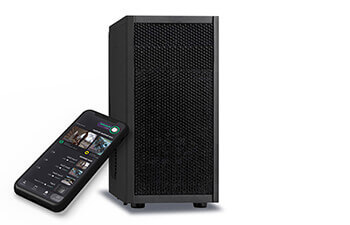
AI PoE Hub
- Advanced AI powered by Nvidia GPU
- 4TB hard drive
- Supports up to 15 PoE cameras
- Instant alerts and access via mobile app
- Live video escalation to human guards
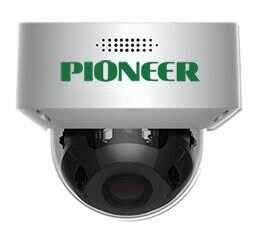
Video Camera
- Power-over-Ethernet
- Dome and bullet video cameras
- 4k/8MP video
- 2-way audio

Guards
- On duty 24/7 stationed in the US
- Professional responses to potential threats
- Can dispatch police via a 911 call from your business address
- Privacy mode gives you full control
Welcome To Pioneer Security Services, Inc.
Family Owned and Operated, Security Systems San Diego Since 1978.
Whether your security needs are for your home, small business, or corporation, Pioneer Security Services has the products and industry experience you need to ensure your safety and peace of mind. Our clients appreciate our hands-on approach to service. You are never just an account number at Pioneer Security. We take pride in pampering our clients with personal service that goes above and beyond expectations.
Live Video Guards
Our newest security innovation is a live video guard system that protects the exterior of your property with two-way voice surveillance. Because our guards interact with vandals and other unwanted visitors before they enter your business or home, we stop crime before it starts. Live video guards reduce both property losses and false alarm fees. Call us today and ask us how live surveillance can improve your security.

Howard L. Feldman
Founder and President